
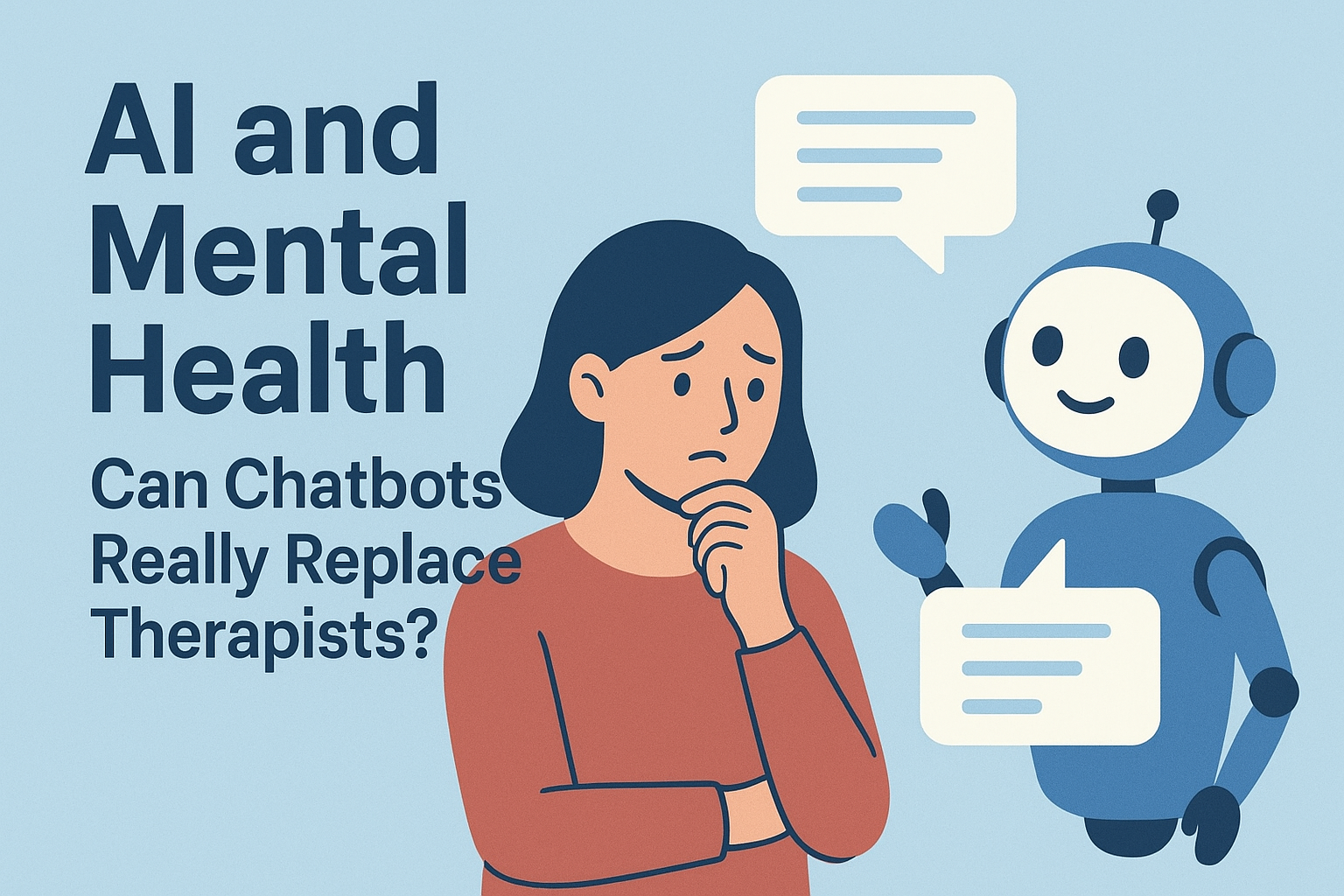
Artificial Intelligence is rapidly changing the mental health landscape, with chatbots offering instant emotional support to millions worldwide. As stress, anxiety, and mental health challenges continue rising, many people turn to AI-powered tools for comfort and guidance. But the question remains: can these chatbots truly replace trained mental-health therapists?
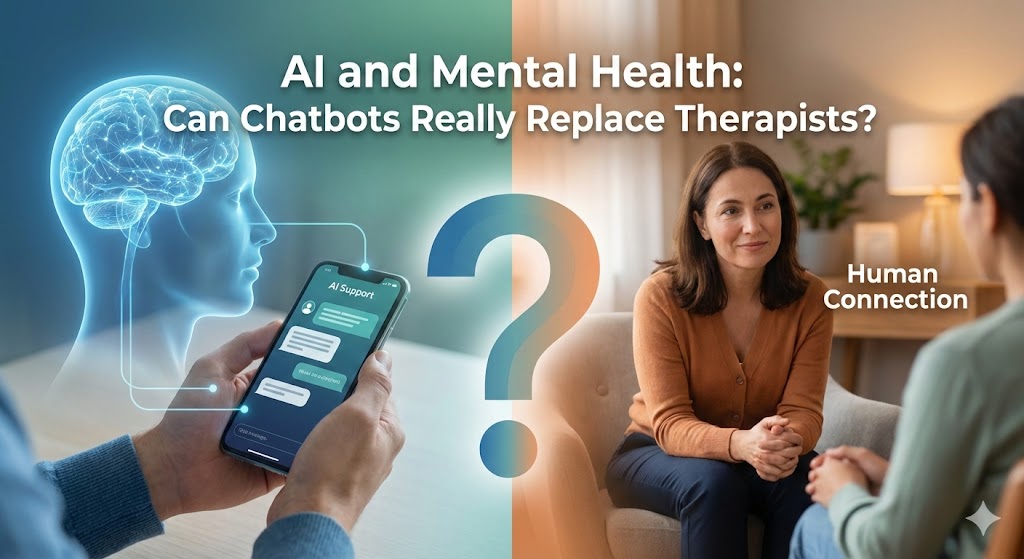
How AI Chatbots Support Mental Health
AI mental-health apps such as Wysa, Replika, and ChatGPT-based tools use natural language processing to create supportive, conversational experiences. They help users track emotions, practice coping techniques, and access Cognitive Behavioral Therapy (CBT)–inspired exercises.
Their biggest advantage is 24/7 availability. Anyone struggling with loneliness or anxiety can receive immediate responses at any time of the day. AI chatbots are also non-judgmental, making it easier for individuals to express feelings openly without fear of criticism.
Research suggests that AI interventions can effectively reduce symptoms of mild anxiety and stress. Many users feel comfortable “talking” to chatbots about issues they hesitate to share with real people.
Why AI Cannot Replace Human Therapists
Despite offering emotional support, AI chatbots have clear limitations. Mental health treatment requires empathy, human intuition, and cultural understanding—areas where AI cannot fully match human therapists. Therapists observe body language, tone changes, and emotional cues that cannot be accurately interpreted by machines.
Moreover, AI chatbots are not equipped to handle severe psychological conditions like trauma, suicidal thoughts, psychosis, or complex mental disorders. When deeper intervention or crisis management is needed, a licensed professional is essential.
Another concern is privacy. Mental-health conversations involve highly sensitive data, and not all AI apps provide strong data protection. This raises questions about confidentiality and ethical use.
The Future: AI as a Partner, Not a Replacement
AI is best seen as a supportive tool, not a substitute for therapists. The future of mental health care will likely combine both:
- AI handling routine check-ins and emotional support
- Human therapists addressing deeper, complex issues
- Hybrid models improving access for people in underserved areas
Chatbots can help reduce the burden on mental-health systems while ensuring users receive immediate support when needed.
Nice blog.
Thanks Cassy