
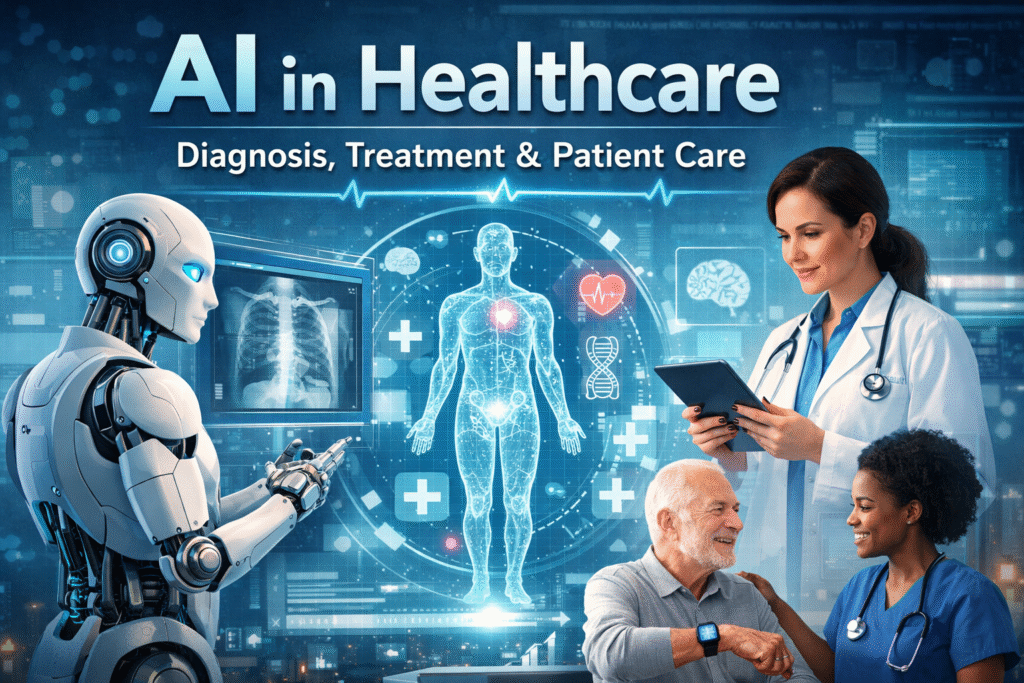
Introduction
Artificial Intelligence (AI) is rapidly reshaping the healthcare sector by improving accuracy, efficiency, and patient outcomes. From early disease detection to personalized treatment plans, AI in healthcare is becoming an essential tool for doctors, hospitals, and healthcare systems worldwide. As medical data grows, AI helps professionals make better decisions while enhancing patient care.
AI in Medical Diagnosis
AI plays a crucial role in medical diagnosis by analyzing large volumes of clinical data, medical images, and patient records. Machine learning algorithms can detect patterns that may be overlooked by human eyes. For example, AI-powered imaging tools assist in identifying cancers, heart diseases, and neurological disorders at early stages.
Moreover, AI diagnostic systems reduce human error and speed up diagnosis. As a result, doctors can provide timely interventions, which significantly improves survival rates and overall patient health.
AI in Treatment Planning
AI also supports healthcare professionals in designing accurate and personalized treatment plans. By analyzing patient history, genetics, and lifestyle factors, AI systems recommend therapies that best suit individual patients.
In addition, AI is widely used in robotic-assisted surgeries, where precision and consistency are critical. These technologies help reduce surgical risks, shorten recovery time, and improve surgical outcomes. Consequently, AI-driven treatment planning leads to safer and more effective healthcare delivery.
AI in Patient Care and Monitoring
Patient care has been transformed through AI-powered tools such as virtual health assistants, wearable devices, and remote monitoring systems. These technologies track vital signs, remind patients to take medications, and provide real-time health updates to doctors.
Furthermore, AI chatbots enhance patient engagement by answering basic medical queries and offering mental health support. This continuous monitoring improves chronic disease management and reduces hospital visits, making healthcare more accessible and patient-centered.
Benefits of AI in Healthcare
AI in healthcare offers several advantages, including improved diagnostic accuracy, reduced operational costs, and enhanced patient experiences. It also allows healthcare professionals to focus more on patient interaction rather than administrative tasks.
However, ethical concerns, data privacy, and system transparency must be addressed to ensure responsible AI implementation.

