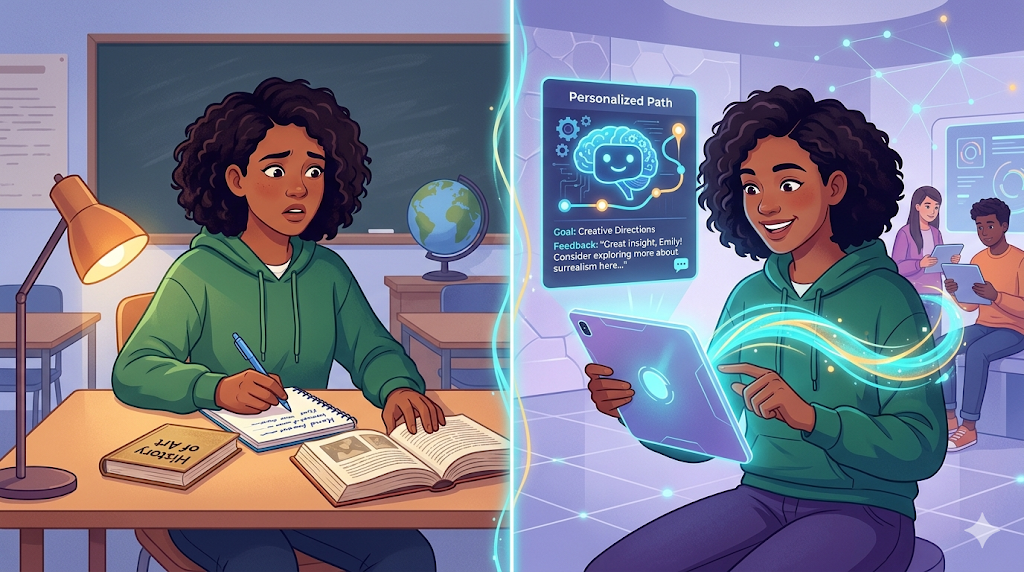

Artificial intelligence is reshaping education in profound ways. Schools are embracing AI to enhance learning experiences.
AI in education is not just a trend; it’s a revolution. It offers personalized learning tailored to each student’s needs.
Teachers are using AI tools to automate tasks, freeing up time for more meaningful interactions with students.
Smart classrooms equipped with AI technology are becoming the norm, fostering collaboration and engagement among students.
As AI continues to evolve, its role in education will only grow, promising a future where learning is more accessible and effective for all.
The Rise of AI in Education: An Overview
AI in education is growing rapidly, changing how we teach and learn. Many schools now use AI tools to enhance educational practices.
This rise is driven by AI’s ability to tailor learning experiences. Personalized education, once a dream, is becoming a reality thanks to AI.
Key benefits of AI in education include:
- Enhanced personalized learning experiences for students.
- Support for teachers through automated administrative tasks.
- Improved access to education for underserved communities.
AI is not limited to a single aspect of education. It’s transforming everything from lesson planning to student assessments.
While the AI revolution is exciting, it also presents new challenges. Schools must adapt to incorporate these advanced technologies into everyday learning.
In summary, AI is set to play a crucial role in the future of education, making it more efficient and inclusive.
Personalized Learning: Tailoring Education to Every Student
Personalized learning is transforming education, thanks to AI’s capabilities. AI analyzes student data to understand individual learning styles.
This data-driven insight allows for customized educational experiences. Each student receives content matched to their pace and interests.
Key features of personalized learning with AI include:
- Adaptive learning paths that adjust to student progress.
- Real-time feedback to foster better understanding.
- Tailored interventions for students needing extra support.

by Elena Mozhvilo (https://unsplash.com/@miracleday)
AI helps create dynamic lessons that engage each learner uniquely. Students can pursue subjects they are passionate about more deeply.
Intelligent tutoring systems further enhance personalization. They offer immediate assistance outside classroom hours, reinforcing learning.
This approach also supports diverse learning needs, including students with disabilities. AI helps create inclusive and effective learning environments.
Personalization isn’t just about technology. It’s about a pedagogical shift that values each learner’s journey. It promises a more engaging and supportive educational experience.
AI-Powered Tools and Smart Classrooms
AI-powered tools are modernizing classrooms, transforming them into smart learning environments. Smart classrooms use AI to enhance interaction and engagement.
These environments are equipped with technology that supports learning in innovative ways. Students are exposed to various digital tools that complement traditional methods.
Key components of smart classrooms include:
- Interactive whiteboards with AI integration.
- Virtual and augmented reality for immersive experiences.
- AI-driven platforms for collaboration and communication.

by Vitaly Gariev (https://unsplash.com/@silverkblack)
These tools foster a collaborative atmosphere, encouraging group work and peer learning. AI supports teachers by providing insights into classroom dynamics.
Additionally, AI-powered solutions track student progress in real-time. This helps tailor instruction and provides prompt feedback for individual improvement.
Smart classrooms promote interactive learning through hands-on activities. They also facilitate discussions that deepen understanding and critical thinking.
By enhancing the learning environment, AI empowers both educators and students. The result is a more dynamic, engaging, and effective educational experience.
Automating Administrative Tasks and Teacher Support
AI is revolutionizing school administration by automating routine tasks. This shift allows educators to dedicate more time to teaching.
Automation streamlines processes, reduces errors, and increases efficiency. Teachers benefit as they can focus on student interactions and lesson planning instead.
AI’s capabilities in administration include:
- Automated grading and assessment reporting.
- Data analysis for attendance and performance tracking.
- Scheduling tools for class and meeting management.
These applications lessen the load of paperwork and manual data entry. As a result, teachers find themselves better equipped to support students.
AI-powered teacher support tools offer insights into student behavior and needs. This enhances instructional strategies and boosts student outcomes.
Ultimately, AI not only lightens administrative burdens but also aids in effective decision-making, creating a supportive environment for both students and educators.
Enhancing Student Engagement and Collaboration
AI has the potential to greatly enhance student engagement. By fostering interactive and collaborative learning environments, it transforms how students experience education.
Smart classrooms make use of AI to promote teamwork. Tools like collaborative platforms facilitate peer-to-peer learning and discussions.
AI-driven technologies are designed to increase student motivation:
- Interactive educational games and simulations.
- Virtual reality experiences for immersive learning.
- Gamified lesson content to make learning fun.
These tools not only make learning more engaging but also cater to different learning styles. Students become active participants in the educational process.
AI encourages a culture of collaboration, where students work together to solve problems. This not only enhances engagement but also builds essential social and communication skills, preparing students for future challenges in the world outside school.
Addressing Educational Inequality and Accessibility
AI in education plays a pivotal role in addressing inequality. By providing personalized learning experiences, AI can reduce disparities in educational access and quality.
Students in remote or underserved areas greatly benefit from AI’s capabilities. Technology allows them access to quality educational resources and personalized support, which was once out of reach.
AI makes education more inclusive for students with disabilities through:
- Assistive technologies adapting content to individual needs.
- Real-time translation and speech-to-text services.
- Customizable learning paths that accommodate diverse learning paces.
By bridging the gap between different educational environments, AI ensures that every student has the opportunity to succeed. It creates a level playing field, where technology brings quality education to all corners of the globe.
Ethical Considerations: Privacy, Bias, and Security
As AI becomes more integrated into education, ethical challenges emerge. These revolve around privacy, potential bias, and data security. Protecting students’ personal data is paramount, yet AI systems require vast amounts of data to function effectively.
Data privacy is one of the most pressing concerns. Schools must ensure that students’ information is handled with care and protected from breaches. Transparent data policies are crucial in building trust among students, parents, and educators.
Bias in AI algorithms can also affect educational outcomes. AI systems may inadvertently favor certain groups, leading to unequal treatment. It’s vital to develop AI tools that are fair and unbiased.
Security measures must keep pace with evolving threats. Schools need robust defenses against cyberattacks, ensuring data integrity and confidentiality. Ethical considerations in AI adoption include:
- Establishing clear privacy agreements.
- Ongoing assessments of AI system biases.
- Implementing advanced cybersecurity measures.
Addressing these concerns is essential for responsible AI integration, fostering an environment of trust and safety.
Challenges and Limitations of AI in Schools
AI adoption in schools presents several challenges. Despite its potential, AI is not a complete solution for every educational need. Schools face hurdles like resource limitations and infrastructure readiness.
Teachers may resist technological changes without adequate training and support. Fear of job displacement and unfamiliarity with AI tools can hinder adoption. Continuous professional development is crucial to facilitate this transition.
AI systems require significant data to function effectively, which can be a limitation in data-scarce settings. Additionally, financial constraints can restrict access to cutting-edge technology. Challenges of AI in schools include:
- Limited financial resources for implementation
- Inadequate teacher training and support
- Insufficient data for AI system optimization
Understanding these limitations can help schools develop strategies to successfully integrate AI, maximizing its benefits while minimizing drawbacks.
The Future of Educational Technology: Trends and Predictions
The role of AI in education is expected to grow significantly. Schools are investing in AI-driven educational technology to enhance learning experiences. This growth will likely lead to more sophisticated AI applications in classrooms.
Several trends are emerging that could shape the future of education. Virtual reality (VR) and augmented reality (AR) may become common in schools, offering immersive learning experiences. Gamification could also gain traction, making learning more engaging and interactive.
Key predicted trends in educational technology include:
- Increased use of VR and AR for immersive learning
- Expansion of personalized learning via adaptive AI platforms
- Integration of gamified learning environments

by Austrian National Library (https://unsplash.com/@austriannationallibrary)
As these trends gain momentum, educators and policymakers need to stay abreast of technological developments. Understanding these trends will be crucial for harnessing AI’s potential in reshaping education. The future looks promising, with AI continuing to transform learning landscapes.
Conclusion: Embracing the AI-Driven Transformation in Education
Artificial intelligence is poised to revolutionize education. Schools must embrace this transformation to prepare students for the future. Implementing AI can provide personalized learning and improve educational outcomes.
Educators need to adapt and integrate AI tools effectively. This will require ongoing professional development and collaboration. By embracing change, teachers can enhance their teaching methods and engage students more deeply.
Ultimately, the success of AI in education will depend on addressing challenges and ensuring ethical use. As schools navigate this landscape, focusing on inclusivity and accessibility will be vital. AI offers immense potential, and thoughtful implementation can lead to positive, lasting impacts.