Benefits of Using Artificial Intelligence in Education
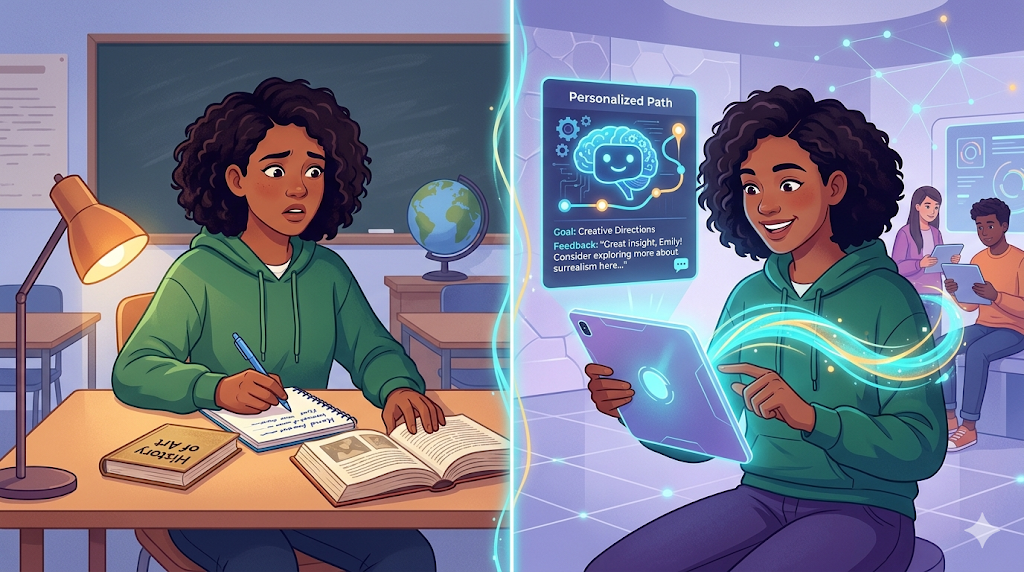
Imagine a classroom where a single teacher is expected to instruct thirty distinct personalities, each with different learning speeds, all at the exact same time. It sounds like an impossible juggling act because, for decades, it was. But imagine if that teacher had thirty digital assistants—one sitting next to every student, guiding them at their own unique pace. This isn’t a scene from a science fiction movie; it is the practical reality of AI in education today.
We have all faced that moment of panic at the kitchen table: staring at a math problem that feels like a foreign language, with the teacher unavailable until the next morning. In the past, this meant frustration or giving up. This scenario highlights a core benefit of AI in education: it acts as a tireless tutor. Unlike a standard search engine that just spits out answers, modern tools use Generative AI to explain why an answer is correct, offering hints and encouragement just like a human mentor would.

Education experts often highlight that this shift does more than just boost grades; it lowers anxiety. By providing a judgment-free zone where it is safe to make mistakes, these tools allow students to ask questions they might be too shy to raise in front of the class, moving us from a “factory” model of schooling to one that finally fits the individual.
How Your Phone Becomes a Math Tutor: The Magic of Personalized Learning Paths
Getting stuck on a math problem usually isn’t about the question right in front of you; it’s often because of a missing piece of information from three grades ago. In a crowded classroom, a teacher might not spot that a child missed a specific lesson on fractions, but AI in education excels at finding these invisible roadblocks. Instead of just marking an answer wrong, the software acts like a digital detective, analyzing the specific mistake to pinpoint exactly where the student’s understanding broke down.
Think of this process as a GPS for the brain. When a driver misses a turn, the navigation system doesn’t shut down; it immediately calculates a new route to get back on track. Similarly, adaptive algorithms create personalized learning paths for students by automatically “rerouting” them to the concept they need to review. If a student struggles with algebra because they are shaky on multiplication, the system pauses the current lesson, inserts a quick refresher exercise to bridge that knowledge gap, and guides them back to the main topic once they are ready.
This dynamic approach drastically lowers the anxiety that comes with raising a hand to admit confusion in front of thirty peers. Because the tool provides private, real-time feedback, learners can make mistakes without fear of judgment, building confidence at their own speed. While this technology empowers students to take charge of their own learning journey, it also solves a massive logistical problem for educators, freeing them from the impossible task of manually grading thirty different homework assignments every night.
The End of the Sunday Night Grading Marathon: How AI Reclaims Teacher Time
For decades, the image of a dedicated educator has included a kitchen table covered in stacks of papers on a Sunday night. While teaching is about connection, the job often requires hours of administrative maintenance that keeps teachers from focusing on their students. This is where the conversation shifts to how AI reduces teacher workload. Rather than acting as a replacement, AI serves as a tireless administrative assistant, specifically designed to handle the repetitive “box-checking” tasks that lead to burnout.
By handing off these logistical duties to intelligent software, educators can reclaim a significant portion of their day. Current data suggests that properly implementing these tools can result in up to a 30% reduction in administrative workload. Automated grading systems efficiency shines brightest when handling objective tasks, allowing technology to instantly manage:
- Multiple-choice grading
- Attendance tracking
- Lesson plan formatting
- Basic email responses
The true value of AI for teachers isn’t just about finishing the workday earlier; it is about reinvesting that time into human connection. When a computer handles the paperwork, a teacher finally has the mental bandwidth to sit down with a struggling student or mentor a child who needs extra encouragement. This efficiency sets the stage for a deeper benefit: moving beyond just saving time to actually improving the quality and fairness of the feedback itself.
From Red Ink to Instant Insights: Why Automated Grading is Fairer and Faster
Waiting a week to find out you misunderstood a math concept is frustrating. By the time a student sees the red ink on a traditional quiz, the class has often moved on to a new topic, leaving the confusion unresolved. Automated grading systems efficiency changes this dynamic by acting like a digital mirror that reflects mistakes the moment they happen. Instead of internalizing errors, students can correct their thinking instantly, transforming a test from a judgment tool into a live learning opportunity.
Human grading is also naturally influenced by fatigue. A teacher grading their fiftieth exam at midnight simply cannot offer the same fresh perspective they had for the first one. In contrast, looking at AI-powered vs manual assessment methods highlights a distinct advantage: consistency. Software judges every answer by the exact same standard, ensuring that a student’s grade depends entirely on their knowledge rather than the teacher’s energy levels. This objectivity ensures every student gets a fair shake on objective measures.
Beyond fairness, speed creates momentum. When a student sees a green checkmark immediately after solving a difficult equation, it triggers a sense of accomplishment similar to leveling up in a video game. This instant validation keeps frustration low, preventing the “I’m just not good at this” mindset from taking root. Once students trust that the system helps them improve, they become open to turning dry lessons into interactive adventures.
Making Fractions Fun: Using Gamified AI to Keep Students Hooked
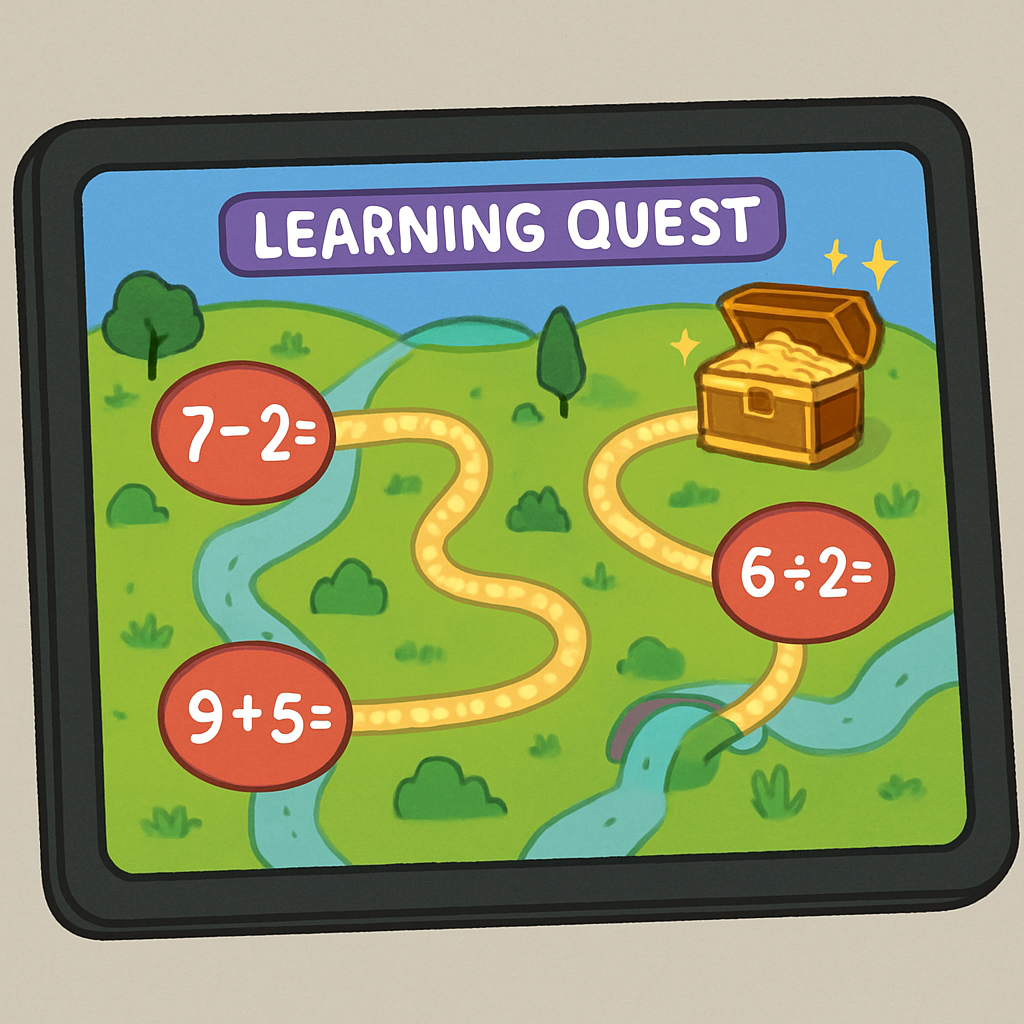
We’ve all seen a child hyper-focused on a mobile game for hours, yet struggle with a ten-minute lecture. The secret isn’t just flashy graphics; it is the immediate sense of progress. AI captures this by turning dry exercises into interactive quests where a student might navigate a spaceship using fuel calculations. By improving student engagement with gamified AI, tools transform the “chore” of homework into a rewarding challenge.
The real magic happens behind the scenes as the software adapts to the player’s skill. Psychologists call this the “Flow State”—that perfect zone where a task is difficult enough to be interesting but not so hard it causes anxiety. Traditional vs adaptive learning environments highlight a key difference here: a textbook cannot change if a student is stuck, but AI can. If a player breezes through, the system increases the difficulty; if they stumble, it scales back to keep them in that optimal learning zone.
Earning digital badges does more than boost morale; it creates positive emotional associations with learning. These micro-rewards reinforce memory, helping facts stick long after the screen is turned off. As AI in education proves that fun and rigor can coexist, this adaptability becomes the perfect foundation for supporting students with disabilities who require highly personalized tools.
Why AI is the Ultimate Tool for Students with Disabilities
Traditional classrooms often rely on a single way of teaching—usually reading and listening—which unintentionally leaves many learners behind. This creates a pressing question for parents and educators: can AI assist students with disabilities in a meaningful way? The answer lies in customization. Instead of forcing a child to adapt to a rigid curriculum, AI adjusts the material to fit the child’s unique sensory and cognitive needs, leveling the playing field in ways that were previously impossible without a dedicated human aide for every student.
Consider how these specific tools act as digital bridges, connecting students to content they were previously locked out of:
- Screen readers for the blind instantly convert digital text into synthesized speech.
- Live captions for the deaf visualize spoken lectures in real-time.
- Text simplification for dyslexia adjusts reading levels and fonts without losing the core meaning.
- Speech-to-text for motor impairments allows students to write essays using only their voice.
Interestingly, this same adaptive technology powers language translation tools for ESL students, demonstrating how accessibility features often end up benefiting the entire student body.
Critics sometimes worry that these tools might be “shortcuts,” but there is a vital distinction between doing the work for a student and making the work accessible. For a student with cognitive processing differences, AI doesn’t provide the answers; it breaks down complex sentence structures so the student can understand the question and formulate their own response. By removing these mechanical barriers, AI in education ensures that intellect, rather than physical ability, determines success. This personalized support system extends well beyond the final bell, paving the way for the 24/7 availability of digital study companions.
The 24/7 Digital Safety Net: Why AI Chatbots are the New Study Buddies
We’ve all seen the panic that sets in at 10 PM when a student hits a roadblock on a math assignment long after teachers have gone home. In the past, that confusion cemented itself until school the next morning, but modern intelligent tutoring systems for K-12 act as an always-on lifeline. Unlike a static search engine that simply lists websites, these conversational tools guide students through the problem step-by-step, explaining the logic rather than just handing over the answer, effectively providing 24/7 student support through AI chatbots.
Beyond just convenience, there is a surprising emotional advantage to learning with a machine: it never gets frustrated. Many students hesitate to raise their hands in class for fear of looking “slow,” yet they feel perfectly comfortable asking a bot to explain a concept five different ways. This creates a safe, judgment-free zone where the learner controls the pace, fostering confidence that eventually translates back into the physical classroom.
From a school’s perspective, this technology solves the impossible problem of giving thousands of students individual attention simultaneously. By handling the routine questions that usually flood a teacher’s inbox, the benefits of artificial intelligence in education free up educators to focus on complex mentorship rather than repetitive tutoring. While chatbots handle these immediate questions, schools are also beginning to look further ahead, using data to catch academic struggles before they even begin.
Predictive Analytics: Spotting the ‘Early Warning Signs’ Before a Student Fails
Just as your car’s dashboard warns you of low tire pressure before you get a flat, schools are now using technology to spot academic risks before they turn into failing grades. Traditionally, a teacher might not realize a student is struggling until mid-term exams, often leaving little time to fix the issue. Predictive analytics for student success rates changes this timeline by analyzing subtle trends effectively, acting as a “check engine light” for education that allows educators to step in when it matters most.
These systems function like a digital safety net, sifting through information to find students who might be quietly slipping through the cracks. Instead of waiting for a final report card, the software flags specific behavioral shifts that humans might miss in a busy classroom. Indicators AI tracks include:
- Sudden drops in login frequency
- Patterns in missed homework
- Declining scores in foundational concepts
The purpose of collecting this data isn’t surveillance, but support. By addressing learning gaps with real-time feedback, schools can offer help—like extra tutoring or a counselor meeting—weeks earlier than usual. This shift provides data-driven educational insights for administrators, ensuring that resources go exactly where they are needed to keep students on track. Once specific needs are identified, the next challenge is creating the right content to fix them, leading us to how AI is helping teachers design curriculums in minutes.
Building Better Lessons: How Teachers Use Generative AI to Design Curriculums in Minutes
Teachers often spend their evenings hunting for fresh examples to explain stale concepts, but AI for teachers acts like an on-demand creative partner. Instead of writing a single lesson plan that targets the “average” student, educators can now ask software to generate a dozen unique explanations for the same topic instantly. This technology doesn’t replace the teacher’s expertise; rather, it handles the heavy lifting of brainstorming, providing a menu of options ranging from sports analogies to cooking metaphors to help a specific concept stick.
The true power of this technology emerges when a student fails to connect with standard textbook material. Using generative AI for curriculum development, a teacher can instantly rewrite a complex algebra problem to feature a student’s favorite video game characters or recast a history lesson as a modern social media feed. This turns a rigid curriculum into a flexible toolkit, allowing educators to meet students exactly where their interests lie without spending hours reformatting documents manually.
Implementing AI tools in the classroom is surprisingly simple, often requiring nothing more than typing a request into a chat box to produce these tailored materials. By reducing the time spent on administrative preparation, teachers gain more freedom to interact directly with students and address individual needs. As classrooms become more diverse, this ability to customize content instantly becomes even more critical, especially when we consider how technology is beginning to bridge gaps for students who don’t speak the native language.
Breaking the Language Barrier: AI as a Translator for Global Classrooms
For a student learning English as a second language, a standard science lecture can feel like a high-speed game of catch-up where the rules are written in a secret code. Language translation tools for ESL students are dismantling this barrier by providing instant, accurate support that goes far beyond a pocket dictionary. Instead of feeling isolated by a language gap, students can now access the same curriculum as their peers, turning a daunting struggle into an accessible learning opportunity.
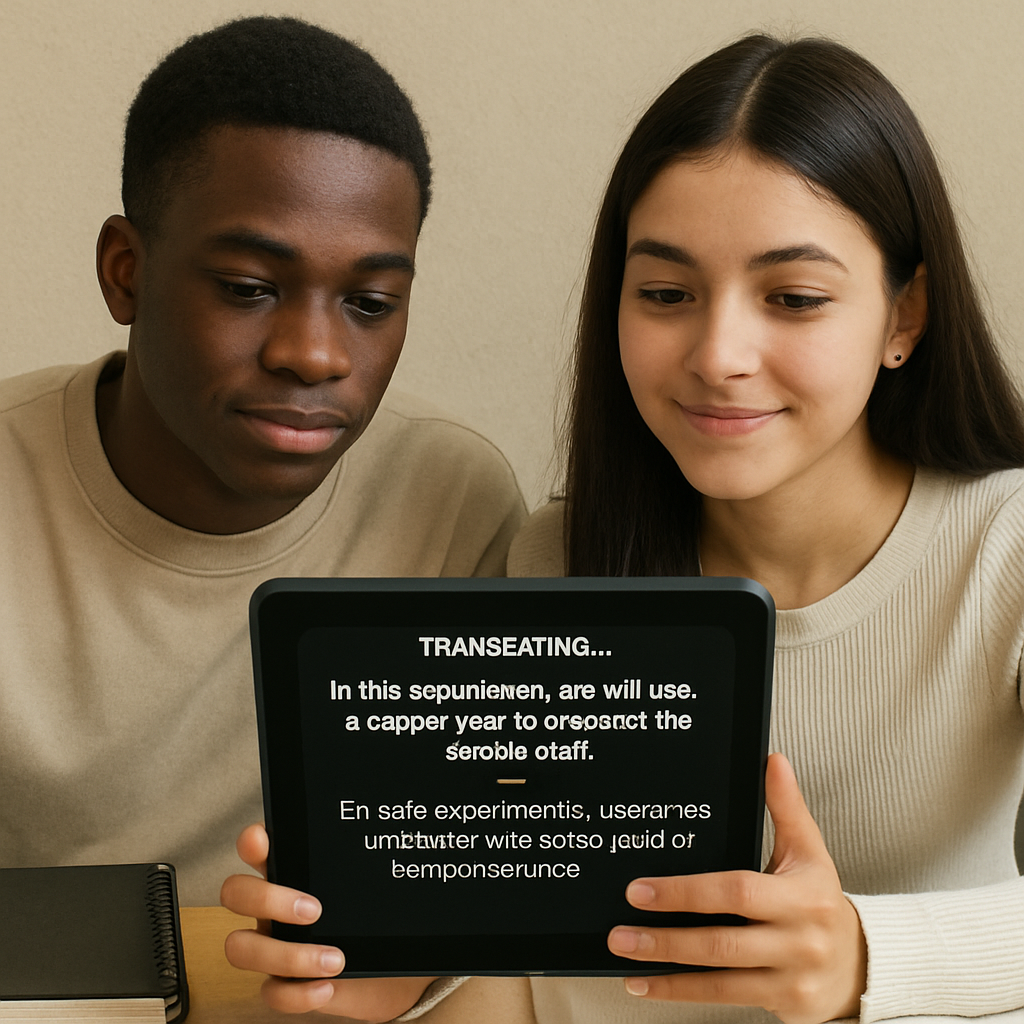
This technology functions like “live subtitles” for the physical world. Through a process called neural translation, an app on a tablet can listen to a teacher’s voice and display the text in the student’s native language almost instantly. Unlike older programs that often produced garbled sentences, AI in education now grasps context and idioms, ensuring that a math explanation doesn’t get lost in translation. This allows the student to follow the lesson in real-time rather than spending hours decoding notes later that night.
The psychological impact of these tools is just as vital as the academic boost. When a child understands what is happening around them, the benefits of artificial intelligence in education manifest as increased participation and a stronger sense of belonging. However, inviting powerful listening tools into the classroom raises valid concerns about privacy and the human connection, leading many to wonder if we are relying too heavily on algorithms.
Addressing the Elephant in the Room: Is AI Safe and Will it Replace Teachers?
It is natural to worry that relying on algorithms might push human educators out of the picture. However, the goal of implementing AI tools in the classroom isn’t to replace the teacher, but to give them a “co-pilot.” Just as an airplane’s autopilot handles the tedious job of keeping the plane level so the pilot can navigate storms and land safely, AI handles grading and data tracking. This frees up the teacher to focus on the complex, creative work of mentoring students, rather than drowning in paperwork.
While the efficiency is exciting, we must also ask who is watching the watchers. Bringing AI in education means entrusting software with student data, from grades to learning habits. Responsible schools and developers treat this information like a “digital vault,” utilizing strict anonymity rules to ensure a child’s learning patterns are used exclusively to help them improve, rather than being exposed to the open web or advertisers.
Even the smartest computer cannot replicate the emotional intelligence required to guide a child through their formative years. An algorithm can identify a missing comma, but it cannot detect when a student is acting out because of problems at home. There are critical areas where human connection remains the only solution:
- Empathy for a crying child
- Mentoring a student’s character
- Inspiring a passion for art
- Managing classroom social dynamics
Ultimately, the benefits of AI in education mean nothing if we lose the human touch. By letting AI handle the logistics, we actually create more room for face-to-face mentorship. With these safety measures and balance in mind, let’s look at practical steps for bringing these advantages into your own home or school.
Your AI Action Plan: How to Start Using These Tools Today
You no longer need to view AI in education as a futuristic concept reserved for tech experts. Instead, you can now see it for what it truly is: a personalized support system that meets learners exactly where they are. The question isn’t whether technology will replace human connection, but how it can handle the repetitive heavy lifting—like drilling vocabulary or explaining a math problem for the tenth time—so that teachers and parents can focus on encouragement and mentorship.
To begin experiencing these benefits firsthand, you don’t need complex software. Start with these accessible tools:
- Khan Academy (Khanmigo): Excellent for safe, personalized tutoring in math and science.
- Duolingo: Uses adaptive pacing to make learning new languages feel like a game.
- Canva: Helps students visualize complex concepts through AI-assisted design.
- ChatGPT: Ideal for brainstorming essay topics or summarizing long historical texts.
Implementing AI tools in the classroom or at the kitchen table is most effective when kept simple. Follow this three-step routine: First, identify a specific “struggle point,” such as algebra equations or vocabulary retention. Second, use an AI tool to tackle that specific hurdle for just 15 minutes a day. Finally, discuss the results together to ensure the tool is building understanding rather than just providing answers.
The landscape of learning is shifting from a “one-size-fits-all” model to a journey tailored to every individual. By taking that first step—perhaps just trying one lesson on an adaptive platform this week—you open the door to a world where frustration is replaced by curiosity. The future of education isn’t about students competing against machines; it’s about students reaching their full potential with machines by their side.