
You don’t need a computer science degree to master artificial intelligence today. According to recent workforce reports, AI is rapidly shifting from a “bonus skill” to a fundamental job requirement across almost every industry. Think back to the early days of Microsoft Excel—what was once a specialized technical program quickly became a mandatory office capability. As we move forward, being an active AI user is following that exact same trajectory.
Mastering this technology comes down to a concept called AI literacy. This simply means understanding how to use these tools to work smarter, much like knowing how to give clear instructions to a very fast, literal assistant who can summarize a week of unread emails in seconds. You do not need to know how to write complex code or build software from scratch to future-proof your career.
Navigating the explosion of random tutorials and unverified advice online can feel incredibly overwhelming for busy professionals. Earning a formal certification provides a much-needed structured path through all that noise, giving you a proven credential that employers actually trust. Industry data reveals that hiring managers are increasingly looking for recognized brand names on resumes to verify these modern capabilities.
Knowing where to start is half the battle, which is why having a clear career roadmap makes all the difference. Here is a vetted selection of top AI certification programs for 2025, categorized by specific professional goals to help you strategically advance your skill set.
Is the AI Skills Gap Real? How Certification Bridges the 2025 Hiring Divide
Every company wants AI-savvy talent, but a massive disconnect exists between what employers need and what applicants know. This divide—the AI skills gap—occurs because casually using tools like ChatGPT differs entirely from securely applying them to real business problems. To stand out, you must bridge the AI skills gap with professional training, proving your competence in critical areas like ethical data usage and prompt engineering.
Hiring managers now demand concrete proof rather than trusting vague resume claims. Recent 2024-2025 industry reports highlight exactly why formal validation drives career growth:
- 71% of business leaders prefer hiring less-experienced candidates who possess practical AI skills.
- 66% of executives state they will not hire someone lacking foundational AI literacy.
- Job postings requiring industry-recognized machine learning specializations or general AI certificates grew by over 300%.
Earning a verified credential does more than just build your daily confidence; it acts as a powerful resume filter bypass. When automated hiring software scans your application, a formal certificate instantly signals that you have the exact abilities companies desperately need. However, before enrolling in the first course you see, you must determine which programs offer true value. Comparing free versus paid options is the best way to uncover the hidden costs and real ROI of AI training.
Free vs Paid: The Hidden Costs and Real ROI of AI Training
Deciding whether to open your wallet for an AI credential comes down to understanding what you actually get in return. When exploring free vs paid artificial intelligence online programs, a smart strategy is to start by “tire-kicking.” Many popular learning platforms offer an “Audit Mode”—meaning you can watch the video lectures and read the course materials entirely for free. While this is a risk-free way to see if you enjoy the subject, unpaid access rarely delivers the real ROI of AI training (Return on Investment): the concrete proof of capability that employers demand.
Upgrading to a paid track unlocks the premium features that actually catch a hiring manager’s eye. Consider this quick comparison before you enroll:
- Free Options: Zero financial risk to learn the basics, but you receive no shareable certificate, no graded feedback, and no access to student networking communities.
- Paid Options: Unlocks private peer networks, verified LinkedIn badges, and “Capstone Projects”—hands-on final assignments that prove you can solve a real-world office problem.
Ultimately, the highest paying AI certifications for 2025 require completing these paid, project-based components to show you are job-ready. Securing a verified digital badge officially bypasses automated resume filters and signals your new expertise to the professional world.
The Beginner’s Gold Standard: IBM and Google Professional Certificates on Coursera
Stepping into artificial intelligence can feel intimidating, but a Professional Certificate—an industry-recognized credential designed for immediate job readiness—makes the transition seamless. If you want the best generative AI certifications for beginners, Google’s AI Essentials is a perfect starting point. This program focuses heavily on everyday office tasks, teaching you to use AI to summarize messy email threads, draft presentations, and organize complex schedules.
Beyond simply saving time at your desk, completing top AI programs holds tangible academic weight. Both Google and IBM’s offerings provide a direct path to an ACE® credit (American Council on Education), meaning your workplace effort can potentially translate into actual college credits. You gain immediate confidence for your current job while building a permanent educational asset for your resume.
If you prefer understanding how these systems operate behind the scenes, the IBM Applied AI Professional Certificate on Coursera is an outstanding alternative. It strikes a practical balance between AI theory and active, no-code tool building. The daily learning is broken down into highly manageable modules tailored for non-technical professionals:
- Python Basics: A gentle introduction to this popular coding language, focusing only on simple commands rather than heavy software engineering.
- Building Chatbots: Creating automated virtual assistants that can easily answer common customer questions on a website.
- Computer Vision: Teaching computers to identify specific objects in digital images, similar to how your smartphone recognizes your face to unlock the home screen.
Securing these brand-name qualifications proves to employers your commitment to modernizing your skill set. Once you understand these core tools, the next logical step is learning to command them flawlessly.
Mastering the Prompt: Best Generative AI Certifications for Non-Technical Pros
You might think chatting with AI is simple, but turning it into a reliable coworker takes specific skills. Today’s Large Language Models (LLMs)—the underlying technology powering programs like ChatGPT—do much more than answer trivia. They can analyze complex budget data and streamline creative workflows. However, they occasionally suffer from “hallucinations,” acting like a confident but incorrect intern who unintentionally invents facts to please you. Taking the best generative AI certifications for beginners ensures you can spot these errors while maximizing your daily productivity.
Getting exact results requires prompt engineering—the skill of framing precise, contextual inputs to guide the AI effectively. To master this communication without learning to code, three practical courses currently dominate the landscape:
- DeepLearning.AI’s Generative AI for Everyone: The number one recommended starting point for 2025, offering a jargon-free overview of real-world capabilities.
- Vanderbilt University’s Prompt Engineering for ChatGPT: Teaches you how to structure commands to save hours on daily email drafting and meeting summaries.
- Coursera’s AI Foundations: A solid conceptual stepping stone if you eventually plan to pursue a formal generative AI engineer certification path.
Directing these tools on a personal laptop is an excellent foundation; understanding how large organizations deploy them globally is the next tier of professional expertise.
Cloud Giants Battle: Choosing Between Microsoft Azure and Google Cloud Credentials
Understanding how AI actually talks to your company’s data is the next critical step on your roadmap to becoming a certified AI specialist. You already know cloud storage—everyday programs like OneDrive or Google Drive act as digital filing cabinets. In the business world, the larger system housing those cabinets is the “infrastructure.” Cloud certifications prove to employers that you understand this broader digital office building, knowing exactly where AI lives and how it connects to sensitive business information securely.
For most corporate professionals, the Microsoft Azure AI Fundamentals (AI-900) exam is the undisputed gold standard. Because countless businesses already rely on Microsoft Office, this certification perfectly aligns with environments you likely use every day. It introduces Machine Learning Operations (MLOps)—essentially the behind-the-scenes IT management process keeping AI models updated and running smoothly—without demanding you write a single line of code.
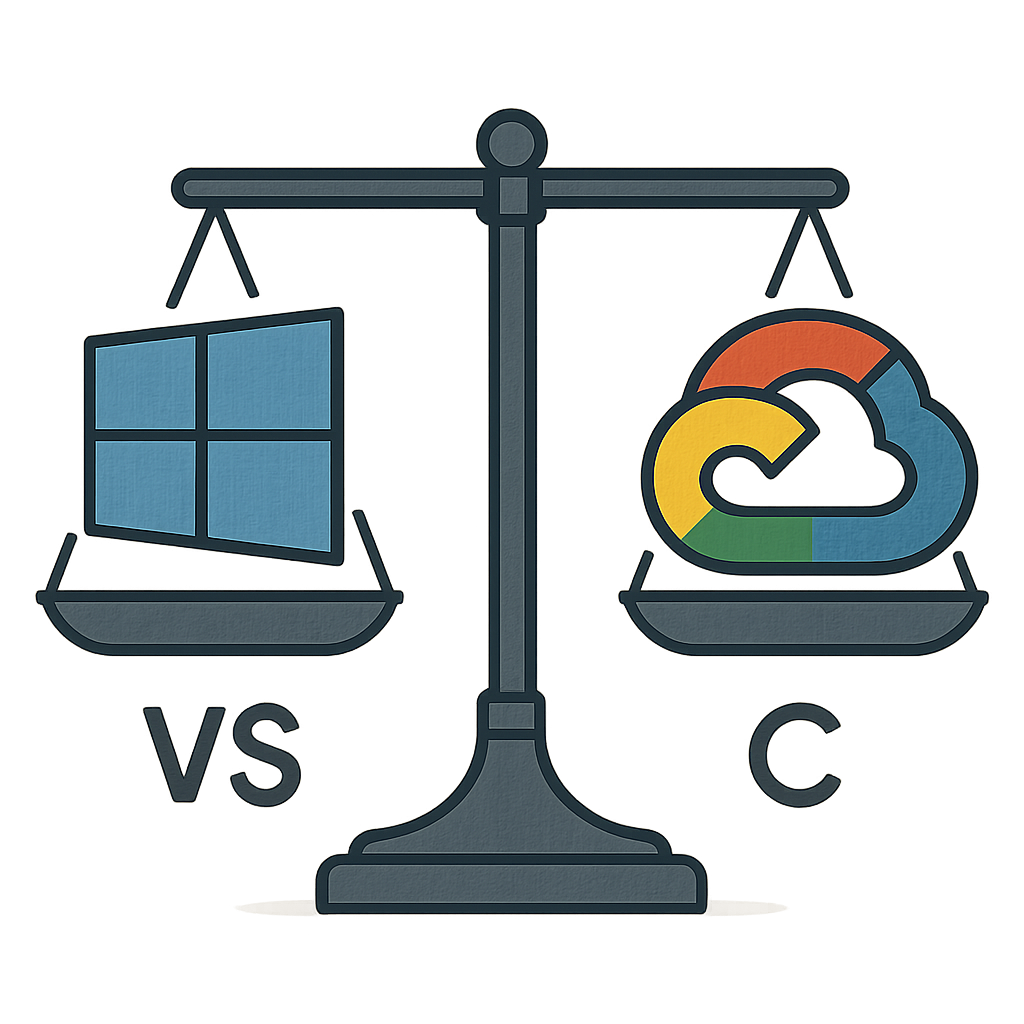
To accurately weigh Microsoft Azure vs Google Cloud AI credentials, look at your current office ecosystem alongside the top certification courses available:
- Microsoft Azure (AI-900): Best for traditional corporate roles and Microsoft-heavy offices.
- Google Cloud: Ideal for data-heavy organizations, digital marketing agencies, and modern startups.
- Amazon Web Services (AWS): A strong alternative if your company’s tech team relies heavily on Amazon’s backend servers.
Possessing these foundational cloud skills makes you an incredibly valuable asset to any management team looking to adopt technology safely. Professionals ready to move beyond the basics can dive deeper into advanced system mechanics for higher-level specialization.
Technical Excellence: NVIDIA and Stanford Programs for High-Level Specialization
While cloud certifications prove you can navigate the modern AI office building, some career paths require you to understand the wiring inside the walls. If you are eyeing a transition into technical AI management or engineering, you will need credentials that carry heavy industry prestige. This is where elite, specialized programs step in to elevate your resume from “capable user” to “technical strategist.”
Two standout options dominate this higher tier. The Stanford University professional certificate in artificial intelligence serves as a profound, long-term investment, giving leaders the theoretical groundwork to manage complex tech teams. On the more hands-on side, the NVIDIA Deep Learning Institute technical training focuses heavily on “Deep Learning”—a specialized process where we teach computers to recognize patterns and solve problems by mimicking the neural pathways of a human brain.
Before enrolling, it is important to understand the prerequisites for advanced AI courses at this level. Unlike beginner-friendly basics, these rigorous programs require a specific foundational toolkit:
- Basic Python Knowledge: You must understand Python, the primary programming language used to give AI models their instructions.
- Data Comfort: Familiarity with basic statistics and data structures is expected, though you will not need high-level calculus.
- Time Commitment: Expect to invest several months of focused study rather than a quick weekend sprint.
Making the leap into these advanced arenas demands real effort, but the payoff in job market leverage is significant. Once the technical theory is mastered, the final hurdle is proving those hard-earned skills to hiring managers.
From Certificate to Salary Increase: Building a Portfolio with Capstone Projects
You no longer need to feel overwhelmed by the rapid evolution of artificial intelligence. If you are still wondering whether AI certifications are worth it for career growth, the answer is yes—provided you focus on solving real office problems rather than just collecting digital badges.
A certificate alone isn’t magic; you must show how you applied it to a problem. The credential is the key, but the project is the door. The ultimate advantage hidden within top AI certification courses is the final assignment. Leveraging these hands-on AI capstone projects for portfolio building proves to employers exactly how you use intelligent tools to streamline daily operations.
To capture attention, you must display this evidence where hiring managers actively look. Include your AI projects on LinkedIn under the ‘Featured’ section to increase recruiter views. When leaders see your applied skills in action, they immediately recognize the time saved and confidence gained by having an AI-literate professional on their team.
A practical starting point is selecting one foundational course and dedicating a few hours each week. Consistent, hands-on practice will transform abstract AI concepts into a concrete, visible career advantage.