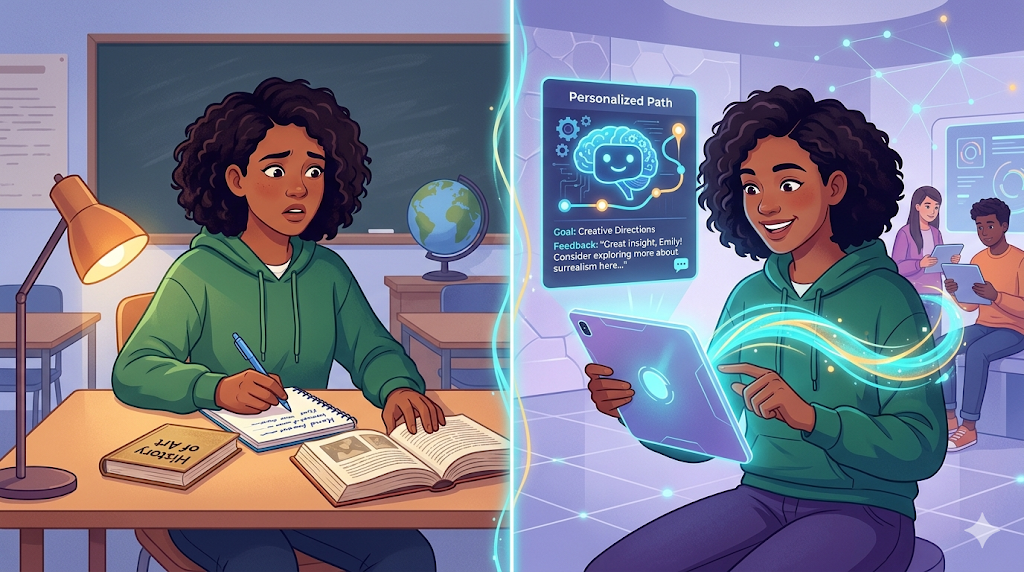
Remember the first time you brought a calculator to math class? Some worried it would stop students from learning arithmetic, but instead, it freed us to solve bigger problems. According to many teachers, the rise of artificial intelligence in education is our generation’s “calculator moment.”
Unlike traditional search engines that simply point you to facts, this new wave of educational technology acts as an interactive partner. Think of collaborative AI as an endlessly patient digital tutor that sits beside your child at the kitchen table. It doesn’t just hand out answers; it talks through frustrating homework hurdles step-by-step.
Educators across the country are discovering that AI in education serves as a 24/7 support system, not a classroom replacement. This powerful collaboration reduces late-night homework stress for parents and builds crucial confidence for students.
Is it a Robot or a Recipe? How to Spot the Difference Between Generative AI and Adaptive Learning
Picture a busy kitchen where a cook takes basic ingredients to craft a new meal. This is exactly how generative AI works—like a “Digital Chef” mixing vast amounts of data to cook up an original essay or image. Educators even use generative AI for automated lesson planning, saving hours by letting software instantly draft weekly reading assignments.
But what happens when software acts like a tailor adjusting a suit rather than a chef? Adaptive learning platforms don’t write new text; they monitor how quickly and accurately a student answers questions. If your teenager breezes through basic algebra, the program automatically increases the difficulty to keep them challenged.
Behind the scenes, these adjustments rely on a concept similar to how human brains spot patterns. The software builds personalized learning paths through neural networks, constantly studying a student’s unique test-taking habits to predict which topic they need to practice next.
Distinguishing a tool that creates content from one that tracks progress helps families use classroom technology wisely. With these systems in place, personalized learning becomes a reality, offering every student the equivalent of a private digital tutor.
Why Every Student Can Now Have a Private Tutor: The Power of Personalized Learning
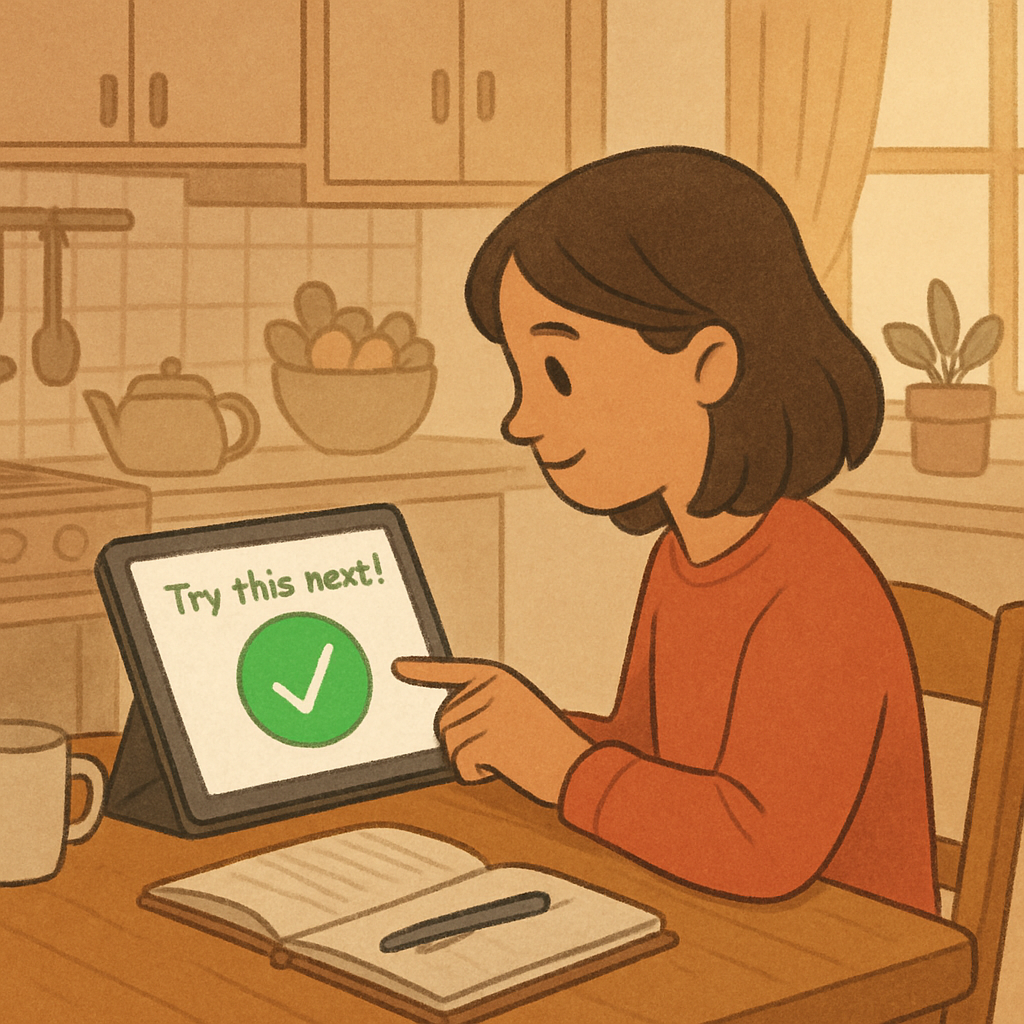
Imagine a classroom where a single teacher tries helping one student with fractions while keeping advanced learners from getting bored. This is where AI steps in as a “digital tutor.”
Using continuous feedback loops, these programs act like a GPS for education. If a child takes a wrong turn on a problem, the system instantly recalculates the route, explaining the misstep and offering another chance to practice.
Families are realizing that intelligent tutoring systems for K-12 offer personalized learning paths that adjust instantly to varying speeds. Machine learning improves student engagement through four clear benefits:
- Pace control: Kids progress only when they are ready.
- Instant correction: Fixing errors before bad habits form.
- Low-pressure environment: Removing the embarrassment of raising a hand.
- Focused skill-building: Targeting specific academic weaknesses.
Taking away the public fear of being wrong gives learners the confidence to tackle harder challenges without judgment. While these tools uniquely support our students, they also provide massive relief to the adults in the room by automating the invisible work of teaching.
Giving Teachers Their Evenings Back: How AI Automates the ‘Invisible Work’
We’ve all heard stories of teachers staying up past midnight, buried under paperwork. While classroom instruction is highly visible, educators actually spend hours on hidden chores. By reducing administrative burden for teachers, artificial intelligence acts like a highly efficient assistant, handling repetitive data entry so educators can focus on human connection.
When evaluating automated grading systems vs traditional feedback, a powerful partnership emerges. Instead of spending hours circling spelling typos with a red pen, a teacher lets the software catch those basic mistakes, freeing them to write meaningful, personalized comments on a student’s actual ideas.
Taking basic grading, lesson drafting, and data entry off a teacher’s plate tonight fundamentally changes their profession. This crucial shift prevents burnout and transforms exhausted instructors back into energetic mentors with the bandwidth to dream up creative projects. With their evenings finally restored, educators have the energy to completely reimagine their subjects and turn ordinary lessons into immersive adventures.
Bringing History to Life: How Smart Classrooms Make Learning an Adventure
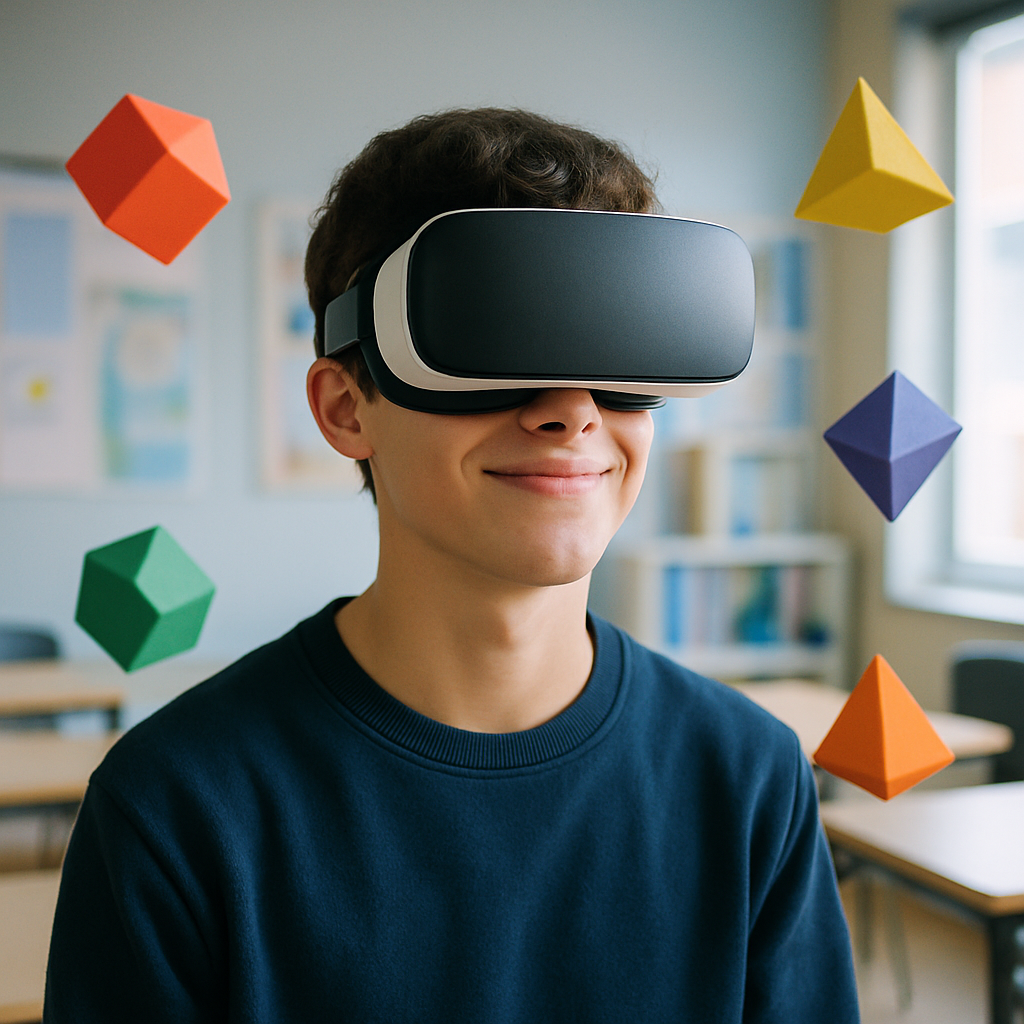
Flat pages of dusty textbooks about ancient Rome can make it difficult for young minds to stay engaged. The future of smart classrooms and IoT—the “Internet of Things,” linking everyday room devices to the web like a classroom’s nervous system—transforms those lessons. By 2025, a classroom might automatically dim its lights and project starry skies onto smart-screens the moment a lesson shifts to astronomy.
Instead of just memorizing dates, students step directly inside the subject. Virtual reality and AI in immersive learning act as a digital time machine, letting kids walk through history in 3D. When combined with game-like rewards, gamified learning experiences powered by AI turn education into an interactive quest—a shift that studies show can increase student information retention by up to 40%. This partnership unlocks thrilling new ways to learn:
- Virtual field trips to the bottom of the Mariana Trench.
- Historical ‘chat’ simulations where kids interview an AI-powered Abraham Lincoln.
- Interactive science labs that let students safely mix volatile virtual chemicals.
While exploring these incredible 3D worlds makes school unforgettable, this interconnected technology relies heavily on tracking student behaviors. Before outfitting every child with a headset, schools and parents must carefully navigate how these tools handle privacy, bias, and academic integrity.
The ‘Mirror with a Memory’: Navigating Privacy, Bias, and Cheating
When software acts as a teacher, we must remember that AI operates like a “mirror with a memory.” Because these systems learn from imperfect human data, they can reflect our flaws back into the classroom, creating a “built-in unfairness” where certain students might be misunderstood or graded incorrectly. Recognizing the ethical implications of algorithms in schools keeps education fair for everyone.
Protecting your child’s digital footprint is just as vital. With programs tracking every quiz score, addressing data privacy in modern classrooms requires three simple safety checks: asking who owns the data, how long it is stored, and whether it can be sold. We must ensure a student’s early academic struggles do not follow them permanently across the internet.
Beyond privacy concerns, the very definition of cheating is shifting under our feet. The impact of large language models on academic integrity causes worry that students will let software bypass the hard work of writing essays entirely. Fortunately, educators are finding a middle ground by teaching kids to use these systems as creative brainstorming partners instead of complete ghostwriters.
Fear of these new challenges should not banish technology from the homework table. By developing a clear readiness checklist, families can confidently prepare for the future and engage with classroom technology safely.
Your AI Readiness Checklist: How to Engage with Technology Safely
Handing a child a new app without guidance is like giving them car keys without driving lessons. Instead of simply blocking access, our goal must be developing AI literacy in students—teaching them how these tools actually make decisions. This basic understanding transforms them from passive consumers into smart, critical thinkers navigating AI in education.
Before trusting a new digital tutor at the kitchen table, families should run the software through a practical five-point safety check:
- Data Privacy: Does the company explicitly promise not to sell student information?
- Age Limits: Is the software appropriately filtered for young users?
- Accuracy: Does the tool remind students to double-check its facts?
- Human-in-the-loop: Is a real person reviewing the AI’s choices to ensure teachers stay in control?
- Purpose: Does it actually teach the skills, or just finish the homework?
Armed with this checklist, parents can confidently ask school administrators how they are implementing AI assistants in the classroom. Technology makes a wonderful educational co-pilot, but a terrible autopilot. Maintaining this vital balance ensures that the best learning environments will always remain fundamentally human-first.
The Road Ahead: Why the Best Classrooms Will Always Be Human-First
You no longer need to view artificial intelligence in education as a mystery. Instead of worrying about machines taking over the classroom, you can now recognize AI as a helpful co-pilot. By handling routine tasks, this educational technology actually frees up teachers to focus on what truly matters: providing the empathy and mentorship that no algorithm can ever replicate.
Build on this foundation by taking a practical step toward AI literacy this week. Start with a simple conversation at the dinner table; ask your child if they have used AI tools in school recently, or try using a chatbot together to explain a tricky homework topic.
Every time you explore these tools, you build confidence. The future of education isn’t about students learning from machines in isolation. Rather, it is about using brilliant technology to create a more personalized, profoundly human classroom.