
Artificial Intelligence (AI) is transforming education. Schools are increasingly adopting AI to enhance learning experiences.
AI in classrooms offers personalized learning and improved educational outcomes. However, it also brings challenges.
Ethical and responsible AI use is crucial. Schools need a robust AI governance framework to guide integration.
Such frameworks ensure privacy, security, and ethical standards are met. They help schools navigate the complexities of AI.
AI governance in education involves collaboration among educators, technologists, and policymakers. It requires clear policies and guidelines.
Stakeholder engagement is vital. Students, parents, and teachers should be involved in AI discussions.
Training and professional development are essential for educators. They need skills to effectively use AI tools.
As AI evolves, schools must adapt their governance frameworks. Continuous evaluation and improvement are key to success.
Understanding AI in Classrooms: Opportunities and Challenges
AI in classrooms is transforming how students learn. By analyzing data, AI can customize lessons to each student’s needs.
Personalized learning is a major advantage. It allows students to learn at their own pace and addresses individual weaknesses.
AI tools can automate routine tasks. This frees up time for teachers to focus on interactive and creative teaching methods.
Despite these benefits, challenges remain. Schools must address ethical issues and ensure equal access to AI resources.
There are concerns about data privacy and security. Schools must implement safeguards to protect student information.
Furthermore, bias in AI algorithms can perpetuate inequalities. Developers must strive for fair and accurate AI systems.
Key opportunities and challenges of AI in classrooms include:
- Personalized Learning: Tailoring education to individual needs.
- Administrative Efficiency: Streamlining tasks like grading.
- Ethical Concerns: Addressing privacy and biases.
- Accessibility: Ensuring AI benefits all students.

Schools must work continuously to balance innovation with care. Integrating AI requires careful planning and collaboration.
Educators, technologists, and policymakers need to work together. This ensures a safe and effective learning environment with AI.
As AI continues to evolve, so will the educational landscape. Schools must remain adaptable and forward-thinking.
The Importance of AI Governance in Education
AI governance is crucial for ensuring the safe use of AI in schools. Clear guidelines are needed to navigate this complex landscape.
Without governance, AI implementation can falter. Schools risk issues of privacy, ethical dilemmas, and security breaches.
Education systems must embrace governance to protect student data. Proper frameworks can prevent misuse and build trust with stakeholders.
Involving diverse voices in governance discussions is key. Students, parents, and teachers should all have a say in shaping AI policies.
Well-defined AI governance helps streamline processes and align them with educational goals. It promotes transparency and accountability.
Key reasons governance is vital in education include:
- Data Protection: Safeguarding personal information.
- Ethical Standards: Mitigating biases in AI systems.
- Stakeholder Trust: Building confidence in AI initiatives.
- Policy Alignment: Ensuring AI supports educational objectives.
- Transparency: Clarifying AI’s role and impact in schools.
AI governance provides the roadmap for ethical AI use. Schools need policies that evolve with technology, ensuring continued relevance.
Building a robust governance framework supports innovation. It allows educators to explore AI’s possibilities while managing risks responsibly.
Core Principles of an Effective AI Governance Framework
Developing an effective AI governance framework requires a strong foundation. This includes principles that align with educational goals and ethical standards.
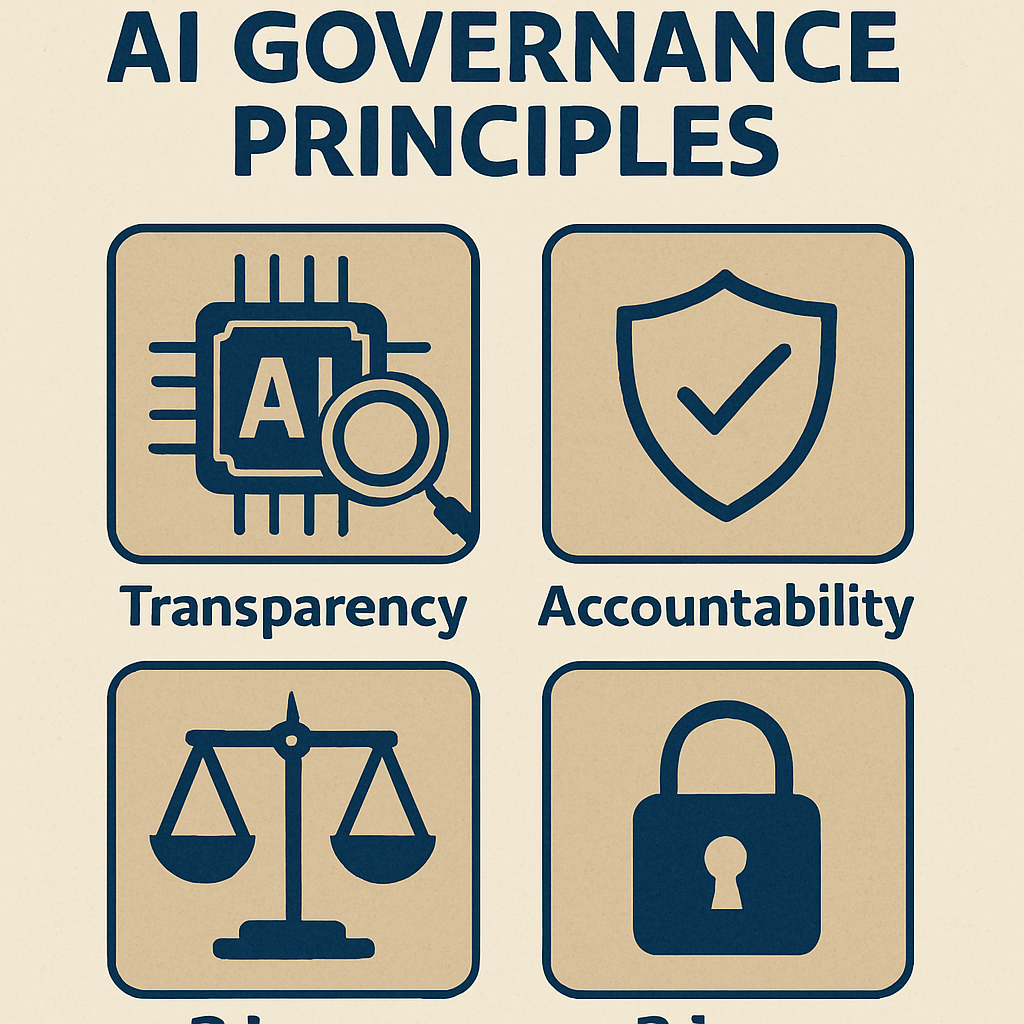
First, transparency is essential. Stakeholders need to understand how AI systems operate and how decisions are made.
Accountability ensures responsibility at every level. Schools must establish clear lines of accountability for AI deployments.
Privacy protection cannot be overlooked. Safeguarding student data from misuse is paramount in any framework.
Inclusivity guarantees that all voices are heard. Diverse perspectives help in addressing complex AI challenges in schools.
Adaptability is crucial in the fast-evolving field of AI. Schools need policies that can flex with technological advancements.
Continuous improvement guarantees that governance frameworks remain relevant. Regular assessments allow for necessary refinements over time.
These core principles guide schools in crafting frameworks. They serve as a blueprint for responsible and ethical AI use.
An effective framework balances innovation and regulation. Schools can foster creativity while safeguarding student interests.
Principles to prioritize:
- Transparency: Open AI operations.
- Accountability: Defined responsibilities.
- Privacy: Secure data practices.
- Inclusivity: Diverse input.
- Adaptability: Flexibility in approach.
- Continuous Improvement: Regular updates.
Key Components of an AI Governance Framework for Schools
A solid AI governance framework for schools should include several vital components. Each plays a role in ensuring smooth and ethical AI integration.
Firstly, policy development is crucial. Schools must craft clear policies that outline AI’s role in education.
These policies should include rules for AI data collection and usage. Defining data practices helps protect student privacy.
Additionally, schools need an AI ethics board. This board ensures AI tools align with ethical standards.
Training programs for educators are another critical component. Teachers must be prepared to use AI effectively in their classrooms.
Moreover, integrating mechanisms for feedback and evaluation is vital. These allow stakeholders to assess AI’s impact regularly.
Technology partnerships can provide essential support. Collaborating with AI providers offers access to resources and expertise.
Finally, establishing a protocol for addressing AI-related issues is essential. Clear channels for reporting issues help resolve concerns promptly.
Key components include:
- Policy Development: Defining AI’s educational role.
- Data Management: Protecting student privacy.
- AI Ethics Board: Ensuring ethical use.
- Educator Training: Equipping teachers.
- Feedback Mechanisms: Evaluating AI’s impact.
- Technology Partnerships: Access to resources.
- Issue Resolution Protocols: Managing AI concerns.
These components work together to create a comprehensive framework. Their integration is essential for fostering a responsible AI environment in schools.
AI Integration Strategies: Best Practices for Schools
Successful AI integration in schools requires strategic planning. Schools must adopt practices that ensure effective and ethical implementation.
Start with a clear vision. Establish what AI should achieve in your school. Goals might include personalized learning or administrative efficiency.
Collaboration is essential. Engage with educators, parents, and policymakers. Their input ensures balanced and inclusive AI policies.
Provide robust training. Equip educators with the skills to use AI tools. Ongoing professional development is vital to keep up with technological advancements.
Utilize a phased approach. Gradually introduce AI technologies. This allows for addressing challenges without overwhelming the system.
Feedback loops are crucial. Collect feedback from students and teachers. Use this information to refine AI applications continually.
Monitor the integration’s impact. Evaluate if AI meets set goals and make adjustments as needed.
Best Practices for AI Integration:
- Vision Establishment: Define clear objectives.
- Stakeholder Engagement: Collaborate with the community.
- Educator Training: Foster continuous learning.
- Phased Implementation: Introduce gradually.
- Feedback Collection: Gather insights to improve.
- Impact Monitoring: Assess and refine regularly.
Effective AI integration can enhance learning experiences and operations. Schools must embrace innovation while maintaining ethical standards. This balance ensures AI’s positive impact on education.
Addressing Ethical, Legal, and Privacy Concerns
AI in education raises ethical, legal, and privacy issues. Schools must address these to protect all stakeholders.
Ethically, AI should promote fairness. Ensure AI systems are free from bias. Bias can lead to unequal treatment of students.
Privacy is a top priority. AI systems collect vast data on students. Schools must protect this data against misuse or breaches.
Legal compliance is also crucial. Schools must adhere to data protection laws. This involves staying updated with regulations like GDPR and FERPA.
Schools should create clear policies for data usage. Define who can access data and how it is used. Transparency builds trust among students, parents, and educators.
Concerns to Address:
- Fairness: Prevent bias in AI algorithms.
- Privacy Protection: Secure student data against breaches.
- Legal Compliance: Follow relevant data protection laws.
- Policy Creation: Establish clear data usage guidelines.
- Transparency: Communicate data practices openly.
Addressing these concerns ensures ethical AI application. It protects the school community and upholds trust. This is essential for sustainable AI integration in education.
Stakeholder Engagement: Involving Educators, Students, and Parents
Effective AI governance requires active participation from all stakeholders. Educators, students, and parents play crucial roles. Their involvement leads to successful AI integration in schools.
Educators offer insights into classroom needs. Their experience guides AI tool selection and implementation. Teachers can share feedback on AI’s impact on learning outcomes.
Students are the primary beneficiaries of AI in education. Involving them provides valuable perspectives. They can express concerns or suggest improvements for AI systems.
Parents offer a supportive role in AI initiatives. Engaging them builds understanding and trust in AI technologies. Their feedback helps address ethical and privacy concerns.
Ways to Engage Stakeholders:
- Workshops: Conduct sessions to explain AI tools and benefits.
- Feedback Channels: Create platforms for sharing opinions and suggestions.
- Collaborative Meetings: Involve stakeholders in discussions on AI policies.
- Surveys: Collect insights about AI experiences and expectations.
Involving these groups ensures diverse input and fosters a collaborative environment for AI governance. This engagement strengthens trust and broadens the understanding of AI’s role in education.
Training and Professional Development for AI in Classrooms
Effective AI usage in classrooms depends on well-prepared educators. Training empowers teachers to utilize AI tools optimally. Professional development is crucial for their confidence and skill-building.
Regular workshops enhance educators’ AI literacy. These sessions should cover the basics and advanced applications. Encouraging exploration of AI functionalities benefits classroom integration.
Ongoing professional support is necessary. Teachers need resources and guidance to adapt AI for varied learning environments. Peer collaboration also fosters effective AI strategies.
To support educators, schools can provide:
- Online Courses: Offer flexible, self-paced learning opportunities.
- Mentorship Programs: Pair novice teachers with experienced AI users.
- Resource Libraries: Maintain databases of AI tools and tutorials.
- Tech Assistance: Provide on-demand support for troubleshooting AI tools.
Through comprehensive training and resources, educators can leverage AI for improved teaching methods. This preparation ensures that AI benefits both teachers and students in meaningful ways.
Continuous Evaluation and Improvement of AI Governance
For AI governance frameworks to remain effective, constant evaluation is necessary. Schools should establish processes for regular review of AI implementations. This will help identify potential areas for improvement.
Feedback from all stakeholders is essential. Teachers, students, and parents offer diverse perspectives. Regular surveys and feedback sessions can provide valuable insights into the effectiveness of AI tools and governance.
AI technologies rapidly evolve, requiring frameworks to adapt. Schools must remain flexible and responsive to technological advances. This ensures that governance practices stay relevant and beneficial.
Consider these strategies to enhance AI governance:
- Annual Reviews: Conduct comprehensive evaluations of AI policies.
- Stakeholder Feedback: Facilitate open forums for input and suggestions.
- Technological Updates: Integrate new AI solutions responsibly.
- Impact Analysis: Assess the effects of AI on educational outcomes.
By continually refining AI governance, schools can effectively navigate the complexities of AI integration. This proactive approach ensures that AI’s role in education continues to support and enrich student learning experiences.
Future Trends: The Evolving Role of AI Governance in Education
The landscape of AI in education is rapidly changing. Schools are increasingly exploring innovative AI applications. Understanding future trends in AI governance is crucial for staying ahead.
AI-driven personalization will become more prevalent. This trend supports individualized learning experiences for students. Schools need governance frameworks that can accommodate such advanced technologies.
Collaboration between educational institutions and tech companies is likely to grow. Such partnerships can offer schools access to cutting-edge AI solutions. However, ensuring ethical use and implementation remains a priority.
Consider potential future trends in AI governance:
- Adaptive Learning: Systems that tailor content to individual student needs.
- AI-Driven Assessment: Automated grading and feedback mechanisms.
- Virtual Classrooms: Enhanced online learning through AI tools.

AI governance will continue to evolve alongside these advancements. Schools must remain proactive in adapting their governance strategies. This ensures that AI continues to positively impact education.
Conclusion: Building a Responsible AI Future for Schools
AI governance frameworks are vital to creating an ethical AI future in education. They ensure responsible AI integration while addressing critical concerns.
Schools must embrace adaptive governance strategies. As technologies evolve, these frameworks should also adapt and improve, ensuring they meet educational needs.
By fostering collaboration and continued learning, educational leaders can guide students into a tech-driven future. This approach helps in cultivating environments where AI can thrive without compromising ethical standards. With a strong governance foundation, schools will effectively harness AI’s transformative power.