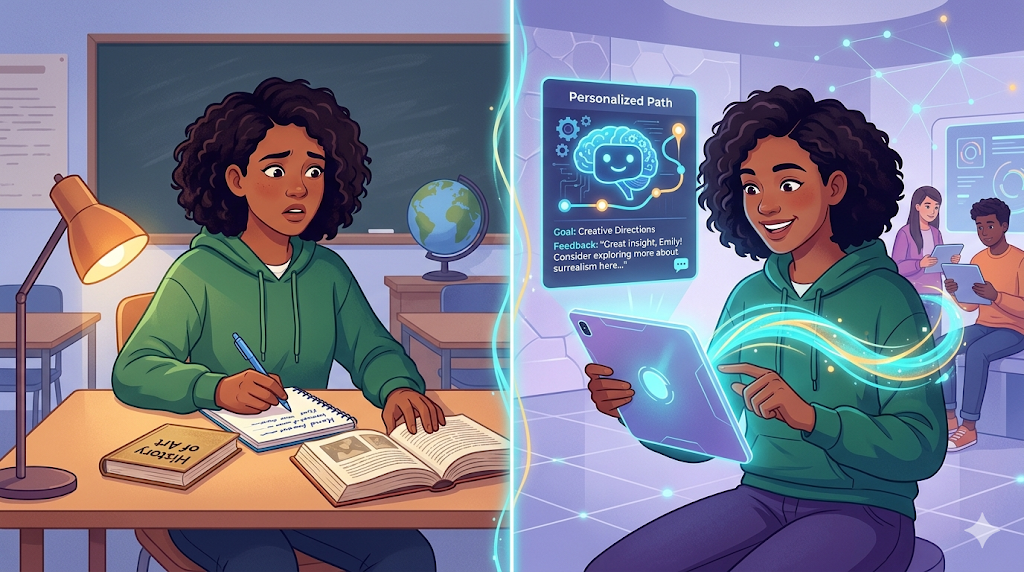
Imagine your child sits down at the kitchen table to write a history essay, but instead of reaching for a textbook, they type a prompt into a computer that instantly generates a complete first draft. This is the reality of Generative AI—a type of technology that acts as a highly advanced prediction engine to create brand-new text, images, or ideas on demand. According to surveys from national education researchers, a significant majority of students are already experimenting with these tools at home. For parents and teachers alike, this sudden shift raises immediate questions about what constitutes cheating versus a clever new study hack.
Technology is currently moving much faster than traditional school handbooks can handle, leaving many districts feeling like they are navigating a digital Wild West. To bring order to this confusion, education departments across the country are stepping in to provide state ai guidance for k12 schools. Think of this guidance as a high-level roadmap rather than a strict set of laws. It offers a structured way for educators to understand how these powerful tools operate without getting bogged down in complex computer science.
Understanding the difference between state recommendations and your local school board’s rules is crucial for families trying to make sense of these changes. While a state department of education provides the broad vision and expert advice on best practices, it is ultimately up to your local principal and teachers to write the actual rules your child must follow. The state acts as the architect drawing the blueprints, but your local district is the builder deciding exactly how the classroom environment will look.
Protecting student data and ensuring academic fairness remain the driving forces behind any successful generative AI classroom policy framework. Education leaders are not trying to ban the future, nor are they letting robots take over the grading process. Instead, they are building digital fences that keep your child’s personal information safe from being sold or misused, all while helping teachers use AI to support safe, step-by-step learning.
Guidance vs. Rules: Who Actually Decides What Happens in the Classroom?
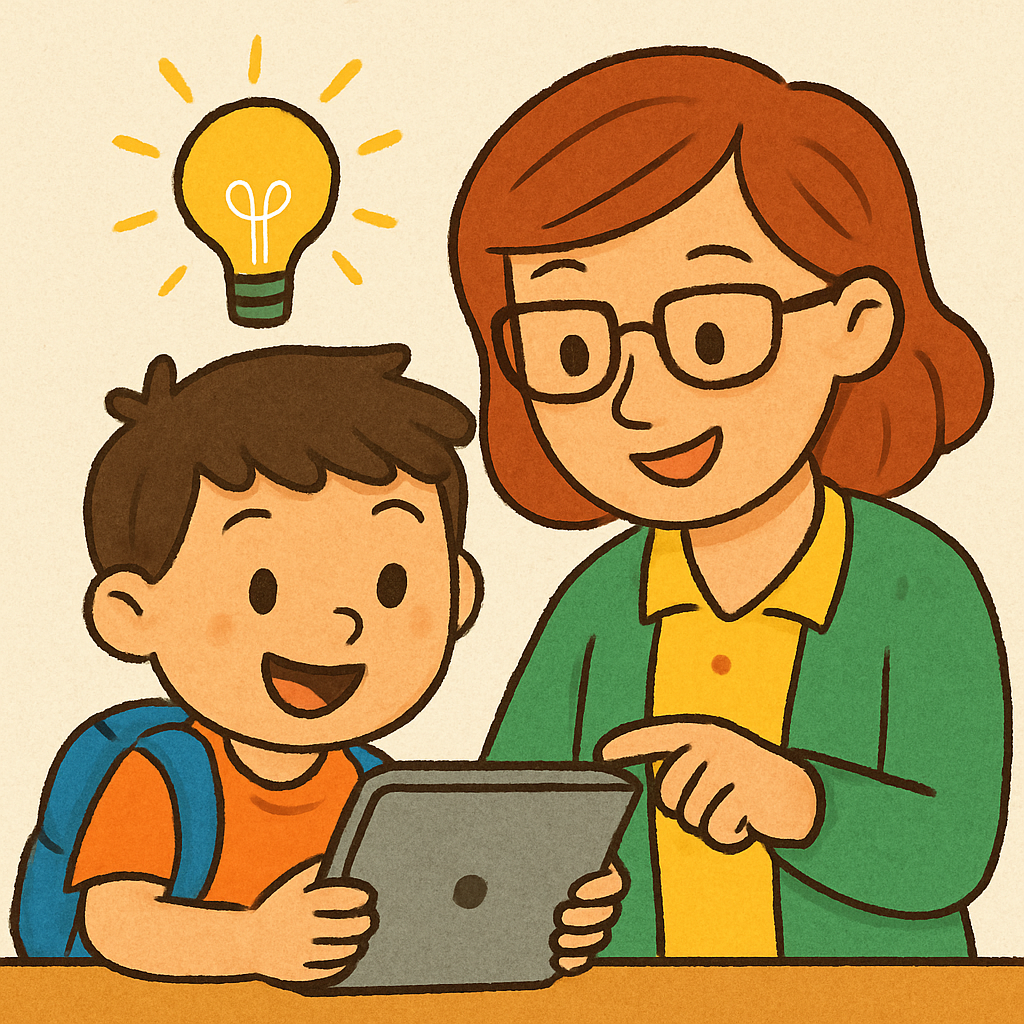
When new technology hits the classroom, you might wonder who sets the rules for your child’s homework. It is actually a team effort between two groups: the State Department of Education and your Local School Board. Think of the state as a GPS providing a recommended route, while your local school board acts as the driver making the actual turns. Because artificial intelligence is changing so rapidly, most state leaders are currently offering flexible recommendations rather than strict laws.
To understand this dynamic, it helps to distinguish state guidance (expert suggestions) from state vs local school AI mandates (legal requirements). As educators figure out how to implement AI in public schools, they rely on these key differences:
- Flexibility: State guidance offers broad ideas that local schools can adapt; a mandate is a rigid law every district must follow.
- Timeline: Recommendations can update quickly as technology shifts, while legal mandates take years to pass through a legislature.
- Enforcement: Guidance provides a helpful framework to support teachers, whereas mandates carry legal or financial penalties if ignored.
Your local district takes these broad state suggestions and creates an Acceptable Use Policy (AUP)—the daily rulebook dictating exactly what happens on school laptops. Just as older policies banned social media during math class, an updated AUP tells a 10th-grader whether using a chatbot to brainstorm an essay is a clever study hack or cheating. Clarifying these classroom rules is vital, but protecting student privacy through robust digital boundaries is equally important.
Building Digital Fences: How State Guidelines Protect Student Privacy
When a teacher finds a free AI tool that instantly grades math quizzes, it sounds helpful, but “free” software has a hidden cost. When a child types personal details into an unprotected chatbot, the company might use that information to train its systems. This process, known as data mining, extracts private details from digital interactions. State guidelines step in by requiring schools to build “digital fences” around student information.
To construct these fences, districts rely on the Family Educational Rights and Privacy Act (FERPA), a law guaranteeing parents control over educational records. Ensuring FERPA compliance for school AI tools means districts must force tech companies to legally promise they will not sell student data. States outline best practices for student data privacy in AI, recommending schools only use vetted programs with privacy shields—digital barriers preventing the AI from remembering what students type.
You can actively verify that your school’s technology is data-safe by asking your principal these four questions:
- Are classroom AI tools officially vetted by the district?
- Do these programs erase student inputs after a session?
- Are students using personal email accounts for AI homework?
- Where can I view our software privacy agreements?
Protecting sensitive information is just the foundation. Once security fences are firmly in place, educators face the practical challenge of navigating how technology impacts actual learning and academic integrity.
From Cheating to ‘Study Hacks’: How Schools Define Fair AI Use
If a teenager is struggling to start a history essay, they might ask a chatbot for an outline. Years ago, copying an encyclopedia was obvious plagiarism, but today, the boundary between cheating and a clever “study hack” is blurry. When students practice prompt engineering—the skill of typing specific instructions to make the AI act as a tutor rather than an answer key—they learn to brainstorm effectively without copying.
Catching the difference between brainstorming and an automated essay writer is complicated. Many teachers initially turned to AI Detectors: software programs designed to scan a paper and guess if a machine wrote it. Unfortunately, these scanners frequently make mistakes, sometimes falsely accusing honest students. Because technology cannot perfectly police homework, educators are shifting focus toward mitigating student plagiarism with generative AI through clear classroom boundaries rather than relying on flawed tracking software.
To create these practical boundaries, districts are adopting a “Traffic Light” system to guide responsible AI adoption in K-12 education. This visual framework tells students exactly what is allowed for each specific assignment:
- Red (Cheating): No AI allowed. Students must do all writing and problem-solving independently.
- Yellow (Helpful Tool): AI can be used for brainstorming or spelling checks, but the final words must be the student’s own.
- Green (Full Use): AI is a required part of the lesson, such as evaluating an AI-generated essay for historical inaccuracies.
Clear expectations ensure technology enhances critical thinking rather than replacing it. However, a fair rulebook only works if every child actually has equitable access to these educational tools at home.
Closing the AI Gap: Ensuring Every Student Has the Same Digital Opportunity
A school’s zip code often dictates its budget, but the rapid rise of ai in education is creating a completely new kind of inequality. While some districts can comfortably afford premium software subscriptions for every student, others still lack basic internet infrastructure. This gap is known as the “Digital Divide,” and it means some students are learning to master tomorrow’s workplace tools while others are stuck using yesterday’s technology. State guidance is stepping in to ensure that a child’s access to these powerful resources does not solely depend on local property taxes.
To combat this disparity, education departments are actively addressing equity and the digital divide in AI access through targeted financial support. Rather than leaving districts to figure it out alone, states are distributing funds to under-resourced schools in three specific ways:
- Purchasing statewide licenses for secure, student-safe AI platforms.
- Upgrading local school Wi-Fi networks so they can handle advanced digital tools.
- Providing paid training for teachers in low-income districts to effectively use these systems.
Beyond simply fixing internet connections, this funding introduces “Assistive AI Technology”—specialized software that acts as a digital ramp for students with disabilities. For example, AI can provide highly accurate, real-time captioning for deaf students or help children with dyslexia organize their thoughts through advanced speech-to-text features. By securing these tools for everyone, schools can finally focus on teaching the necessary skills to navigate them.
Beyond the Textbook: Integrating AI Literacy into Daily Lessons
Tomorrow’s jobs will demand new skills, prompting education leaders to bring “AI Literacy” into classrooms. Simply put, this means teaching students to use artificial intelligence safely instead of just banning it. Through careful AI integration into K-12 curriculum standards, schools ensure a fourth-grader learns to ask a computer helpful questions, while a high schooler uses AI to brainstorm a resume. Early exposure gives students a distinct advantage in the modern job market.
Unlike traditional encyclopedias, artificial intelligence is essentially a powerful prediction engine that occasionally makes mistakes. This introduces a vital new academic skill: learning to systematically question the computer’s answers. Teachers are showing students how to spot an AI “hallucination”—which is simply the industry term for when an AI confidently makes up incorrect information. If a student uses a chatbot for history research, they must double-check those facts against reliable library sources.
Guiding children through this digital landscape requires knowledgeable educators at the front of the room. To make this happen, districts are prioritizing professional development for AI literacy so teachers feel confident navigating these evolving programs. Just as educators once learned to incorporate internet searches into lesson plans, they are receiving training to guide students and spot the difference between cheating and a legitimate study hack.
Ultimately, teaching students to think critically about technology creates unexpected benefits for school staff, who can also leverage these digital tools to organize their own daily workloads.
Helping Teachers Work Smarter: How AI Guidance Frees Up Time for Students
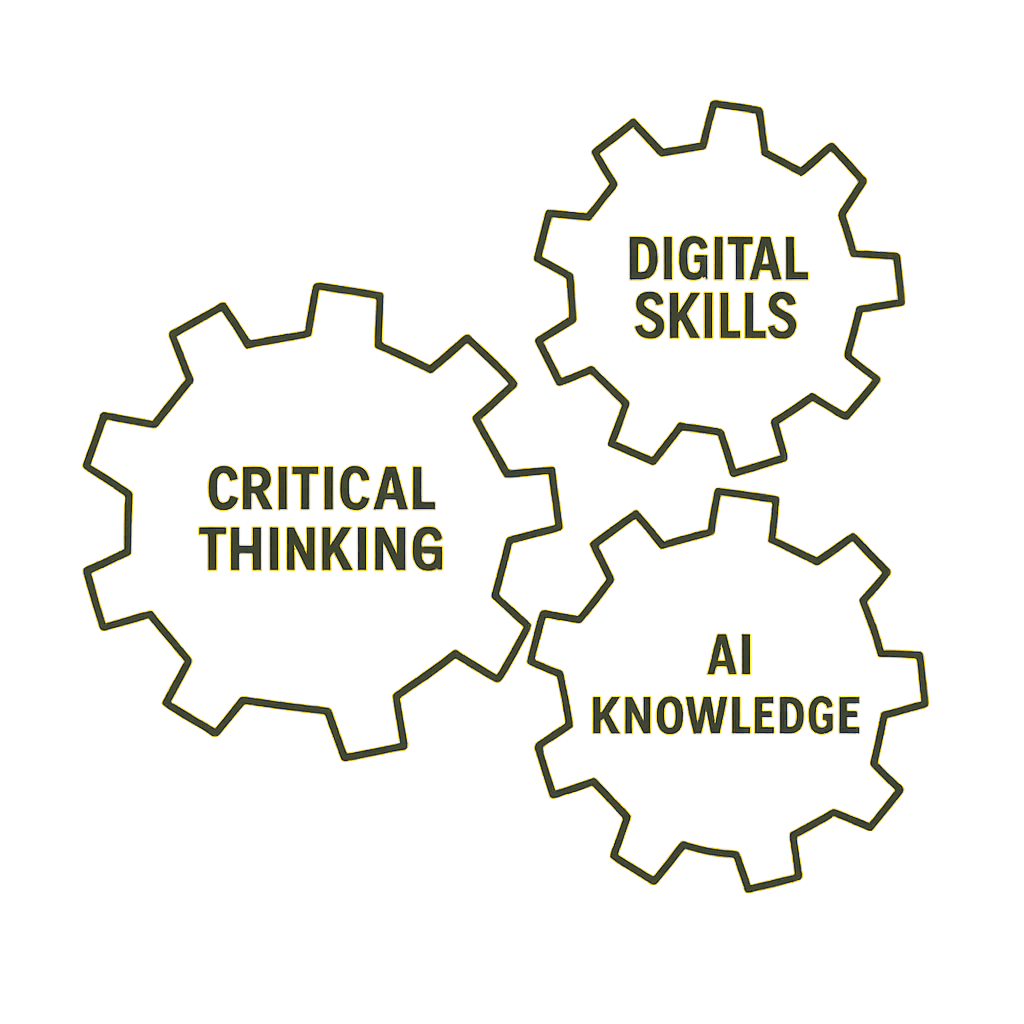
Teaching is often only half the job; mountains of paperwork frequently keep educators working long past the final bell. State guidance now encourages safe ai for teachers to shoulder this administrative burden and combat burnout. Educators are increasingly using digital assistants to jump-start their daily planning. Today, approved AI tools are “automating” tasks like:
- Drafting weekly parent newsletters
- Translating announcements into multiple languages
- Generating practice quiz questions
- Organizing grading rubrics
- Creating substitute teacher outlines
Reclaiming those lost hours means students reap the immediate rewards. Extra time allows educators to focus on “Personalized Learning,” a teaching method where instruction easily adjusts to fit an individual child’s specific pace and needs. The benefits of artificial intelligence in personalized learning shine when a teacher uses a program to instantly rewrite a complex science text to a fourth-grade level for a struggling reader, while simultaneously generating a more challenging version for an advanced student.
Even with these digital shortcuts, state policies ensure computers aren’t running the classroom. Education departments require a “human-in-the-loop” approach, meaning a qualified educator must review and approve everything the AI generates before it reaches a student. The teacher remains the expert decision-maker, ensuring materials are accurate, appropriate, and compassionate. Yet, having a teacher double-check the work isn’t always enough to protect students if the underlying technology has built-in blind spots.
Fixing ‘The Mirror Problem’: Why States Monitor AI for Fairness and Bias
Just as a funhouse mirror distorts a family photograph, computers face a similar issue called “The Mirror Problem.” If artificial intelligence learns from outdated or one-sided information, it naturally reflects those same flaws back to students. Experts call this algorithmic bias, a situation where a digital tool unfairly favors one group over another based on its initial programming.
To understand why this happens, we must look at “training data,” which is the massive collection of books, articles, and websites a computer reads to learn how the world works. When a program only studies examples from specific cultures, it might struggle to grade a diverse student’s paper fairly. Ensuring this foundational information represents all backgrounds is critical for student success, because a tool that misunderstands a child’s culture might mistakenly lower their grade.
State education departments are actively addressing algorithmic bias in educational software to prevent these exact unfair outcomes. Rather than just hoping new programs work correctly, guidelines encourage schools to “audit” or carefully test these systems before buying them. By requiring tech companies to prove their tools are fair for everyone, local leaders are promoting responsible AI adoption in K-12 education that protects equal learning experiences.
School boards must also ensure these modern applications aren’t secretly exposing sensitive student records during everyday use.
Choosing the Right Tools: How States Vet Educational AI Software for Safety
When a teacher finds a flashy new app that grades homework in seconds, using it immediately sounds great. However, in school technology, “free” is rarely truly free. Companies often provide no-cost tools in exchange for collecting users’ personal information. Before adopting these applications, administrators must ask: what are the legal risks of AI in classrooms? To protect students, districts rely on specialized “Terms of Service for Education.” These are strict legal contracts that forbid tech companies from selling student data or using children’s personal essays to train their computer models.
Because reading complex legal documents is exhausting for local principals, state education departments help through a process called “vendor vetting.” Think of this as a rigorous background check for software companies. When evaluating educational AI vendor security, officials demand strict student privacy and mental health protections.
During this initial screening, experts actively watch for five major red flags:
- Hidden Data Sales: The company reserves the right to share student profiles with marketers.
- Age Violations: The tool bypasses necessary parent permissions for young children.
- No Deletion Option: The school cannot erase a student’s data after they graduate.
- Missing Guardrails: The program fails to block inappropriate or harmful content.
- Weak Safety Alerts: The system ignores student writing that indicates potential self-harm.
Keeping unsafe vendors out ensures that taxpayer dollars only fund tools that respect your child’s privacy. By building these digital fences, states handle the legal heavy lifting so educators can safely focus on teaching, leaving local communities to shape the final classroom rules.
Your Role in the Conversation: 3 Steps to Check Your District’s AI Policy
State education departments may build the initial digital fences, but your local school board ultimately decides what happens inside them. This system, known as local control, means your specific community leaders have the final say on classroom rules. While state guidelines provide a helpful roadmap, parents and taxpayers must actively ensure those recommendations become reality in their neighborhood schools.
Figuring out how to implement AI in public schools requires teamwork rather than just administrative guesswork. You do not need to be a software engineer to guide this process. If your district is currently developing ethical AI guidelines for teachers, attending a school board meeting is your best tool. Bring this three-point checklist to the public comment period—the designated time when residents address the board directly:
- Where is the handbook update? Ask if the student code of conduct clearly defines the difference between using AI as a helpful “study hack” and using it to cheat.
- How is our data protected? Request confirmation that the district only uses state-vetted software that legally blocks companies from selling student essays or personal information.
- What training exists? Inquire about the professional support educators receive to help them spot AI-generated homework and evaluate kids fairly.
By stepping up to the microphone, you transform from a concerned bystander into a powerful advocate for student safety. When parents speak up about these practical issues, administrators prioritize creating transparent, easy-to-understand rules before a cheating scandal or data leak forces their hand. Every conversation started today prepares our children for the realities of tomorrow’s workplace.
The Future of the K-12 Classroom: Balancing Innovation with Safety
The integration of artificial intelligence in K-12 classrooms initially felt like navigating the Wild West, but state leaders are now carefully constructing digital fences to protect and prepare students. The focus is no longer just on preventing cheating, but on three vital pillars: protecting student privacy, ensuring equitable access so no child is left behind, and building digital literacy so students understand how these prediction engines actually work.
Any lingering anxiety about robots taking over the classroom should be replaced with confidence in the educators leading the way. Thoughtful state ai guidance for k12 schools actively reinforces that technology is just a supportive tool, not a replacement for human connection. When we look at the future of ai in education, the classroom teacher remains the central, irreplaceable guide who knows your child’s unique needs, strengths, and struggles better than any algorithm ever could.
Parents and community members can actively participate in this technological leap by reviewing their local school district’s handbook or website. Understanding how schools adapt these state-level roadmaps into everyday rules helps ensure these new tools are used safely to support every child’s lifelong learning journey.