The AI Homework & “Critical Thinking” Dilemma
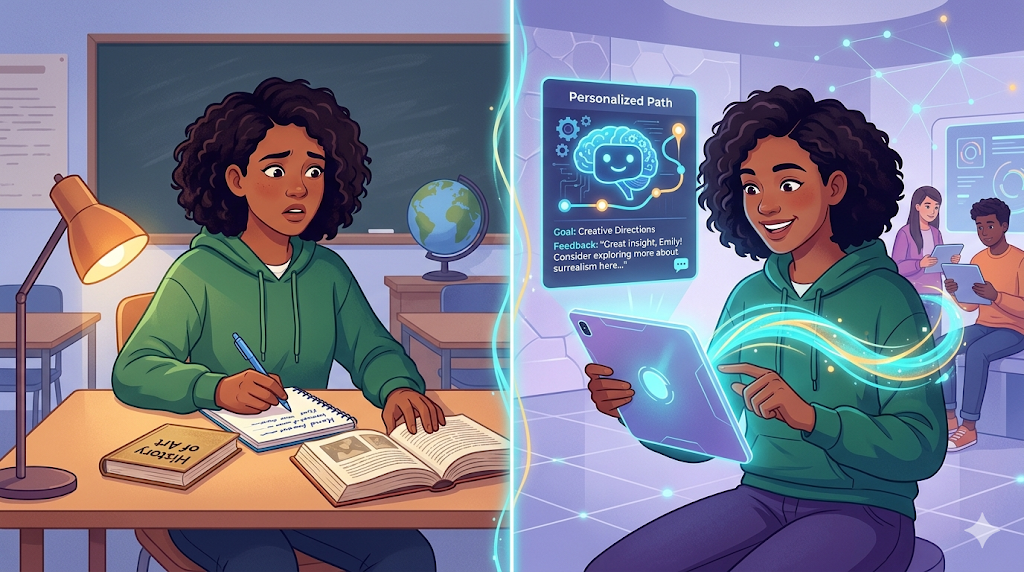
It is Sunday night at 9:00 PM, and your teenager is staring down a blank essay document. Five years ago, this was a procrastination crisis; today, it is a thirty-second chatbot interaction triggering the AI homework and critical thinking dilemma.
According to historians, teachers panicked similarly when the pocket calculator first entered classrooms. Yet, a “calculator for words” carries much higher stakes than long division, actively redefining the future of homework in a post-AI world.
In practice, outsourcing this drafting process eliminates the intellectual struggle required to grow young minds. Guiding the impact of AI on student cognitive development means ensuring tools change how we learn without destroying our ability to think independently.
Meet the Super-Powered Auto-complete: Why AI Predicts but Doesn’t ‘Know’
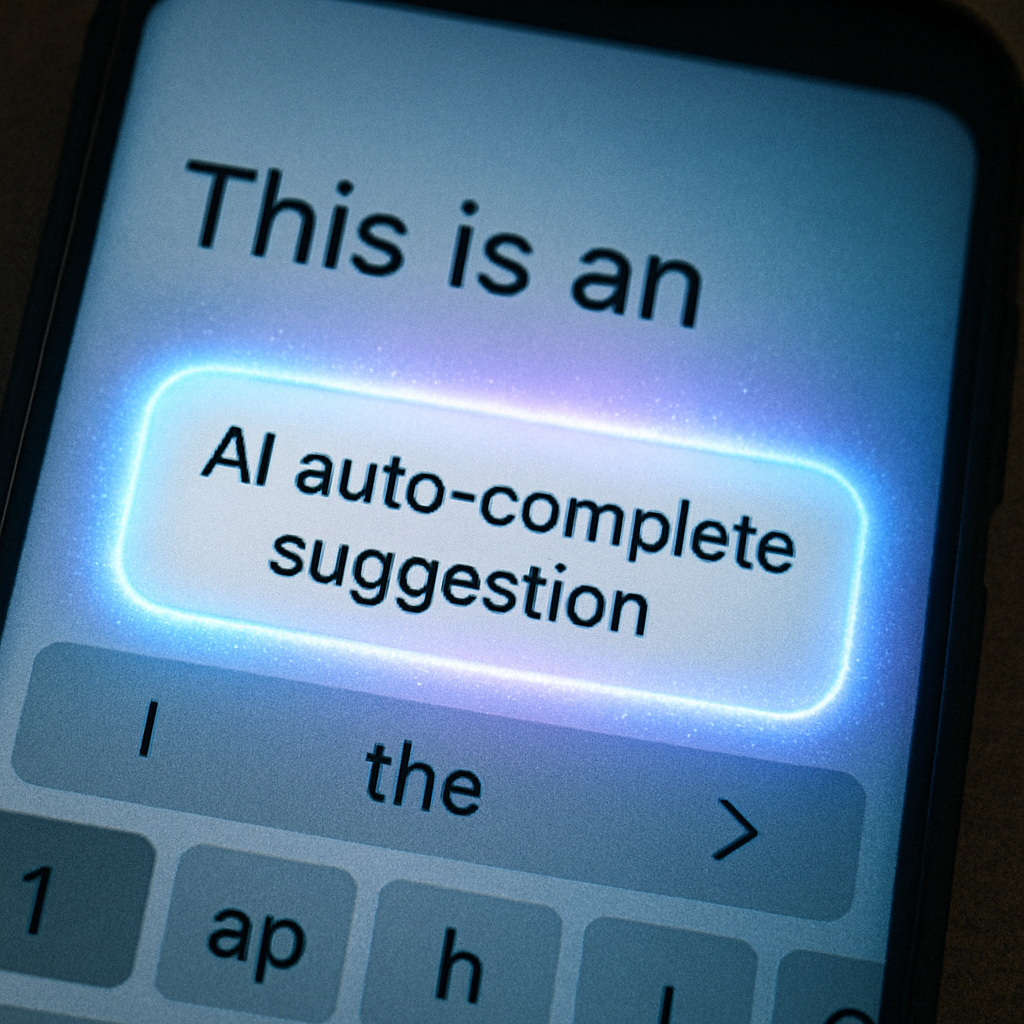
When you text a friend and your phone guesses the next word, it isn’t reading your mind; it’s simply recognizing patterns. Modern generative tools work exactly the same way, just on a massive scale. They act as super-powered auto-completes that predict what word should logically come next based on vast amounts of data.
Because these programs write so beautifully, we easily mistake their grammatical fluency for actual intelligence. However, predicting the next word doesn’t mean the computer understands the meaning behind it. This is why AI often makes “confident mistakes”—inventing fake historical dates or non-existent book quotes while sounding perfectly authoritative.
Parents frequently ask: does artificial intelligence hinder critical thinking skills? The answer lies in recognizing the profound gap between human-centered learning vs machine-generated content. Polished but shallow AI output lacks true comprehension, setting the stage for a much deeper crisis when we start outsourcing our mental struggles.
The Mental Muscle Crisis: Why Outsourcing the Struggle Kills Critical Thinking
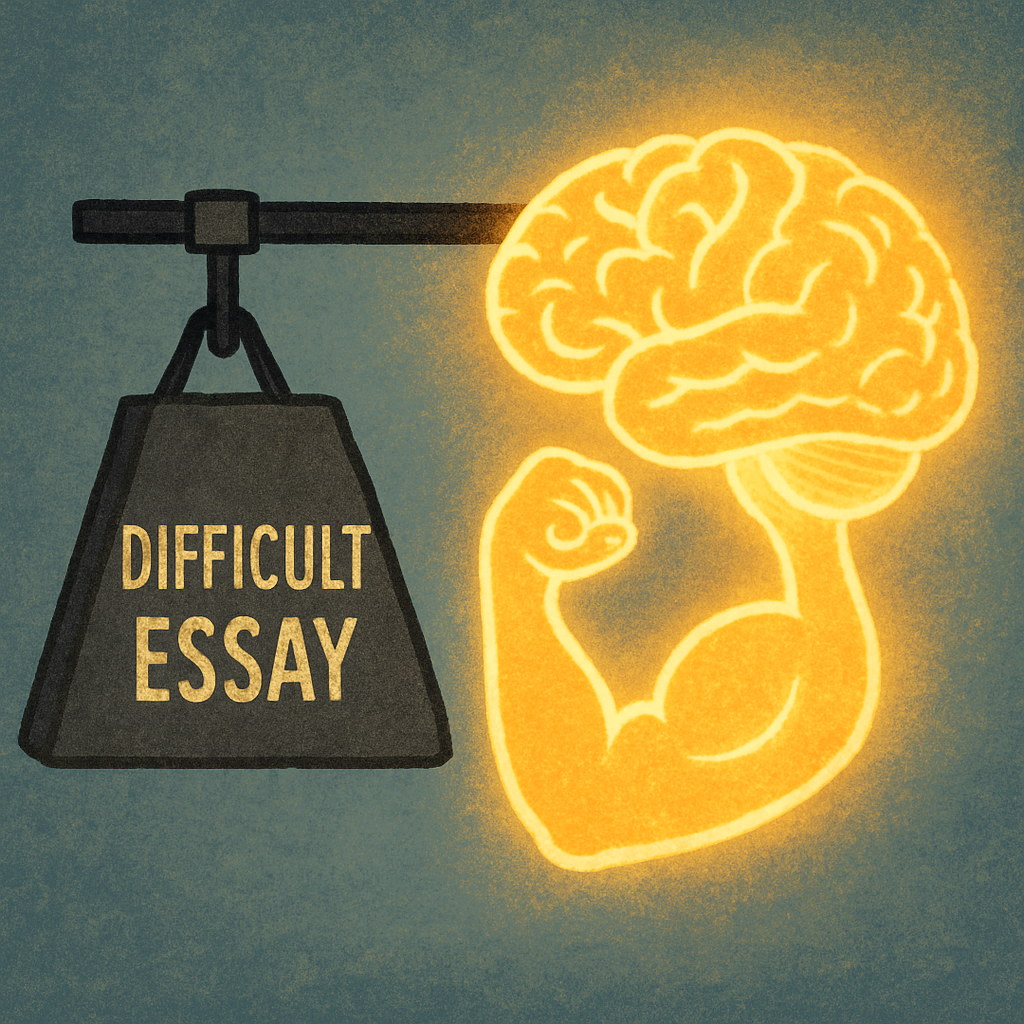
It’s tempting to celebrate a ten-minute history report, but that shortcut bypasses actual learning. Think of critical thinking as a mental muscle that only grows against resistance. When assessing the impact of AI on student cognitive development, the greatest danger isn’t cheating—it’s muscle atrophy.
The true value of any assignment lives in the “messy middle” of synthesizing facts and structuring logic. Handing these heavy-lifting tasks to a chatbot triggers cognitive offloading in the classroom. Like watching someone else lift weights at the gym, outsourcing this struggle leaves the human brain without its required workout.
Getting an ‘A’ on an AI-generated paper yields zero long-term knowledge retention. We must prioritize balancing automated assistance with independent problem solving to ensure real education occurs. A perfect grade means absolutely nothing if a student cannot mentally reconstruct their own argument the next day.
This loss of direction extends far beyond homework. What happens when we completely surrender our ability to navigate a logical conversation? This intellectual outsourcing leads straight into a broader dilemma about losing our internal compass.
Escaping the GPS Effect: How AI Can Make Us Lose Our Internal Compass of Logic

Most of us struggle to navigate unfamiliar neighborhoods without a digital map telling us where to turn. This “GPS Effect” occurs when our spatial awareness deteriorates because we constantly offload navigation to screens. When we ask an AI to structure a complex history report, we suffer the exact same cognitive loss with words, completely losing our internal compass of logic.
Blindly trusting a machine to outline our thoughts creates dangerous intellectual laziness. If a student never learns to map an argument independently, they cannot spot when a chatbot hallucinates bad information. Preventing this requires human-centered learning and AI-proof assessment strategies, guaranteeing that developing information literacy through AI verification remains a foundational classroom survival skill.
Before typing a prompt, you must plot your own intellectual destination so the AI remains the passenger, not the driver. Once independent navigation is secure, the AI transforms from an automated writer into an interactive tutor.
Turning the Bot into a Tutor: How to Use Socratic Prompting for Better Learning
We usually treat AI like a vending machine, inserting a topic and expecting a finished essay. Using ChatGPT as a learning tool rather than a shortcut requires flipping this dynamic. Instead of “output-driven” instructions demanding a final product, we must use “process-driven” prompts. This shift toward Socratic prompting vs direct answer generation forces the AI to ask us questions, transforming it into a tutor.
Encouraging higher-order thinking with generative tools means changing our daily inputs. Try replacing basic requests with these tutor-style prompts:
- “I am writing an essay on World War I. Ask me questions to help me brainstorm an outline.”
- “Review my rough draft. Do not rewrite it; just highlight where my logic is weak.”
- “Act as a debate opponent to test my thesis.”
Keeping humans in the driver’s seat ensures our mental muscles get a proper workout. The AI assists without stealing the cognitive struggle. Because machines still occasionally fail, verifying output and spotting confident mistakes remains an essential skill.
The Art of Verification: Why Spotting ‘Confident Mistakes’ is the New Essential Skill
Imagine a confident intern who occasionally invents facts. That is generative AI. Because these models predict words rather than retrieve facts, their output is merely a first draft requiring heavy human auditing. Developing an ‘Editor’s Eye’ to catch logic gaps is crucial to redefining academic integrity today.
Navigating the ethical considerations of AI in secondary education means treating chatbots as a starting point. Students must master the ‘Rule of Two’: always verify AI-generated claims using two independent sources. Developing information literacy through AI verification transforms passive readers into active detectives, catching the machine’s confident mistakes.
Blindly trusting these tools risks offloading our critical judgment entirely. Preventing this intellectual outsourcing requires intentional strategies to ensure the human mind keeps doing the heavy lifting.
Future-Proofing Your Mind: Three Questions to Ensure You’re Still Doing the Thinking
Navigating the future of homework requires prioritizing intellectual independence over simply getting the grade. Ensure the human mind remains the pilot, while AI merely assists the flight.
To promote metacognition in AI-assisted writing, implement a “Human-First” checklist. Ask these check-in questions to verify the mental muscle is still engaged:
- Can you explain the logic behind this paragraph?
- What did the AI get wrong in the first draft?
- What was the hardest part of this assignment for you to think through?
The real benefits of AI literacy in modern education stem from prioritizing the ability to explain “why” over the ability to show “what.” Embrace this collaboration so technology empowers our thinking rather than replacing it.