We’ve all felt a wave of panic while scrolling through headlines declaring that artificial intelligence is about to change everything. You are not alone in wondering if everyone else received a secret instruction manual. Rather than picturing a sci-fi robot coming for your job, think of this technology as a very fast, well-read calculator for words. Building a foundation for understanding ai starts by simply stepping away from the overwhelming hype.
Industry data reveals that people who adapt fastest treat these programs like eager, yet highly literal, digital interns. Developing your ai literacy requires distinguishing the underlying mathematical “brain” from the interface you actually use. The brain is just an engine matching patterns in the background, while understanding ai tools means learning how to type clear instructions into a basic chat box. You do not need a computer science degree to effectively delegate tasks.
Imagine instantly reclaiming thirty minutes a day normally spent drafting tricky emails or organizing family schedules. This guide will help you spot those practical, life-admin shortcuts and reframe how you interact with technology. Soon, you will discover exactly how to turn a confusing trend into an essential everyday helper.
How AI ‘Thinks’ Using the World’s Biggest Library
We’ve all marveled at how quickly a computer can draft a polite email or plan a weekend trip. But understanding ai doesn’t require a math degree; it just requires imagining the world’s biggest library. The engine behind these tools—a Large Language Model, which is simply a very well-read digital brain—has absorbed millions of books, articles, and websites as its “training data.”
If you have ever wondered how does machine learning work in everyday life, it relies on a process remarkably similar to the autocomplete feature on your smartphone. The tool builds its answers through three simple steps:
- Reading the library: Scanning billions of human sentences.
- Finding patterns: Noticing that the word “peanut” almost always precedes the word “butter.”
- Guessing the next word: Picking the most likely response based on probability.
Because large language models are essentially playing a highly advanced game of fill-in-the-blank, they will sometimes confidently share incorrect answers. They do not possess actual knowledge; they only perform pattern matching. Grasping why these mistakes happen limits our frustration and prepares us to distinguish between the two main types of artificial intelligence: predictive and generative.
Sorting the Magic: The Real Difference Between Predictive and Generative AI
We actually interact with our first category, Predictive AI, every single day without realizing it. Think of it as an expert selector. When Netflix recommends a new show or your GPS reroutes you around traffic, that is predictive AI at work. It sorts through past patterns to offer the best possible choice from things that already exist.
Moving beyond just selecting, recent technology brings us to the creators. Getting generative ai vs predictive ai explained is simple: predictive tools pick from existing options, while generative tools build entirely new things. If you need to forecast a grocery budget based on past receipts, predictive AI is best. But to draft a heartfelt birthday toast from scratch, you need generative AI.
Mastering this distinction makes understanding ai tools much less overwhelming because you can confidently match your daily task to the right technology. Now that you know whether you need a selector or a creator, you can confidently choose the right digital assistant for your specific workflow.
Picking Your Team: How ChatGPT, Gemini, and Claude Actually Differ for Daily Tasks
Looking at a blank screen, it’s easy to assume all AI assistants are identical. However, just like human coworkers, these systems have unique “model personalities” and areas of expertise. When doing an ai tools comparison, you save hours of frustration by assigning the right digital specialist to your specific task, rather than expecting one program to be perfect at everything.
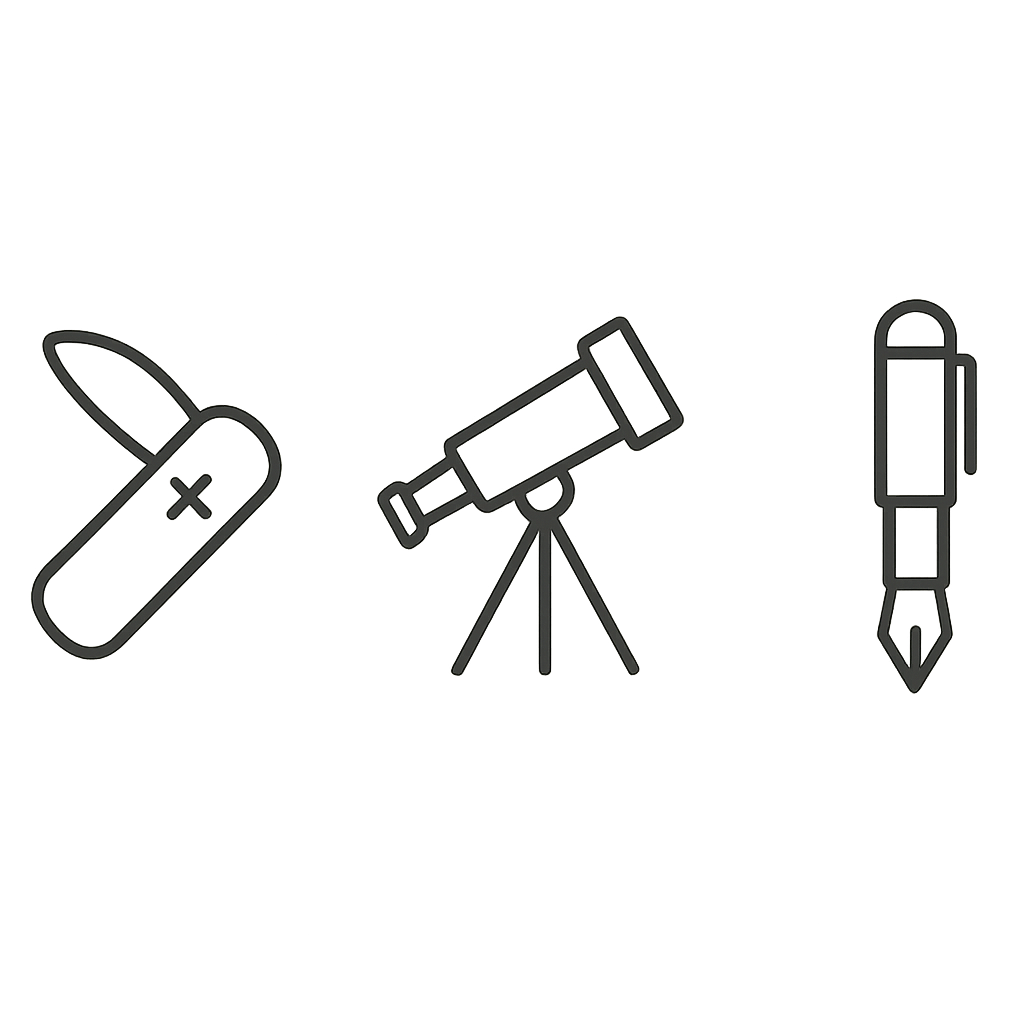
To make sense of the options, think of them as a specialized toolkit:
- ChatGPT (The Swiss Army Knife): Highly versatile and handles everyday administrative tasks smoothly, making it a great starting point.
- Gemini (The Telescope): Built to explore, it excels at web-connected research and quickly summarizing live information.
- Claude (The Fountain Pen): Shines with large documents and reads with the most natural, human-like writing style.
Choosing your champion depends entirely on today’s chore. If you are comparing chatgpt vs gemini vs claude for business or life admin, simply match the tool to the task. Use Claude to digest a massive fifty-page PDF manual, rely on Gemini to find live updates on a delayed flight, and turn to ChatGPT to brainstorm a weekly meal plan. Finding the top rated ai productivity tools for non-technical users is really just about knowing these underlying strengths.
Once you select the perfect assistant for the job, the next step is learning how to give it clear instructions. Even the smartest digital helper cannot read your mind, making prompt engineering—or clear communication—an essential skill to master.
The Art of the Ask: Why Prompt Engineering is Just Good Communication
We’ve all felt the frustration of receiving a robotic, unhelpful answer from an AI. This happens because we often treat these systems like mind readers instead of talented interns who simply lack common sense. The secret to fixing this isn’t learning to code; it’s “prompt engineering”—a fancy term for giving crystal-clear instructions. Applying prompt engineering best practices for better results instantly turns vague requests into precision guidance that hits the mark on the very first try.
To stop wasting time fixing easily avoidable errors, try using the simple C.T.F. Framework whenever you delegate a digital chore:
- Context: Share the background and persona. (“Act as a friendly neighborhood baker…”)
- Task: State exactly what you need done. (“…and write a short email to my customers…”)
- Format: Tell it exactly how the result should look. (“…using bullet points to list today’s specials.”)
Structuring your communication like this effortlessly reduces the time spent correcting AI mistakes by fifty percent. When paired with ai automation tools for workflow optimization, these precise instructions help you stop fighting technology and start directing it. Mastering this simple daily habit positions you to turn the AI skills gap into a professional advantage.
Future-Proofing Your Career: How to Turn the ‘AI Skills Gap’ Into Your Competitive Edge
It is normal to worry that machines might replace our jobs. Yet, workers using tools always replace those who don’t. You can start overcoming the ai skills gap in business by realizing AI needs a human boss. The future of work with human-ai collaboration means you direct the strategy while software handles the tedious tasks.
To succeed, you must master the essential ai skills for the modern workforce. Employers want problem-solvers who use a “human-in-the-loop” approach—where a person constantly guides and reviews the computer’s work. Focus on developing The 3 Non-Negotiable Skills:
- AI Literacy: Knowing which specific tool solves your daily problems.
- Critical Thinking (Fact-Checking): Treating AI outputs as rough drafts needing verification.
- Iteration: Improving initial results through clear, ongoing communication.
Listing these abilities on a resume proves you are an adaptable professional. Enjoying the benefits of ai literacy in career development simply means doing less busywork and more meaningful projects. With these skills clearly defined, establishing a personal learning path is the most effective next step.
Building Your Free Learning Path: Top Resources to Go from Beginner to Pro
Figuring out how to learn artificial intelligence for beginners often feels like navigating a massive, unorganized library. You do not need expensive bootcamps to stay relevant. Instead of paying for flashy “hype” courses, focus on building a personalized ai learning roadmap that takes just two hours a week.
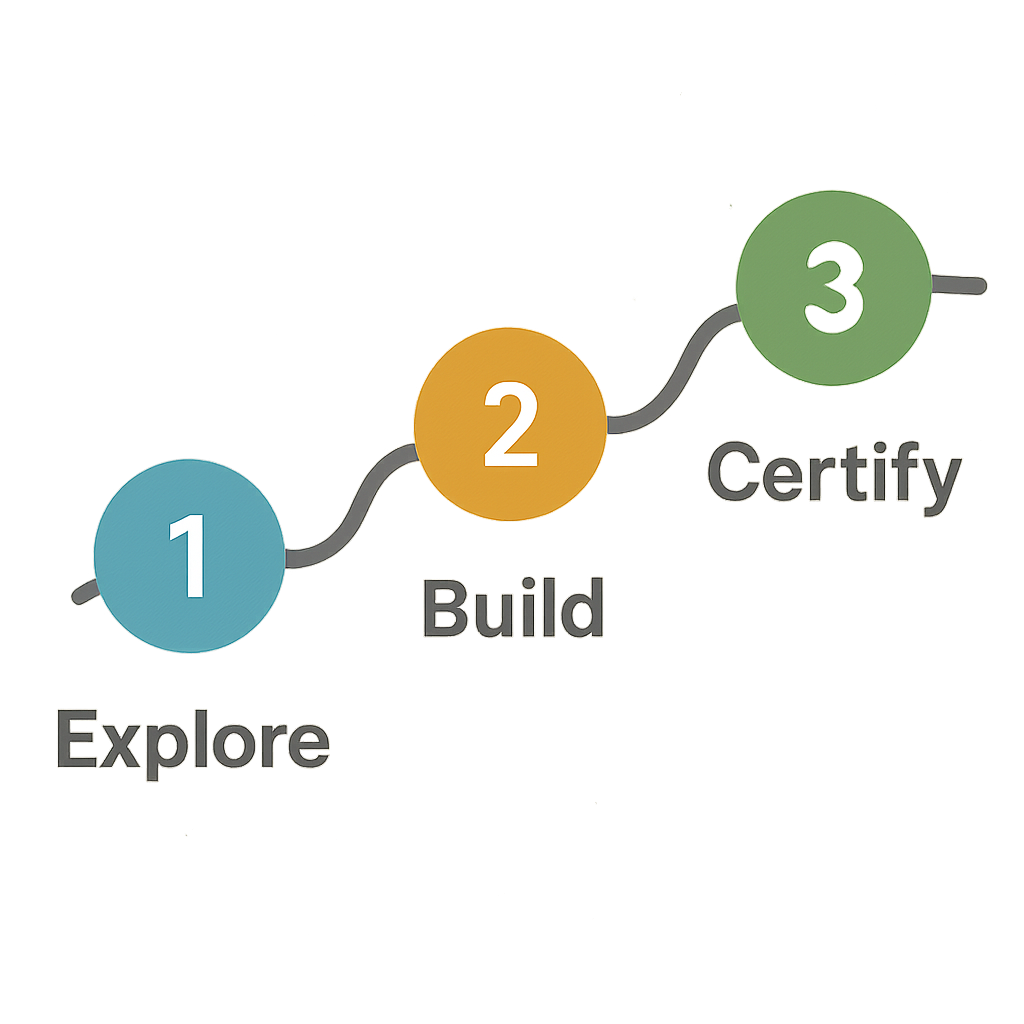
Earning credible credentials is the best way to prove your new abilities. Start your journey with these trusted, free online artificial intelligence certifications for professionals:
- Google’s AI for Everyone: Perfect for grasping basic concepts without the math.
- Microsoft’s AI School: Great for mastering everyday workplace productivity tools.
- DeepLearning.AI’s beginner courses: Ideal for understanding how these helpful systems actually think.
Once you claim your first badge, you are ready to put these concepts into practical use.
Your Monday Morning AI Action Plan: Moving from Learning to Doing
Before today, artificial intelligence might have felt like overwhelming science fiction. Now, you hold the keys to a tireless digital assistant. Imagine taking a messy, one-hour meeting and generating a clear three-point summary in ten seconds. That is the moment this technology transforms from intimidating to absolutely essential.
Your Monday morning plan starts with a simple commitment: choose one low-stakes AI experiment to try within the next 24 hours, like drafting an email. As you build your foundational AI skills and practical tool knowledge, block out five minutes weekly to skim one new update. This steady pace prevents information overload while keeping you mindful of ethical considerations in artificial intelligence implementation.
You no longer need to fear being left behind. Step forward with confidence, ready to embrace these systems as everyday collaborators that give you back your most valuable resource: your time.