Remember the panic when pocket calculators first entered math classes, sparking fears that students would forget basic arithmetic? Today, educators expect artificial intelligence to create a similar, yet profoundly more impactful, crossroads in our schools where the “calculator” now drafts essays and maps out personalized learning plans.
You probably use standard digital tools like Google to hunt down existing web pages, but Generative AI does something entirely different. Rather than merely finding links, it acts as a digital super-assistant that creates fresh text by predicting the most likely next word based on millions of examples. As this technology spreads, parents naturally ask: what exactly is AI, and how will it play a role in the education system?
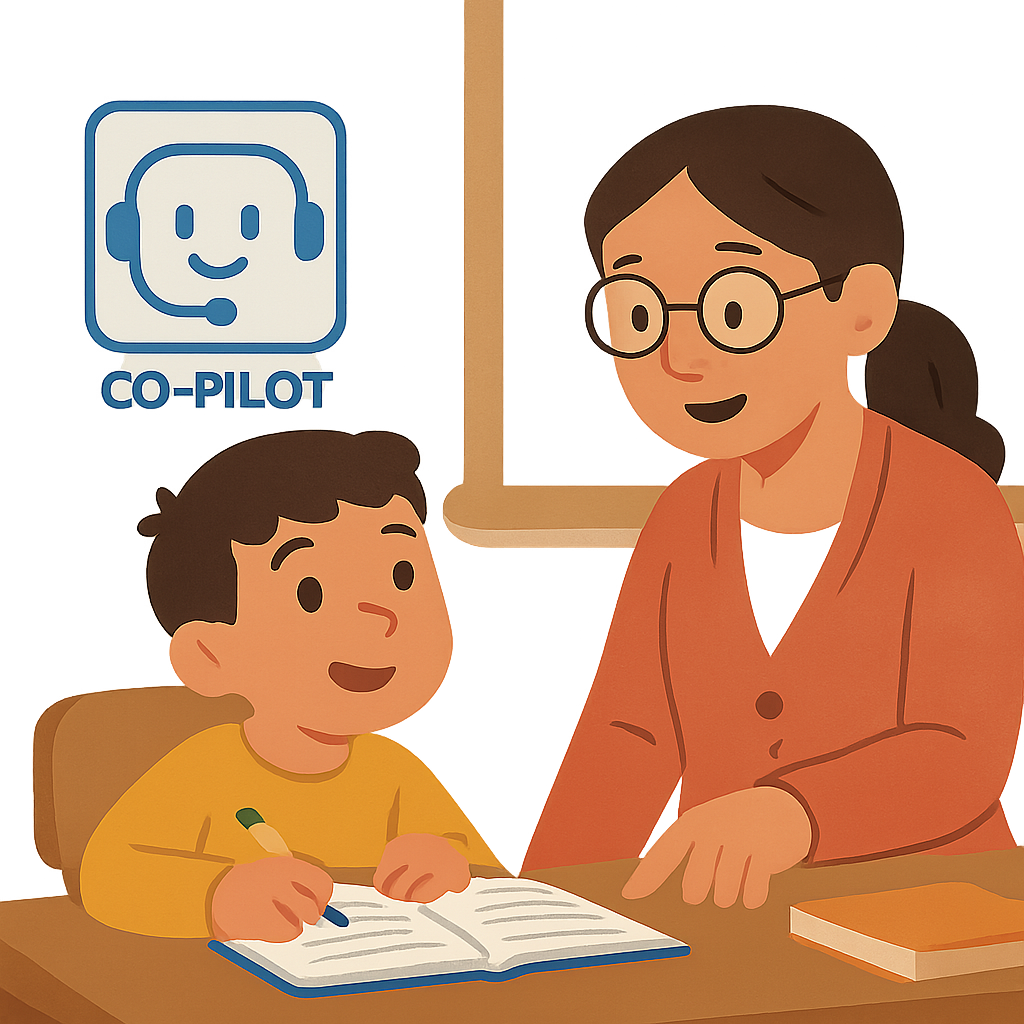
Addressing the elephant in the room immediately helps calm natural anxieties, because this software is not a sentient robot plotting to replace human teachers. According to early classroom data, adopting a “co-pilot” mindset completely reshapes the conversation around artificial intelligence vs traditional teaching methods. The human teacher remains the expert pilot guiding the room, while the AI handles exhausting background work to keep the flight smooth.
Historians frequently compare this digital shift to the invention of the printing press because it permanently alters how students access customized help. Ultimately, successfully navigating AI in education focuses on saving teachers hours of paperwork fatigue so they can spend that reclaimed time directly mentoring your child.
Why AI Isn’t a ‘Robot’ but a Master Pattern Finder
You might picture a walking, talking robot when you hear the term artificial intelligence, but the reality is much less like science fiction and much more like a master organizer. When defining AI, it helps to think of it not as a brain that “thinks,” but as an incredibly fast software program designed to spot trends. Just like a librarian knows exactly where to find a book based on its genre and author, AI sifts through massive amounts of information to find connections, replacing the fear of a “black box” with a highly efficient game of connect-the-dots.
Comparing human learning to computer learning reveals the practical role of neural networks in educational software. A neural network is simply a digital system inspired by the human brain that learns by example rather than being strictly programmed. Consider these three steps:
- Exposure: A child sees a few pictures of a cat and learns to recognize whiskers and pointy ears.
- Data Training: An AI is fed millions of cat pictures until it mathematically maps out what those images have in common.
- Recognition: The child says “kitty” when they see a real cat, while the AI successfully identifies a new cat picture based on the visual patterns it memorized.
Because it relies so heavily on those examples, this technology doesn’t actually “know” facts the way a human teacher does; it simply predicts the most logical next step. If you are integrating machine learning tools in the classroom, the system needs high-quality student data to make accurate predictions. When an AI reviews thousands of examples of students struggling with fractions, it learns the common stumbling blocks, but flawed data will lead to flawed advice.
Once a system successfully understands these patterns, it becomes a powerful co-pilot for educators. By instantly recognizing exactly where a student is getting stuck, the software shifts from being a basic calculator to a dynamic guide. This ability to anticipate a student’s needs transforms the software into a personalized GPS for learning.
A GPS for Learning: Personalized Paths for K-12 Students
Every parent or teacher knows that thirty children in a classroom master subjects at thirty different speeds. Traditional education often forces everyone onto the same highway, regardless of whether they need to slow down to grasp a tricky concept or speed up because they already understand it. Imagine if, instead of a static map, educational software worked like your phone’s navigation app.

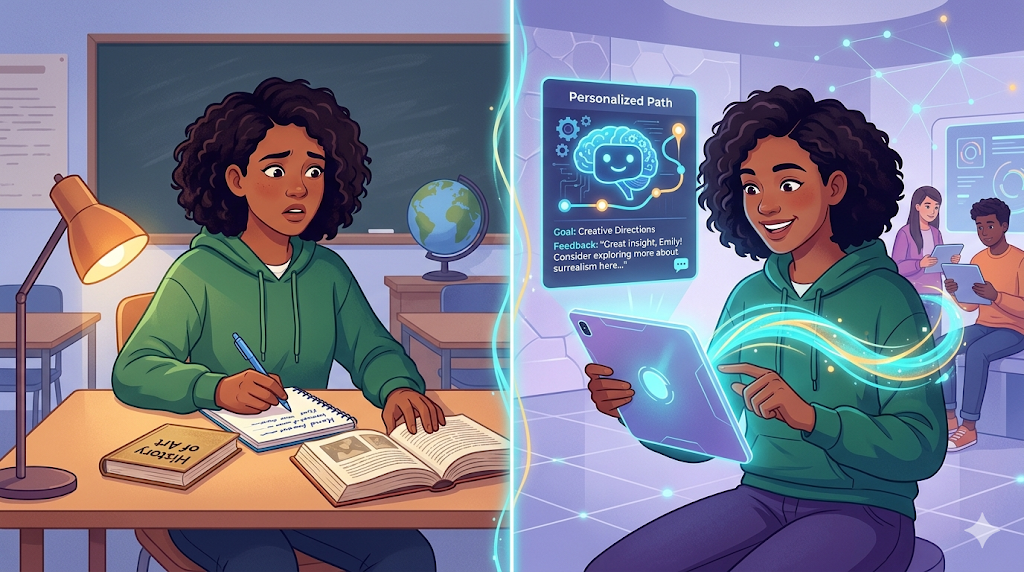
This is where education shifts away from a one-size-fits-all textbook toward adaptive learning. Instead of presenting every child with the exact same chapters, the software creates personalized learning paths for K-12 students based on their actual progress. If a child breezes through basic multiplication, the program instantly adjusts to offer more challenging word problems, keeping them engaged rather than bored.
The true value appears when a student takes a wrong turn and reveals a hidden knowledge gap. One of the greatest benefits of AI-driven adaptive learning platforms is their ability to perform real-time rerouting before a child becomes frustrated. Just like your GPS recalculates when you miss an exit, the software senses if a student is struggling with fractions and automatically loops back to review basic division, ensuring the foundation is solid before moving forward.
Beyond adjusting the daily lesson plan, this technology brings a highly patient helper right into your living room. Families are increasingly relying on virtual tutors for 24/7 student support to help with late-night homework panic. These tools do not just hand over the correct answers; they act as an always-awake coach that prompts the student with gentle hints, making sure learning continues long after the school day ends.
Having a tireless, personalized guide to help master the basics is a massive relief for both educators and parents. However, this technology takes on an entirely different role when we move from practicing math problems to writing history essays. As these tools become more capable of generating text, we must confront new realities about how students create original work.
The Integrity Challenge: Using Generative AI as a Super-Assistant Without Cheating
When copying an encyclopedia page was the ultimate homework sin, academic honesty seemed straightforward. Today, the conversation has fundamentally shifted as tools like ChatGPT can write an entire essay in seconds. Parents and educators naturally worry about how generative AI affects academic integrity, wondering if these systems simply offer a high-tech way to cheat. The answer lies in shifting our perspective from viewing AI as a ghostwriter to treating it like a “super-assistant” that helps organize thoughts rather than doing the thinking for them.
Establishing boundaries between helpful augmentation and outright plagiarism is the first step toward responsible use. When students treat the software as a collaborative partner rather than a shortcut, they unlock its true educational value. Here are four ways students can ethically use AI for their homework:
- Brainstorming: Generating fresh ideas for a difficult writing prompt.
- Outlining: Creating structured frameworks to organize a messy draft.
- Simplifying: Explaining complex historical events in easier-to-understand terms.
- Testing: Generating practice questions to prepare for an upcoming exam.
Beyond simply answering questions, these platforms are becoming sophisticated writing coaches. Schools are increasingly adopting automated feedback systems for student writing, which act much like a digital editor. Instead of fixing a sentence for the student, the system highlights weak arguments or repetitive grammar, prompting the child to revise their own work and build stronger communication skills over time.
Teaching a child to use these tools responsibly isn’t just about passing history class; it is about fostering digital literacy in the age of automation. Knowing how to guide an AI, verify its claims, and refine its output is quickly becoming a mandatory skill for the modern workplace.
Freeing the Human Teacher: How Administrative Automation Ends Paperwork Fatigue
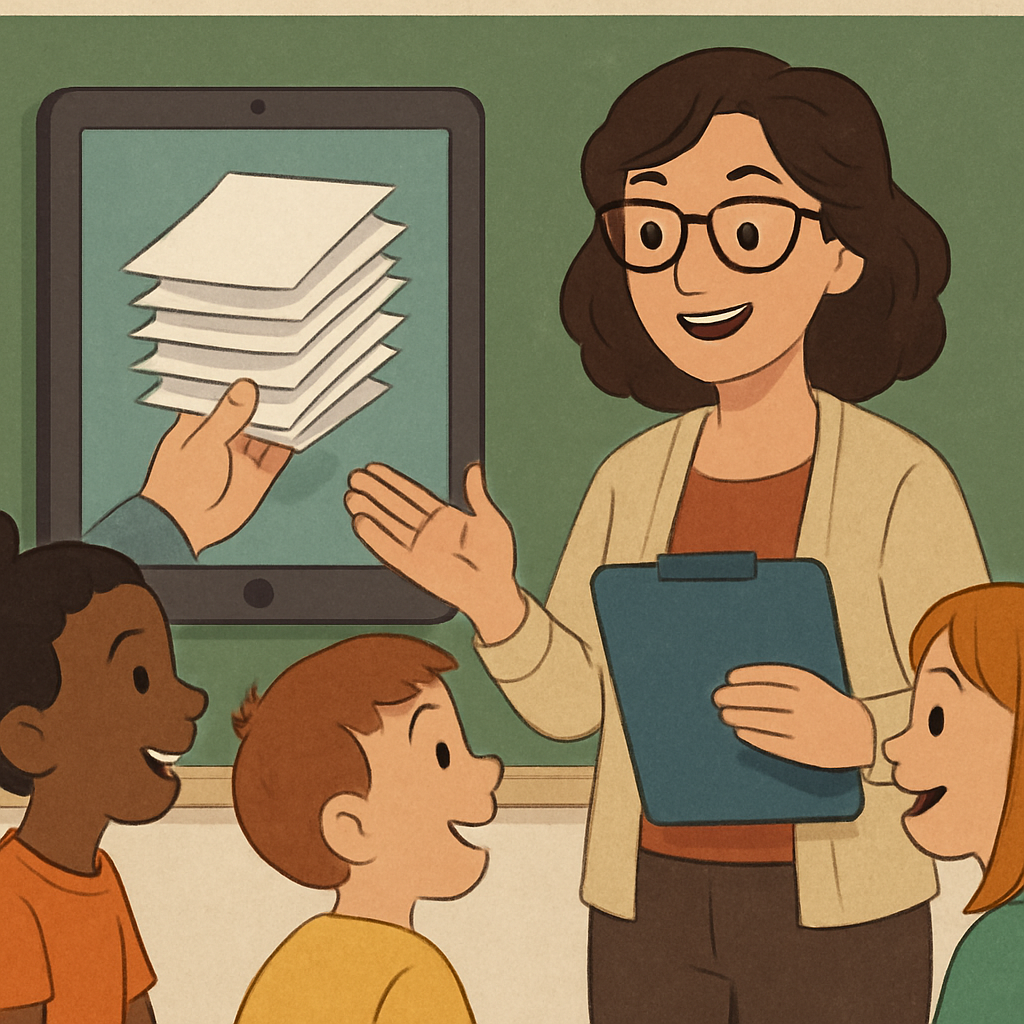
Most of us picture teachers standing at a whiteboard, but much of their real work happens long after the final bell rings. Between grading weekly quizzes, drafting emails, and writing lesson plans, heavy paperwork often causes severe burnout. By reducing educator workload with administrative automation, AI steps in to handle these repetitive chores so educators can actually focus on teaching rather than filing.
This technological shift turns the standard classroom computer into a proactive assistant. Think of how your smartphone automatically sorts a chaotic gallery of photos into neat, searchable albums; AI in schools does something similar for daily teaching tasks. Software can rapidly generate a week’s worth of interactive history quizzes or instantly translate a school newsletter for non-English-speaking parents.
Beyond everyday scheduling, these platforms function as a crucial early warning system by using predictive analytics for identifying at-risk students. Just as a digital map spots traffic patterns and recalculates your route before you hit a jam, the software looks for subtle trends in a student’s attendance, engagement, and quiz scores. If a child starts slipping on minor assignments, the system flags the issue so teachers can intervene and offer support long before a failing grade occurs.
Outsourcing this exhaustion allows educators to reclaim their most valuable resource, giving them time back for genuine connection. When a teacher isn’t buried under a mountain of paperwork, they have the emotional bandwidth to pull up a chair and truly mentor a struggling child.
The Human Shield: Why Neural Networks Won’t Replace Teacher Empathy
It is natural to worry about rapid technological changes in our classrooms, leading many parents to ask: will AI replace human teachers in the future? The short answer is no, because teaching is fundamentally a relationship, not just a transaction of facts. While software can calculate a math grade instantly, it lacks Emotional Intelligence (EQ). An algorithm cannot look at a frustrated student and realize they are exhausted from a bad night’s sleep, nor can it offer a comforting smile to build their confidence.
Schools are adopting a “human-in-the-loop” approach to manage this, meaning a real person always reviews the computer’s suggestions before acting on them. This setup allows classrooms to provide highly accessible education through AI assistive technologies—like real-time captions for hearing-impaired students or simplified text for struggling readers—while keeping the teacher in the driver’s seat. Despite advanced software, we rely on educators for three things AI can never do:
- Empathy: Sensing when a student needs a mental break rather than another practice test.
- Ethical Judgment: Understanding the cultural and emotional nuance behind a child’s behavior.
- Inspiration: Igniting a lifelong passion for learning through shared human enthusiasm.
Keeping humans in control is also our best defense against the complex ethical implications of student data privacy in AI. Just as you wouldn’t want a banking app sharing your financial details, students need their learning records protected. Because AI requires massive amounts of information to find patterns, schools must set strict boundaries to ensure a child’s learning struggles and personal details remain completely confidential. Establishing clear ethical boundaries ensures technology remains a tool for empowerment rather than a liability.
Building Your AI Action Plan: How to Prepare for the Future of Schools Today
Parents and educators no longer need to view artificial intelligence as a mysterious replacement for human teachers. Instead, you can now confidently approach this technology as a powerful co-pilot that shifts the student experience away from rote memorization and toward deep, critical inquiry.
Take an active role by engaging with educators and tracking AI education policy in your district. You can start meaningful conversations by asking your school how they train teachers on these new tools, what guidelines exist to balance academic integrity with creative exploration, and how they actively protect student privacy.
To experience this transformation firsthand, try using a generative chatbot to explain a complex hobby to you. Notice how it adapts to your questions and pacing in real-time. Exploring these tools together at home is an effective, practical method for fostering digital literacy, ensuring your family confidently directs the technology rather than being directed by it.