A Free Online Introduction to Artificial Intelligence for Non-Experts
When you opened your inbox today and didn’t see a single lottery scam, you were witnessing a powerful digital assistant at work. This isn’t magic; it is simply a program that has learned to spot the patterns of junk mail based on millions of previous examples. Just as a librarian memorizes where specific genres belong on the shelves, AI uses machine learning—a method for computers to improve through practice—to sort your digital life.

You might worry that understanding this technology requires complex coding skills, but grasping the basics is surprisingly accessible. In fact, many industry experts suggest that clear logic is often more important than advanced math when starting out. Designed to help you confidently use tools that are likely already in your pocket, this guide moves you from confusion to clarity without the technical headache.
Why AI is Just a Very Fast Recipe Follower (Not a Thinking Brain)
When you bake a cake, you follow a specific set of instructions: mix flour, add eggs, and bake at 350 degrees to get a specific result. In the world of technology, this list of steps is called an algorithm. It isn’t a mysterious digital brain; it is simply a very strict recipe that a computer follows to solve a problem. The only difference between your kitchen and a computer is speed. While you might take an hour to bake one cake, AI can follow that recipe millions of times in a second to find the fastest route home or filter out spam emails.
Most people imagine robots from movies that can think, feel, and hold conversations on any topic, but that is science fiction. We currently live in the age of “Narrow AI.” Think of it like a specialized kitchen appliance rather than a master chef:
- Narrow AI: Like a toaster, it does one thing perfectly (like recommending a song on Spotify) but cannot do anything else (like driving a car).
- General AI: Like a human brain, it could handle any task you throw at it. This does not exist yet.
Crucially, the software doesn’t actually “understand” what it is doing. It doesn’t know why you like action movies; it just notices you watch them often and follows the instructions to show you more. This lack of awareness is a core principle of data science and AI: the system is a map-reader, not a traveler. To build that map, the computer first needs to go to school, which leads us to how a digital student reads the internet to learn your habits.
How a Digital Student Reads the Internet to Learn Your Habits
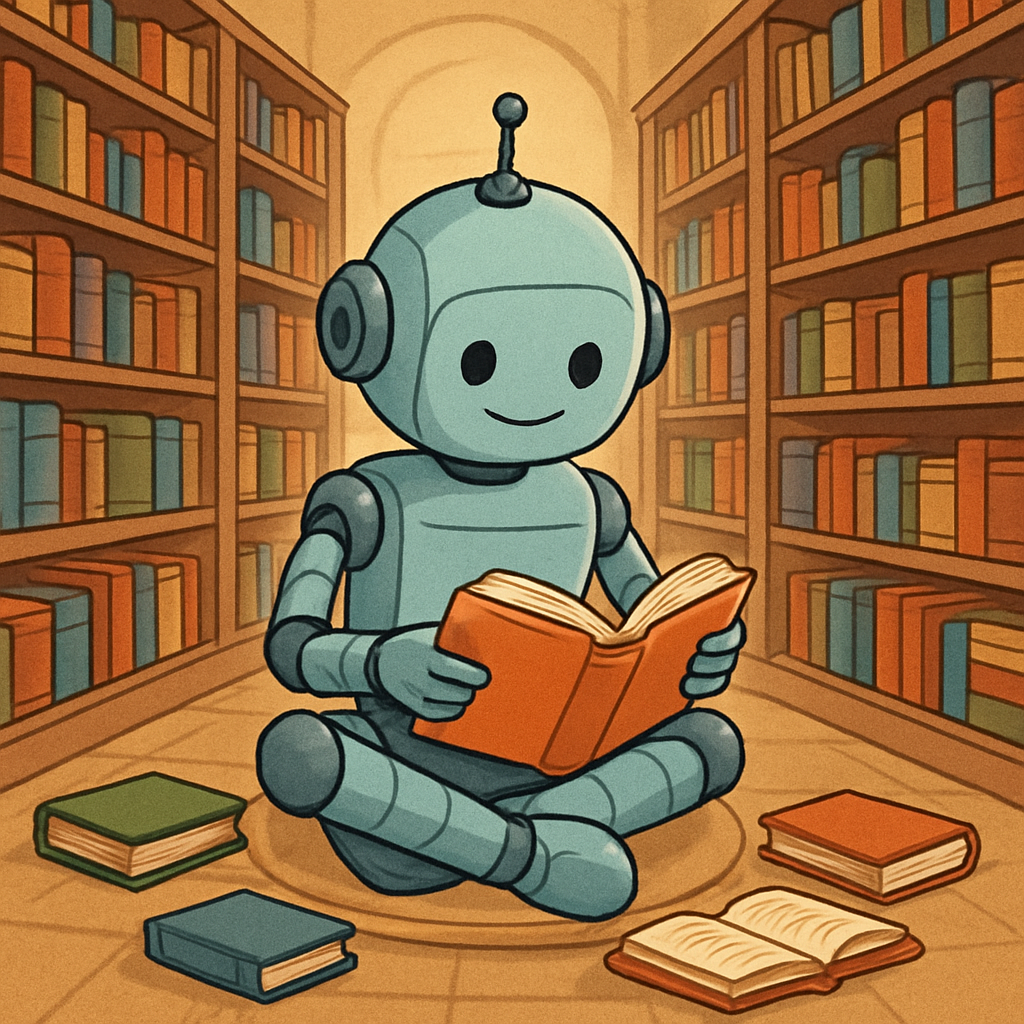
Imagine locking a student in a massive library and telling them to read every book to learn how sentences work. This is essentially how AI is built. Before a computer can answer questions, it goes through a process called “training,” where it processes huge amounts of text, images, or numbers. This collection of information is called “training data,” and it determines the system’s intelligence. If the library only contained cookbooks, the student would only know how to bake, proving that the quality of the reading material matters just as much as the student’s reading speed.
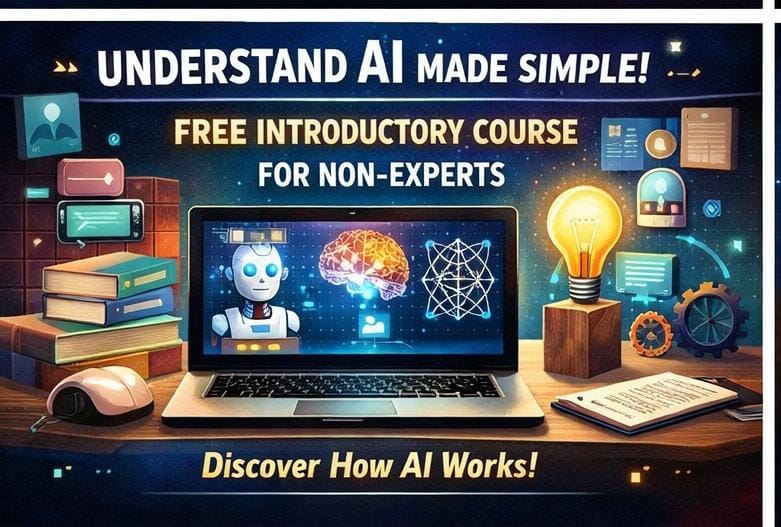
Instead of memorizing facts like a human, the computer acts as a relentless pattern hunter. It notices that the word “Happy” is usually followed by “Birthday,” or that emails with “urgent” in all caps are often scams. Technical guides on machine learning vs deep learning simply describe the depth of this pattern matching. Machine learning spots simple trends, while deep learning notices complex layers, but both rely entirely on the patterns hidden within that initial library.
All of this intense study allows the software to make a statistical guess about the future. It isn’t generating creative ideas; it is predicting the most likely outcome based on what it read in the past. This leads directly to a tool you likely use every day. While free self-paced AI literacy training might start with complex theory, the best example is actually in your pocket: your phone’s autocomplete is just a smaller version of this exact technology.
Turning Your Phone’s Autocomplete Into a Personal Assistant
Think about how your smartphone suggests the next word in a text message. Tools like ChatGPT are built on that exact same principle, just scaled up massively. We call these Large Language Models (LLMs), but you can think of them as super-powered autocomplete engines that have read the entire internet. Instead of just guessing that “birthday” follows “happy,” they predict entire essays, recipes, or emails word by word based on the patterns they studied in that massive digital library.
Because these systems are guessing based on probability rather than checking facts, they can sometimes confidently state things that aren’t true—a glitch experts call “hallucinations.” To keep the AI on track and get useful results while understanding generative AI basics, you need to be the director. Try this simple three-part formula to control the output:
- Context: Who is the AI acting as? (e.g., “You are a travel agent.”)
- Task: What specific thing should it do? (e.g., “List five cheap hotels in Paris.”)
- Format: How should the answer look? (e.g., “Use bullet points.”)
Mastering this formula changes the software from a novelty toy into a serious productivity engine. You are no longer hoping for magic; you are programming a predictable outcome using plain English. Now that you are demystifying large language models like ChatGPT by seeing them as pattern-matchers rather than sci-fi brains, you are ready to apply this to your actual schedule.
Save One Hour Every Day: Three AI Tools You Can Use Tonight
You likely spend hours every week doing work that requires more patience than creativity, such as sifting through long emails or staring at a blank page trying to write a difficult message. These tasks drain your mental battery, which is why learning how to use AI tools for daily productivity is less about technical skill and more about lifestyle design. You are not replacing yourself; you are effectively hiring a tireless digital intern to handle the rough drafts while you step in to polish the final result.
Consider the last time you received a dense PDF, a confusing contract, or a long chain of emails that you needed to understand immediately. Instead of reading every single word, you can copy that text into a chatbot and ask it to “summarize the key points in three simple sentences.” The system analyzes the language patterns and extracts the main ideas in seconds, allowing you to grasp the “what” and “why” without getting bogged down in the details.
Beyond summarizing, these tools excel at curing decision fatigue for low-stakes tasks like meal planning or finding gift ideas. By asking the AI to “suggest five dinner recipes based on chicken and rice that take under 20 minutes,” you skip the brainstorming phase and go straight to cooking. While these seem like small domestic wins, they mirror real-world applications of AI in business, where professionals use these exact same prompting techniques to draft meeting agendas or generate marketing slogans.
Identifying these repetitive, pattern-based chores is the first step toward reclaiming your schedule, but handing over tasks requires a certain level of trust. Since these “digital interns” can sometimes be confident but incorrect, you must know when to verify their work.
The Truth About AI Mistakes and Your Job Security
Trusting a digital assistant blindly is risky because AI learns from human history, and history is rarely perfect. Think of the technology behind chatbots not as a brain, but as a mirror reflecting the world. If the mirror has a curve or a smudge, the reflection you see will be distorted. When experts discuss the ethical implications of AI in everyday life, they usually mean the software is repeating the stereotypes or bad habits it found in its training data, not that it has developed a personality of its own.
Treating these tools as a “co-pilot” rather than an autopilot ensures you catch these distortions before they become problems. Since the system is designed to sound confident even when it is wrong—a phenomenon known as “hallucinating”—you must act as the verifier. Be skeptical if you see:
- Facts or quotes that appear without a clear source.
- Assumptions that lean heavily on social stereotypes.
- Math or dates that feel slightly off upon a second look.
Understanding these limitations and risks of artificial intelligence is exactly what secures your value in the workplace. AI provides the raw materials, but it lacks human judgment, empathy, and strategy. You are not being replaced by a machine; you are being promoted to the role of “editor,” responsible for directing a very fast but occasionally confused assistant. To master this new role, you need a structured way to practice.
Your Free 6-Week Path to AI Literacy Without Writing Code
You might worry that becoming “AI literate” requires returning to university or suffering through advanced calculus, but the reality is much simpler. Modern free online AI introductions are designed for curious people, not computer scientists, focusing on concepts rather than complex code. By dedicating just two hours a week—about the length of a movie—you can grasp the fundamentals in under six weeks, gaining the vocabulary to discuss the technology confidently.
Finding reliable information is the next step, as not all internet guides are created equal. We have selected the best free AI courses for non-technical people that strip away the jargon and offer certificates to prove your new skills:
- Elements of AI: A visually engaging guide to how AI systems actually work, created by the University of Helsinki.
- AI for Everyone: A business-focused breakdown of AI for beginners, teaching you how to spot opportunities in your own job.
- Google’s Introduction to Generative AI: A quick, bite-sized look at the specific technology behind tools like ChatGPT.
Once you have chosen your course, you need a strategy to apply what you learn.
Your Three-Step Action Plan to Move from AI Observer to Confident User
You no longer need to view technology as magic; you now know the secret. AI is just a hyper-fast recipe follower using a massive library of data. This shift—from fearing a digital brain to directing a tool—is your key to navigating the future of AI in modern society. Taking an online course transforms you from a nervous spectator into a confident participant. You realize that you are the chef, and the technology is simply a powerful appliance waiting for your command.
Break the hesitation barrier right now with a five-minute experiment. Open a free chatbot and ask it to explain your favorite hobby in the style of a pirate. Watch how it predicts the next “Arrgh” based on the patterns it has read. It is entertaining, but it proves the fundamental lesson: AI doesn’t think, it matches. Now that you see the strings behind the puppet, start your first course module today.