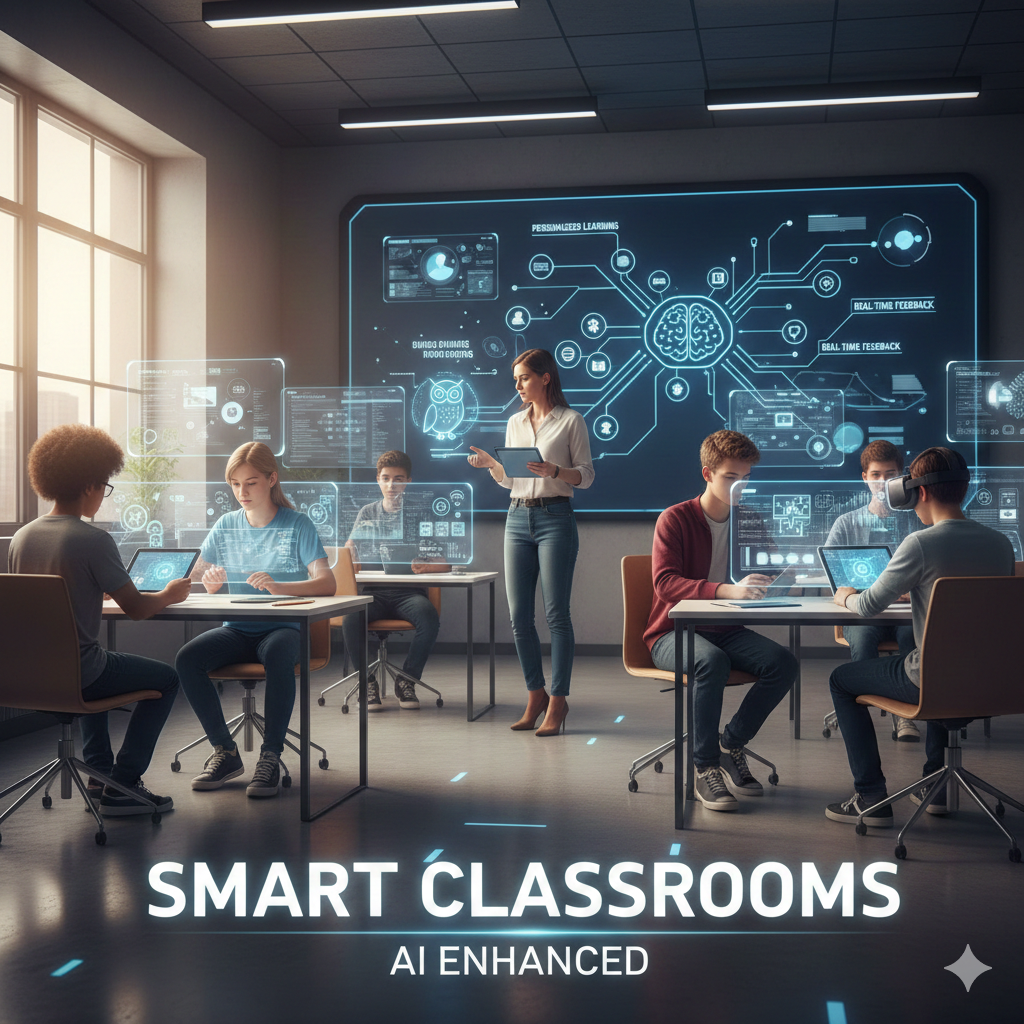
Smart classrooms are transforming modern education by integrating Artificial Intelligence (AI) into everyday teaching and learning. As traditional classrooms struggle to meet diverse student needs, AI-powered technologies are creating interactive, personalized, and engaging learning environments. From adaptive learning platforms to real-time feedback tools, AI is redefining how students engage with content, teachers, and peers.
Personalized Learning Experiences
One of the biggest advantages of AI in smart classrooms is personalized learning. AI-driven systems analyze student performance, learning pace, and preferences to tailor content accordingly. Instead of a one-size-fits-all approach, students receive customized lessons, quizzes, and resources that match their individual needs. This personalization keeps learners motivated and actively engaged, especially those who struggle in conventional classroom settings.
Interactive and Immersive Learning
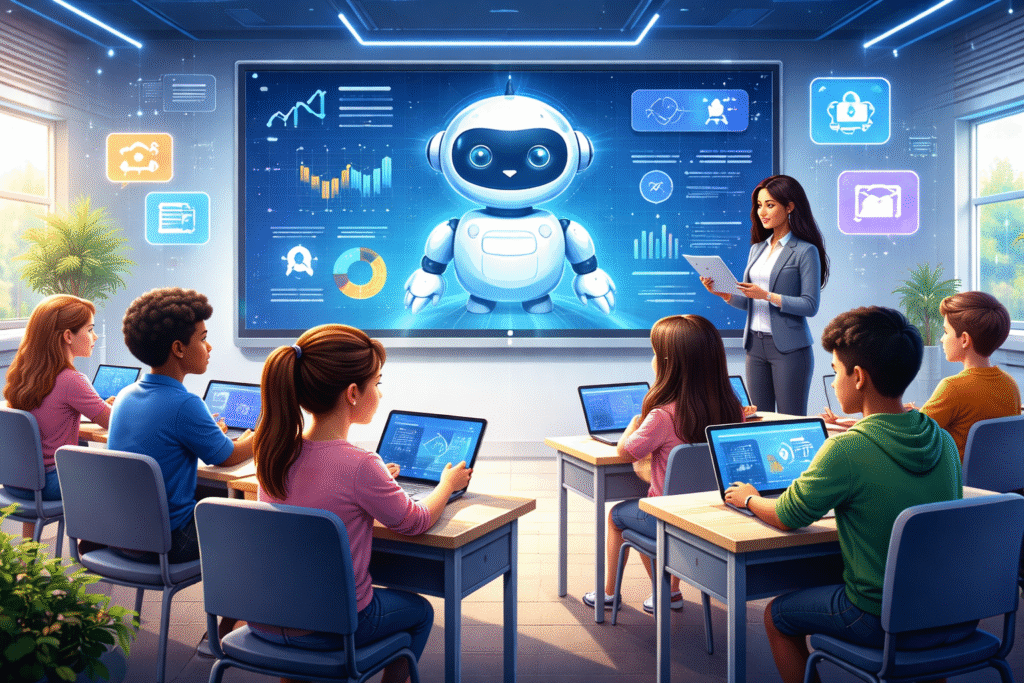
AI enhances student engagement through interactive tools such as virtual assistants, intelligent tutoring systems, and AI-powered simulations. These technologies encourage active participation rather than passive listening. For example, AI chatbots can answer student questions instantly, while virtual reality (VR) powered by AI allows learners to explore complex concepts through immersive experiences. Such interaction makes learning more enjoyable and memorable.
Real-Time Feedback and Assessment
In smart classrooms, AI enables real-time assessment and feedback. Teachers no longer have to wait for exams to evaluate student progress. AI tools track participation, comprehension, and performance continuously, providing instant feedback to both students and educators. This immediate insight helps students correct mistakes early and stay engaged, while teachers can adjust their teaching strategies effectively.
Enhanced Teacher Support
AI does not replace teachers; instead, it supports them. By automating administrative tasks like attendance, grading, and performance tracking, AI allows educators to focus more on student interaction and engagement. Teachers can use AI-generated insights to identify learning gaps and provide targeted support, creating a more responsive classroom environment.
Future of Student Engagement
As AI continues to evolve, smart classrooms will become even more adaptive and inclusive. Predictive analytics, emotion recognition, and intelligent content delivery will further enhance student engagement. Educational institutions adopting AI-driven smart classrooms are better equipped to prepare students for a technology-driven future