
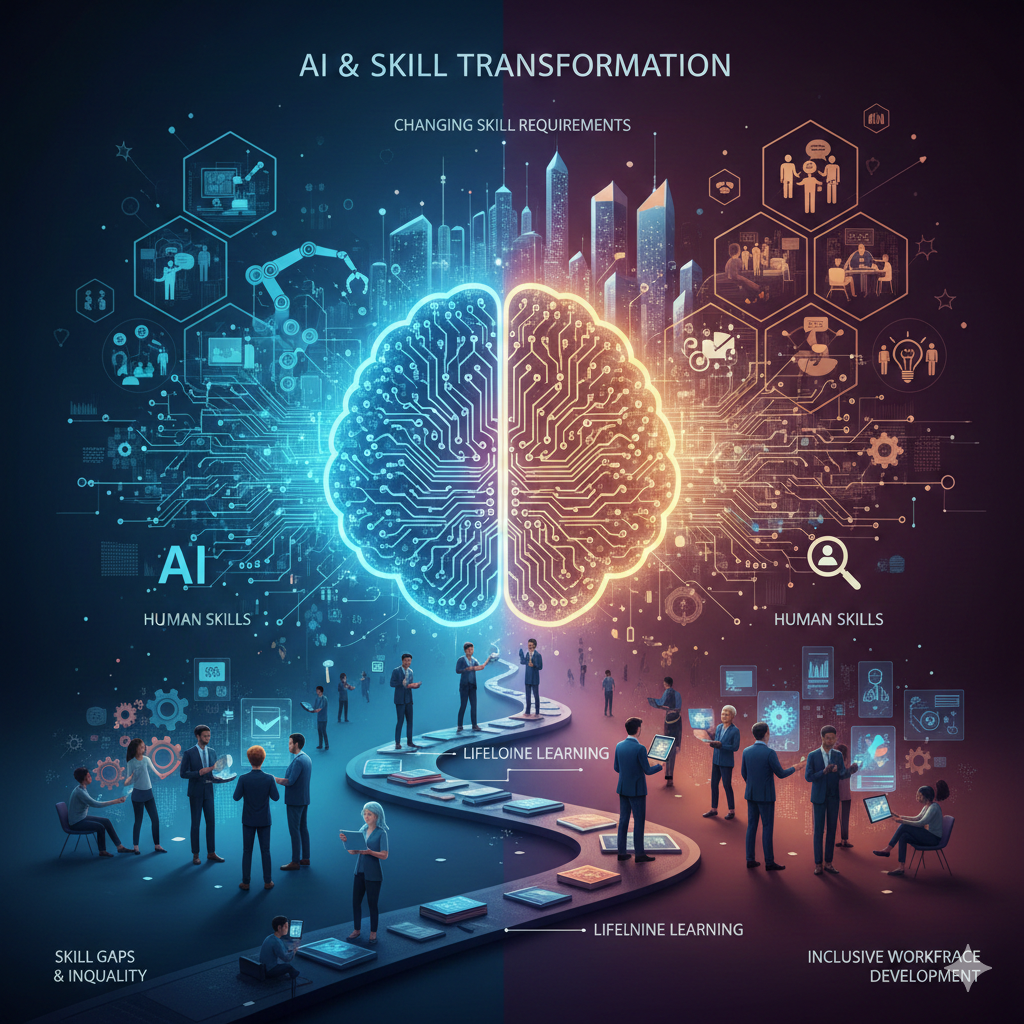
AI and skill transformation are redefining the global workforce as artificial intelligence reshapes how people work, learn, and adapt to changing professional demands. With the growing use of automation, machine learning, and intelligent systems, traditional job roles are evolving, and new skill requirements are emerging across sectors.
Changing Skill Requirements
AI-driven technologies are automating routine and repetitive tasks, increasing the demand for advanced cognitive and digital skills. Skills such as data literacy, basic AI understanding, and digital problem-solving are becoming essential in both technical and non-technical fields. At the same time, human-centered skills—critical thinking, creativity, communication, and emotional intelligence—are gaining importance because they complement AI systems rather than compete with them.
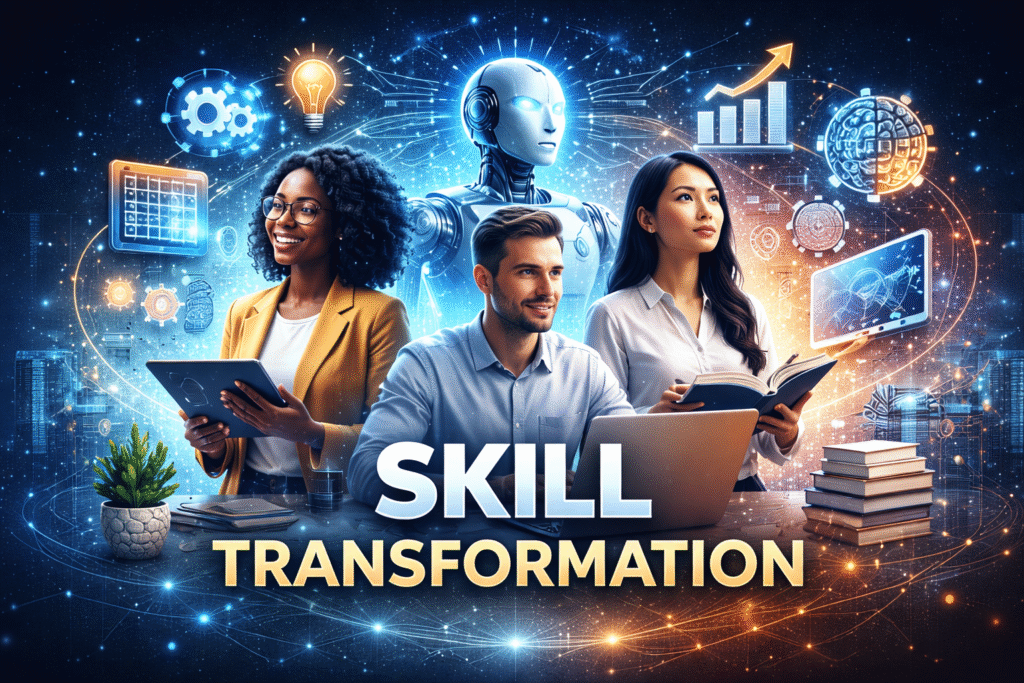
Transformation of Work and Occupations
AI is not simply eliminating jobs; it is transforming them. Many occupations now involve collaboration between humans and AI tools. While AI improves efficiency, accuracy, and speed, humans contribute judgment, ethical reasoning, and contextual understanding. This shift has turned skill transformation into a continuous process, requiring workers to adapt and update their competencies throughout their careers.
Lifelong Learning and Reskilling
The rise of AI and skill transformation has made lifelong learning essential. Traditional education models alone are insufficient to meet rapidly changing labor market demands. Continuous upskilling and reskilling through professional training, online learning platforms, and workplace learning have become critical. Educational institutions and employers must work together to design flexible learning pathways that support future-oriented skill development.
Skill Gaps and Inequality
Despite its benefits, AI also poses challenges related to skill gaps and social inequality. High-skilled workers are more likely to benefit from AI adoption, while low-skilled workers face a greater risk of displacement. Without inclusive policies, AI-driven skill transformation may widen economic and social disparities. Equal access to digital education and targeted training programs are necessary to ensure inclusive workforce development.

