
As research and academic writing continue to evolve, technology is playing a bigger role than ever before. From AI-powered assistants to smarter reference managers, 2026 is shaping up to be a year of efficiency, collaboration, and innovation for scholars and students alike.
Whether you’re preparing your thesis, writing a journal article, or managing large-scale research projects, these free and paid tools can streamline your entire workflow — from literature search to polished final drafts.
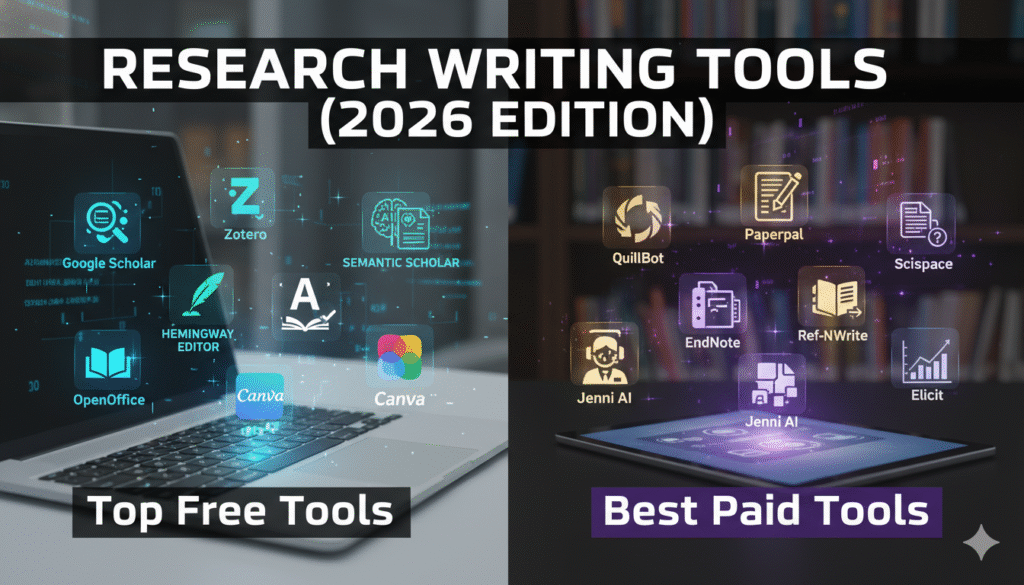
Top Free Tools for Research Writing (2026 Edition)
1. Google Scholar
Still the most trusted academic search engine, Google Scholar makes it easy to discover scholarly literature from virtually any discipline. It’s a cornerstone for literature reviews, citations, and staying updated with recent publications.
2. Zotero
Zotero remains one of the best free reference managers. It helps you collect, organize, and cite your sources across browsers and writing platforms. The 2026 version introduces better cloud syncing and collaboration features for team research.
3. Mendeley
Mendeley continues to combine reference management with an academic social network. It’s perfect for organizing research libraries, annotating PDFs, and connecting with fellow researchers in your field.
4. Semantic Scholar
Semantic Scholar uses AI to go beyond search results, offering paper summaries, topic overviews, and citation insights. In 2026, its upgraded AI summaries make understanding new research even faster and more reliable.
5. Grammarly (Free Version)
Grammarly’s free plan remains a reliable tool for catching grammar and punctuation mistakes. It’s particularly useful for non-native English researchers aiming to polish their writing tone and accuracy.
6. Hemingway Editor
If your goal is clarity, Hemingway Editor is indispensable. It flags overly complex sentences, excessive adverbs, and passive voice — helping you make your writing bolder and more readable.
7. Canva
Researchers increasingly use Canva to design graphs, posters, and presentation slides. Its templates and drag-and-drop tools make it simple to visualize data and share findings effectively.
8. OpenOffice
For those seeking a free, offline writing suite, OpenOffice continues to serve as a stable and capable alternative to Microsoft Office — ideal for drafting, formatting, and editing research papers.
Best Paid Tools for Advanced Research Writing (2026)
1. Paperpal
Paperpal has become one of the leading AI editing assistants for academic writing. Its 2026 upgrade offers deeper contextual feedback, journal-specific editing, and real-time structure analysis — helping authors meet publishing standards faster.
2. QuillBot
QuillBot continues to shine as an all-in-one writing companion. With AI-powered paraphrasing, summarization, and grammar tools, it’s ideal for rewriting complex passages while maintaining clarity and originality.
3. Scrivener
Scrivener remains the go-to tool for long-form writing projects like dissertations or books. Its organizational tools let you manage chapters, notes, and research material in one unified workspace.
4. EndNote
EndNote remains a favorite among professional researchers for advanced citation management. It integrates with major databases and provides collaborative sharing features ideal for multi-author papers.
5. Ref-N-Write
Ref-N-Write is a must-have for scientific writers. It offers an academic phrase library and contextual synonym suggestions to ensure your writing maintains a scholarly tone and consistency.
6. Jenni AI
Jenni AI has grown into a powerful research partner by 2026. It assists in brainstorming, outlining, drafting, and citing. Its integration with academic databases makes literature review easier than ever.
7. Scispace
Formerly known as Typeset.io, Scispace has evolved into a full-fledged AI assistant for reading, summarizing, and explaining research papers. The 2026 version now integrates directly with Google Scholar and PubMed for seamless discovery.
8. Elicit
Elicit continues to revolutionize systematic reviews. It uses AI to extract data, answer research questions, and identify key patterns in the literature — saving researchers countless hours of manual analysis.