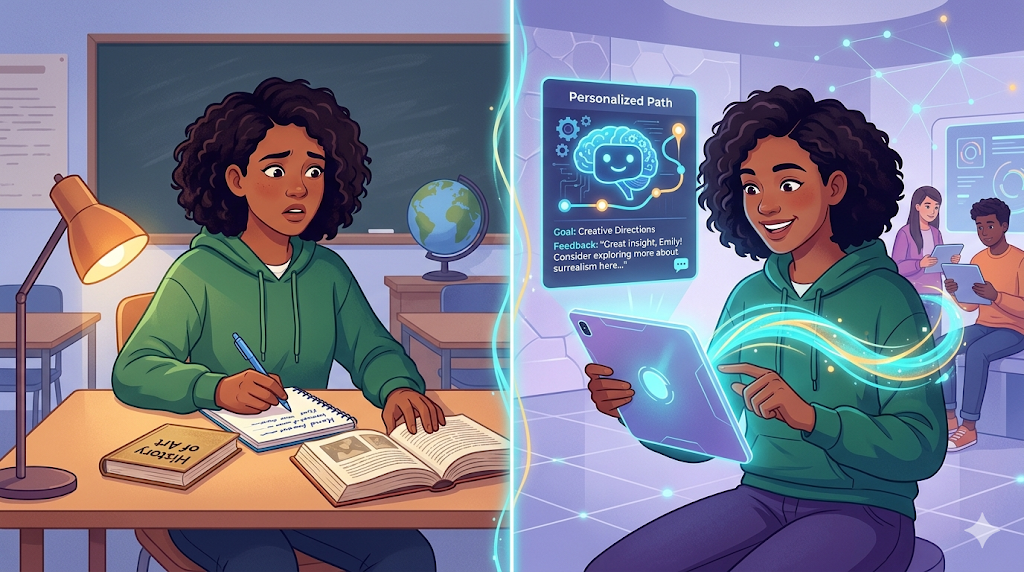
Think back to your favorite teacher. Imagine if 60% of their day was spent on paperwork instead of teaching. According to recent surveys, educators face severe “Time Poverty” from administrative overload. Enter Teacher-First AI. Rooted in human-centric educational technology design, this approach avoids robot replacements. It prioritizes reducing teacher burnout with automation, acting as a digital assistant giving time back to the human in the room.

Why a Digital Sous-Chef is the Key to Reducing Teacher Burnout
Think about a bustling restaurant kitchen. The head chef doesn’t chop every single onion; a sous-chef handles that tedious prep work so the master can focus on the final dish. In our schools, artificial intelligence acts as this exact digital sous-chef. When we look at automated lesson planning software benefits, we see how educators easily reclaim hours of their day. The AI prepares the basic framework of a unit, leaving the human teacher to simply review the material and season it with their unique expertise.
Beyond the curriculum, streamlining administrative tasks for educators is where this technology truly rescues burned-out professionals. The best ai tools for high school teachers act as rapid assistants that instantly tackle repetitive paperwork through quick AI drafting. In mere seconds, a program can check off single-step chores like:
- Drafting routine emails to parents
- Creating lesson outlines for substitute teachers
- Generating standard permission slips
Because a machine handles the heavy lifting of typing, the teacher’s hands never leave the steering wheel. This protective oversight guarantees classroom empathy and keeps pedagogy aligned with human values.
Why Human-in-the-Loop Education Guarantees Classroom Empathy
In human-in-the-loop education, the AI operates as the engine, but the educator provides the vital navigation. While software can rapidly tally a quiz, human judgment remains an absolute necessity for meaningful grading. Strong ethical frameworks for classroom AI use ensure a compassionate adult always makes final decisions about a child’s learning path. This oversight guarantees the pedagogical alignment of artificial intelligence, meaning technology strictly supports—never dictates—human teaching goals.
Instead of waiting weeks for test scores, educators use real-time student progress tracking systems to instantly identify who needs encouragement. The data acts as a digital tap on the shoulder, pointing out which child needs extra help today. Letting software crunch numbers preserves a teacher’s energy for building emotional connections that inspire learning.
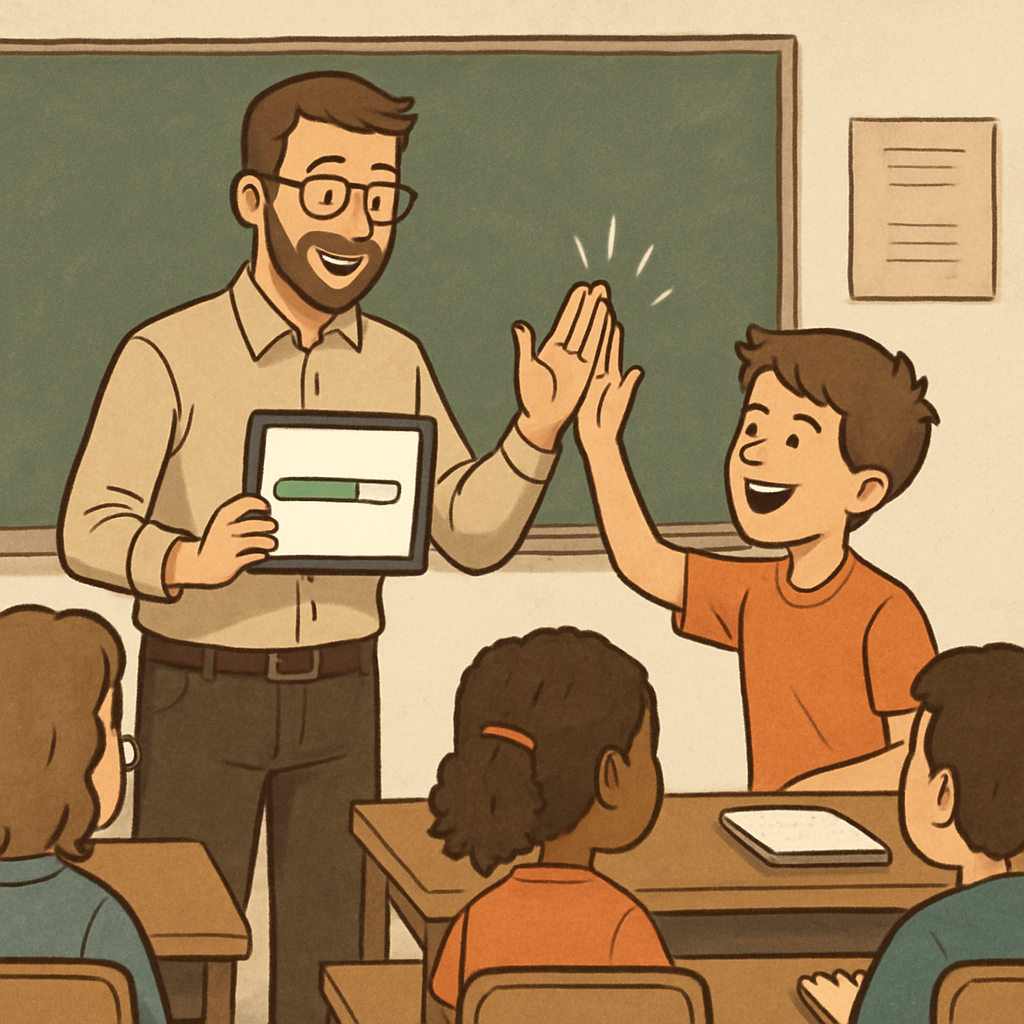
Your 3-Step Roadmap to Adopting Assistive Teaching Technology
Balancing automation and classroom empathy keeps educators firmly in control. Adopt assistive teaching technology in your school using three simple steps:
- Identify repetitive tasks.
- Choose one assistant tool.
- Review and refine output.
By supporting human-centric tech design, we ensure AI acts as a helpful assistant, giving teachers their time back to do what matters most—connecting with our students.