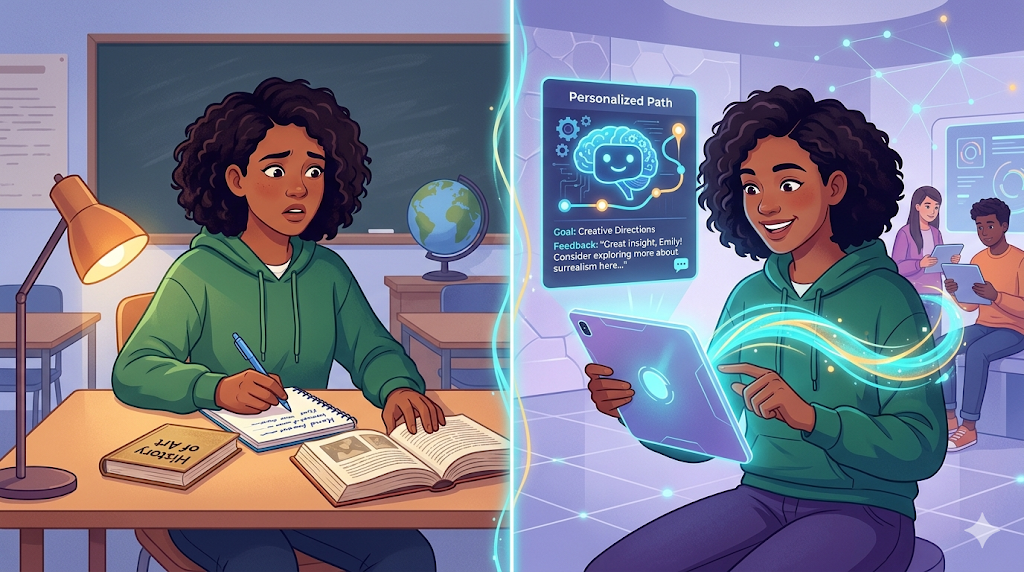
Employers in 2035 won’t care what a child memorized for a Friday history quiz. According to widespread industry data, tomorrow’s careers demand complex problem-solving and adaptability, not just reciting facts that are already a click away. Traditional school grading often rewards rote memorization, but simply knowing information is no longer enough in a digital world.
Picture a teenager stuck on a late-night math assignment, staring at a textbook with no one awake to help. Instead of giving up or simply copying answers, imagine they have a patient, 24/7 tutor that guides them through the actual problem-solving process step-by-step. This highlights the critical shift toward mastering how to do a task rather than just putting in seat time, leading many parents to ask: how can AI facilitate skills-based learning in schools?
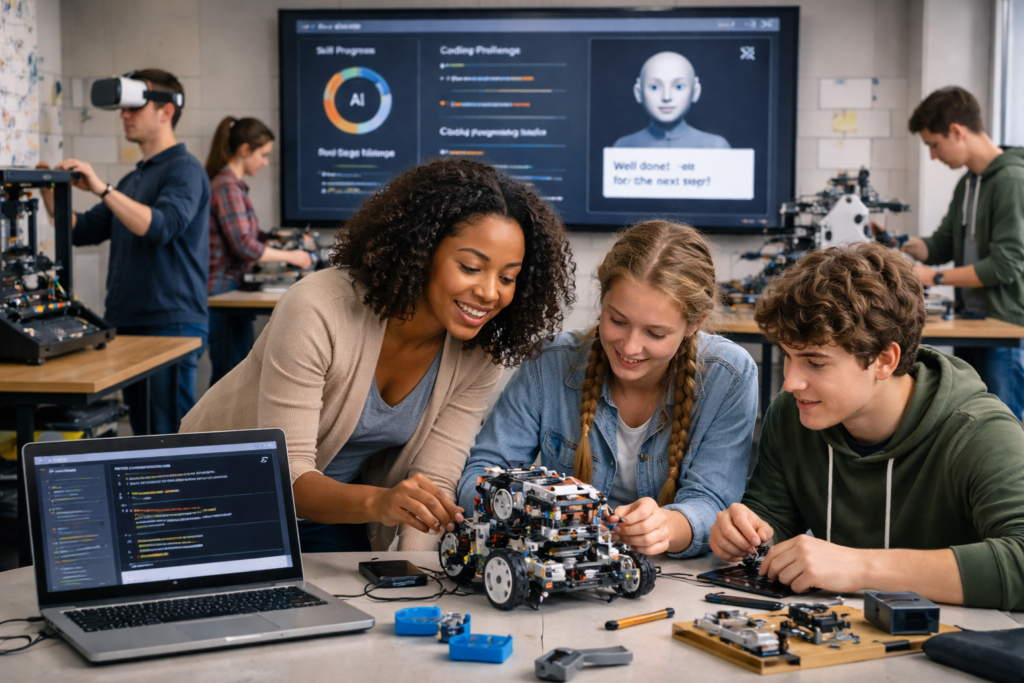
Rather than acting as a simple cheat code that writes essays, modern tools serve as personalized academic coaches. By shifting the classroom focus from memorizing dates to analyzing real-world patterns, upskilling students for the future workforce with AI becomes a practical reality. Research shows that as we embrace AI in education, human teachers are empowered to step away from endless lecturing and become dedicated mentors.
Moving from ‘Seat Time’ to Mastery: What is Skills-Based Learning?
We all know how a traditional classroom works: the calendar dictates the pace. If the syllabus says it is time for algebra, the whole class moves on, even if half the students still struggle with fractions. This model prioritizes “seat time”—hours spent at a desk—over actual understanding. But what if a student’s progress depended entirely on their ability to show they have grasped a concept?

That shift is the heart of competency-based education vs traditional grading models. Instead of rewarding memorization for a Friday test, this approach focuses on mastery-based learning. A student must simply prove they can complete a task before moving forward. Think of sports practice: you do not make the basketball team by just sitting on the court for an hour; you make it by successfully dribbling and shooting.
- Traditional Learning: Fixed pace, calendar-driven, grades based on tests and time spent.
- Skills-Based Learning: Flexible pace, mastery-driven, progress based on demonstrating real skills.
Managing this tailored approach for thirty kids used to be physically impossible for a single teacher. Now, AI in skills-based learning acts like a digital assistant, tracking individual milestones automatically. The technology monitors exactly where each child excels or struggles, allowing educators to step away from the chalkboard and become active mentors instead of simple lecturers. When progress is no longer tied to a ticking clock, every child gets the exact support they need.
The 24/7 Digital Tutor: How AI Creates Personalized Learning Paths
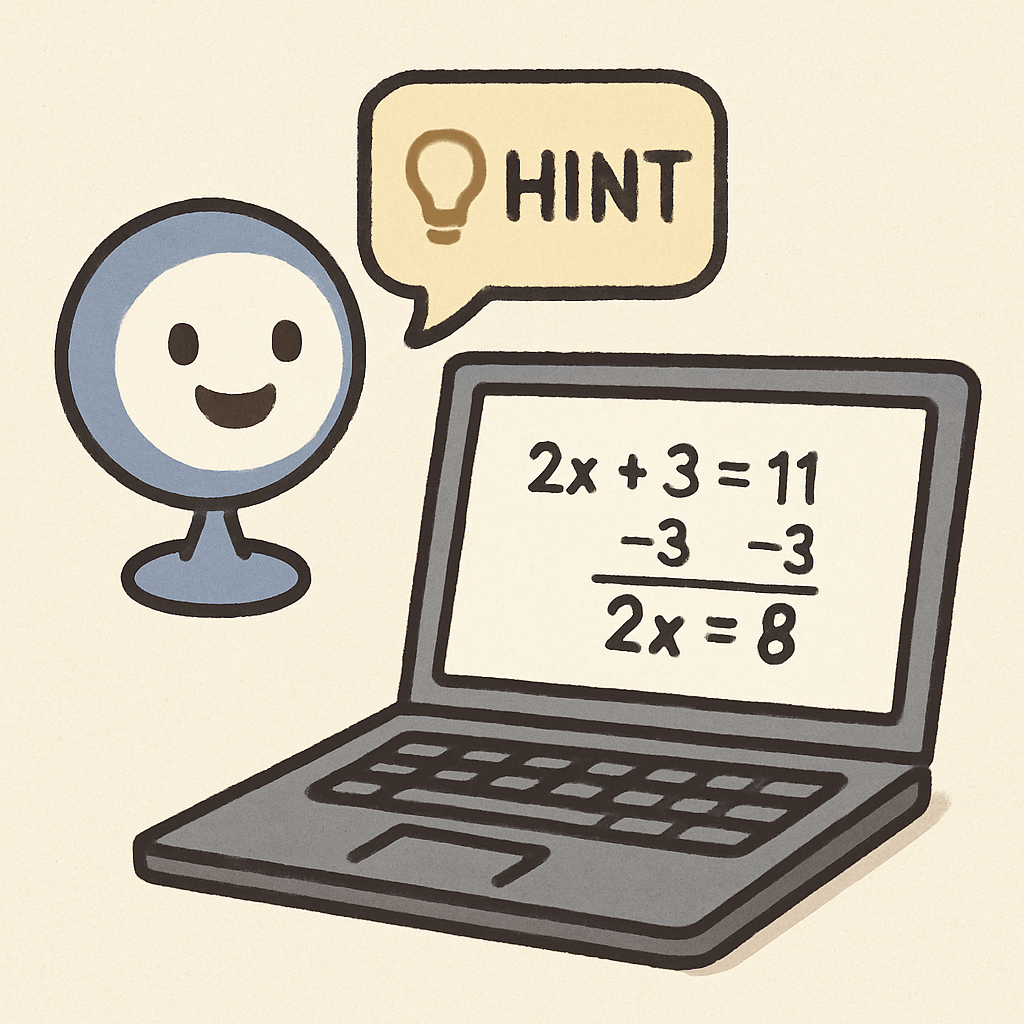
When a student hits a roadblock during after-school study sessions, learning often stops and confidence drops. Today, intelligent tutoring systems for personalized skill acquisition step in to solve this exact problem. Rather than simply giving away the answer, these tools act as patient digital coaches that offer targeted hints the moment a child struggles.
Think of personalized learning paths using artificial intelligence as a smartphone’s GPS. If a driver takes a wrong turn, the navigation system instantly calculates a new route rather than letting them drive off a cliff. Similarly, if a student misunderstands fractions, the software immediately recognizes the error and adjusts the lesson. This instant feedback prevents minor mistakes from silently turning into massive learning gaps over the school year.
Implementing adaptive learning technology in K-12 classrooms provides this “GPS-style” re-routing in three distinct ways:
- Breaking down problems: AI simplifies complex questions into smaller, manageable steps so students are not overwhelmed.
- Swapping formats: If text-based instructions fail, the system automatically provides helpful visual charts.
- Bridging gaps: The software quickly reviews older, foundational concepts the student may have forgotten.
Because of this tailored support, true 1:1 attention is finally possible, even in a crowded room of thirty children. While the software redirects struggling learners, advanced students receive challenging material so they never grow bored. While mastering math is easily measurable, evaluating human nuance and creativity requires a different approach.
Can a Machine Judge Creativity? How AI Assesses Soft Skills
Grading math is straightforward, but evaluating communication has traditionally been a subjective guessing game. Parents often wonder how does AI assess student soft skills like teamwork when there is no single right answer. Instead of looking for a multiple-choice bubble, modern classroom software analyzes the patterns in how students work.
To build these abilities, students use large language models for critical thinking development, treating the AI as a thoughtful debate partner. When a student argues a point, the system does not simply check spelling. It offers counterarguments, prompting the learner to defend and refine their logic. This back-and-forth dialogue allows the software to track reasoning improvements over time, acting as a personal cognitive coach.
Beyond individual assignments, this technology evaluates group dynamics within shared digital projects. It quietly notices if one student writes everything while another only watches, aligning AI tools with 21st century skill frameworks that demand equal collaboration. Because the software handles this complex tracking, it removes the burden of subjective grading. This invisible support naturally leads to giving teachers their time back: automating the paperwork, not the connection.
Giving Teachers Their Time Back: Automating the Paperwork, Not the Connection
We know our schools are facing massive burnout, with educators often drowning in paperwork rather than connecting with kids. By reducing teacher workload through automated feedback systems, technology is actually making classrooms more human. Instead of acting as a robotic replacement, AI serves as an invisible assistant that frees up educators to embrace a teacher-as-mentor model, giving them the time and energy to provide true emotional and academic support.
What does this digital assistant actually do? Today, AI can take over several time-consuming daily tasks:
- Grading routine quizzes the moment a student finishes.
- Drafting weekly progress updates to keep parents informed.
- Creating customized practice problems for different learning speeds.
Taking these repetitive chores off an educator’s plate is the secret to scaling individualized instruction in overcrowded classrooms, ensuring no student is left waiting for help.
Beyond simply saving hours, this software acts like a classroom GPS that alerts a teacher the moment a child takes a wrong turn. Using data-driven insights for student performance tracking, the system highlights exactly who is struggling on a Tuesday, rather than waiting for them to fail a Friday test. With teachers now fully empowered to mentor our kids, we must ensure these systems protect student privacy as we navigate the ethics of AI in our schools.
Safe and Smart: Navigating the Ethics of AI in Our Schools
As classrooms adopt these tools, it is natural to ask about data security and the ethical implications of AI in student assessments. Because AI in education relies on collecting information to personalize learning, schools must prioritize privacy. You should ask your district exactly where your child’s data is stored and how it is protected from third parties.
Beyond keeping information safe, we must understand how these systems think. Since AI learns by studying massive amounts of internet data, it can occasionally pick up the internet’s flaws—a problem known as algorithmic bias. For example, an automated grading tool might unfairly penalize a student’s culturally unique writing style simply because the system only learned from standardized, traditional texts. We can mitigate this by watching closely if certain groups consistently score lower on a specific software.
To prevent these blind spots, schools must maintain a “Human-in-the-loop” safeguard. This rule ensures a computer never makes a final decision about a child’s progress; a human teacher always reviews the software’s recommendations before entering a grade. By keeping educators in the driver’s seat and demanding transparent tools, we can confidently transition to preparing students for a skills-first future.
Your Action Plan: Preparing Students for a Skills-First Future
You no longer have to view artificial intelligence as a shortcut to bypass homework. Instead, you can now recognize it as a patient, 24/7 mentor dedicated to building the exact competencies tomorrow’s employers will demand. Because skills are the new currency, shifting our focus from rote memorization to true capability ensures our children graduate ready to adapt, problem-solve, and thrive in the real world.
To help your child embrace these AI learning tools as true collaborators rather than cheat codes, start with these practical actions at home:
- Guide the conversation: Ask your child to use AI to explain a tricky math concept step-by-step, rather than asking it to generate the final answer.
- Engage the classroom: Ask your teachers how they use real-time progress tracking for mastery-based learning to identify exactly where your child needs personalized support.
- Advocate locally: Speak up at your next school board meeting to champion technology that builds job-ready competencies instead of simply measuring seat time.
When we stop measuring education by what students can memorize and start measuring what they can actually do, the entire learning journey transforms. Start that first conversation with your student tonight, and watch their confidence grow as they tackle tomorrow’s challenges.