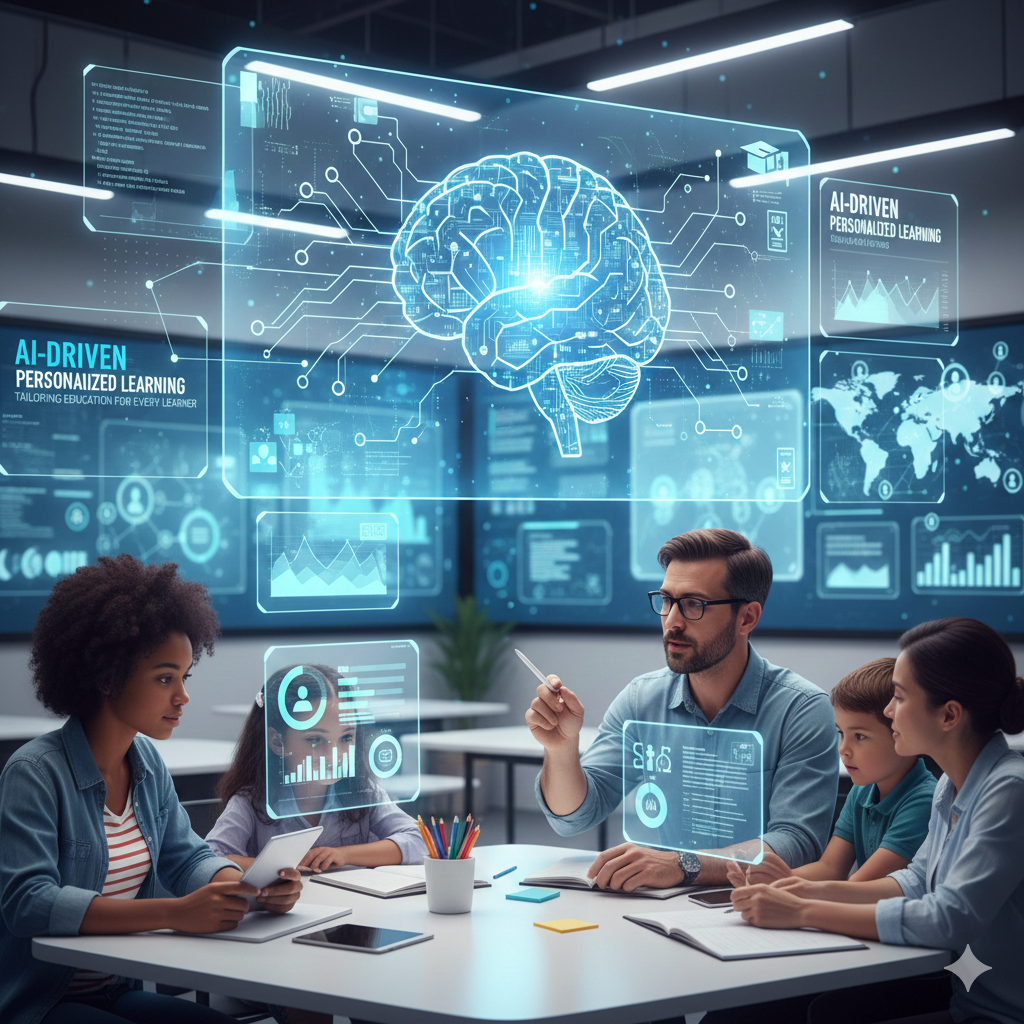
AI-driven personalized learning is transforming education by tailoring instruction to individual learners’ needs, abilities, and learning styles. Unlike traditional one-size-fits-all approaches, artificial intelligence enables adaptive learning experiences that respond to students’ performance, pace, and preferences in real time. This shift is reshaping teaching, learning, and educational outcomes across all levels.
How AI Enables Personalized Learning
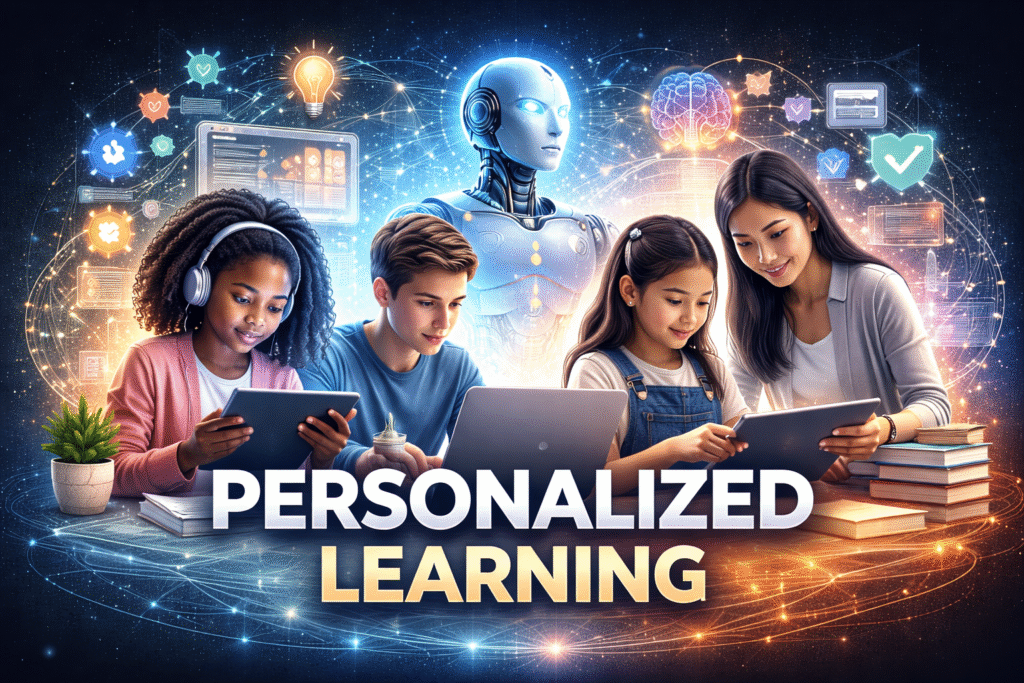
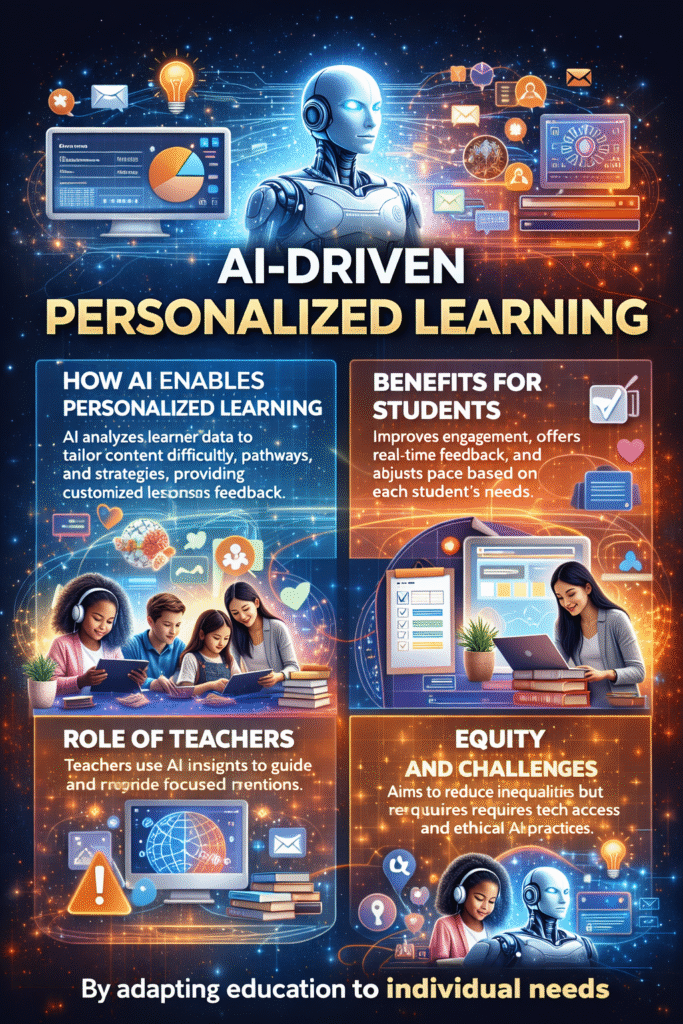
AI-driven systems analyze large amounts of learner data, including assessment results, learning behaviors, and engagement patterns. Based on this data, AI adjusts content difficulty, learning pathways, and instructional strategies. Students receive customized lessons, practice activities, and feedback that match their current level of understanding. This targeted support helps learners progress more effectively and reduces learning gaps.
Benefits for Students
AI-driven personalized learning improves student engagement and motivation by allowing learners to move at their own pace. Struggling students receive additional support, while advanced learners can access more challenging material. Real-time feedback helps students identify mistakes and improve continuously. As a result, learning becomes more student-centered, inclusive, and effective.
Role of Teachers in AI-Driven Learning
AI does not replace teachers; instead, it supports them. Teachers gain insights into student progress, strengths, and weaknesses through AI-generated analytics. This allows educators to make informed instructional decisions and provide focused interventions. By automating routine tasks such as grading and progress tracking, AI enables teachers to spend more time on mentoring, creativity, and meaningful interaction.
AI-Driven Personalized Learning and Equity
Personalized learning powered by AI has the potential to reduce educational inequalities by supporting diverse learning needs. Students from different backgrounds can access tailored resources that address their specific challenges. However, unequal access to technology and data privacy concerns remain major challenges. Inclusive policies and ethical AI practices are essential to ensure fair and responsible implementation.
Challenges and Ethical Considerations
Despite its advantages, AI-driven personalized learning raises concerns related to data security, algorithmic bias, and over-reliance on technology. Educational institutions must ensure transparency, protect student data, and maintain human oversight. Ethical use of AI is critical to building trust among educators, students, and parents.