Using AI in Education to Help Teachers and Their Students
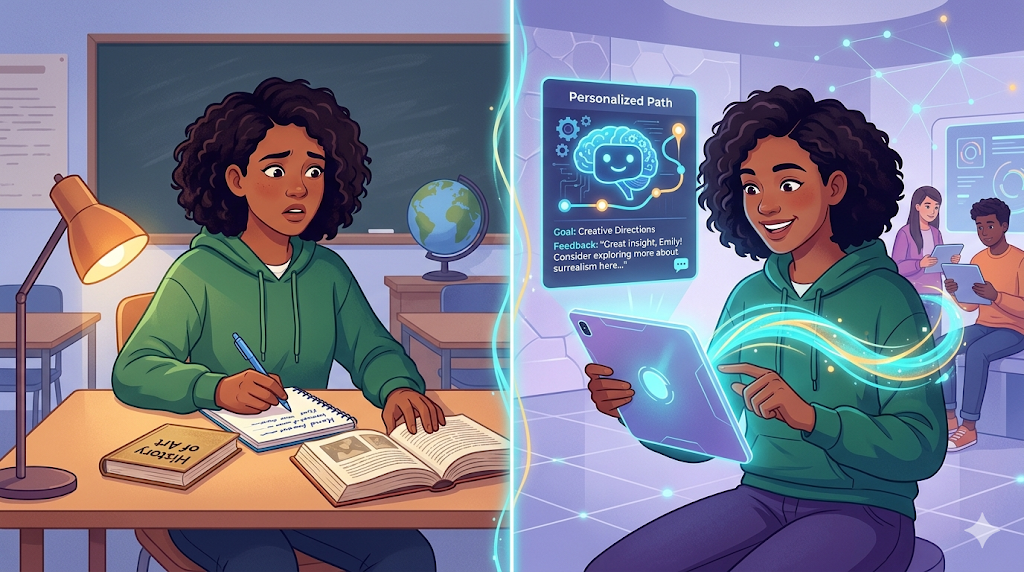
Remember spending hours in the library flipping through encyclopedias, or later, sifting through endless blue links on a search engine? We are moving past the era of simply “searching” for answers into a time where technology helps build them. This shift is driven by Generative AI, a tool that acts less like a search bar and more like a creative partner that can draft lesson plans or explain complex topics instantly. It represents a significant leap in educational technology, designed to support the learning process rather than bypass it.
Think of this evolution like the introduction of the calculator. Just as that device handled basic arithmetic to let students focus on higher-level math, using AI in education to help teachers and their students allows for a focus on critical thinking over administrative tasks. Instead of spending Sunday nights grading routine papers, a teacher can employ a digital assistant to handle the paperwork, reclaiming time to address specific student needs.
Crucially, this technology serves as a co-pilot, not a replacement for the human connection. Education experts agree that while AI can provide personalized support, the teacher remains the essential driver of the classroom experience. By acting as a supportive guardrail, these tools ensure that technology enhances, rather than diminishes, the vital relationship between educator and learner.
Reclaiming Your Sunday: Automating Grading and Admin in Minutes
Ideally, weekends are for recovering, but for many educators, Sunday evenings are consumed by the “invisible” workload that keeps a school running. This administrative burden—grading quizzes, answering emails, and tracking paperwork—often overshadows the actual teaching. By automating administrative tasks for educators, schools can provide teachers with a digital “secretary” to handle the repetitive logistics. This doesn’t mean a robot is teaching the class; rather, it means the teacher isn’t spending their planning period manually inputting data into a spreadsheet.

Consider how much mental energy is saved when a computer handles the sorting and calculating. Modern ai grading software for teacher workload reduction can scan multiple-choice tests instantly or flag missing assignments without human intervention. The best ai assistants for classroom management are effective because they handle three specific drains on a teacher’s time:
- Drafting Communications: Generating professional, empathetic email drafts to parents in seconds.
- Routine Assessment: Instantly scoring objective quizzes to reduce grading time by up to 40%.
- Attendance Monitoring: Spotting patterns in student absences that might otherwise go unnoticed.
Recovering this time allows educators to shift their focus from paperwork back to people. When the “busy work” is handled, teachers have the mental space to be more creative and present for their students. With the administrative chaos under control, we can look at how AI helps with the creative side of the job: building engaging lessons from scratch.
From Scratch to Finished: Using Generative AI for Instant Lesson Planning
Staring at a blank screen is often the hardest part of teaching. Instead of struggling to invent a new way to teach photosynthesis or the Civil War from scratch, educators can now treat AI like a creative partner. By entering a simple instruction—such as “Create a 45-minute science activity about plant growth for 4th graders”—the technology provides a solid foundation of ideas in seconds. This makes generative ai for lesson plan development a powerful cure for writer’s block, offering a high-quality starting point that teachers can then refine with their own expertise and personal touch.
Once a base lesson is created, the real benefit appears in how easily it adjusts for different needs. In the past, a teacher rarely had time to rewrite a complex history text for a student reading at a lower level. Now, implementing ai tools in k-12 curriculum allows them to instantly generate multiple versions of the same assignment: one for advanced readers and one simplified for those catching up. This ensures every child engages with the same core concepts without feeling left behind, effectively tailoring the education to fit the student rather than forcing the student to fit the textbook.
Beyond just text, these tools suggest dynamic activities that transform dry topics into interactive experiments or role-playing games. Parents often ask how does ai impact student engagement, and the answer lies in variety; when teachers spend less time planning logistics, they have more energy to facilitate fun, creative projects. This ability to instantly customize content for the whole class sets the stage for an even more specific possibility: using technology to act as a dedicated coach for each individual child.
A Tutor for Every Desk: Personalized Learning Pathways Without the High Cost
Imagine trying to teach thirty students who all read at different speeds using a single textbook. It is nearly impossible for one human teacher to address every gap in knowledge instantly for every child. This is where the difference between adaptive learning platforms vs traditional teaching becomes clear. Like a digital tailor, these programs adjust the “fit” of the lesson in real-time, ensuring that a student who masters a concept moves ahead, while one who struggles receives immediate, simplified explanations until they are ready to proceed.
Rather than waiting for a grade on a test days later, these tools act as an always-available tutor that learns from the student’s actions. The software analyzes every answer to build personalized learning pathways for diverse learners, utilizing specific features that guide them toward mastery:
- Dynamic difficulty adjustment: If a student answers correctly, the next question becomes slightly harder; if they stumble, the system offers an easier problem to build confidence.
- Immediate feedback: Explanations are provided the moment a mistake happens, preventing bad habits from forming.
- Personalized reading recommendations: Content creates connections by matching the student’s current interests with their specific reading level.
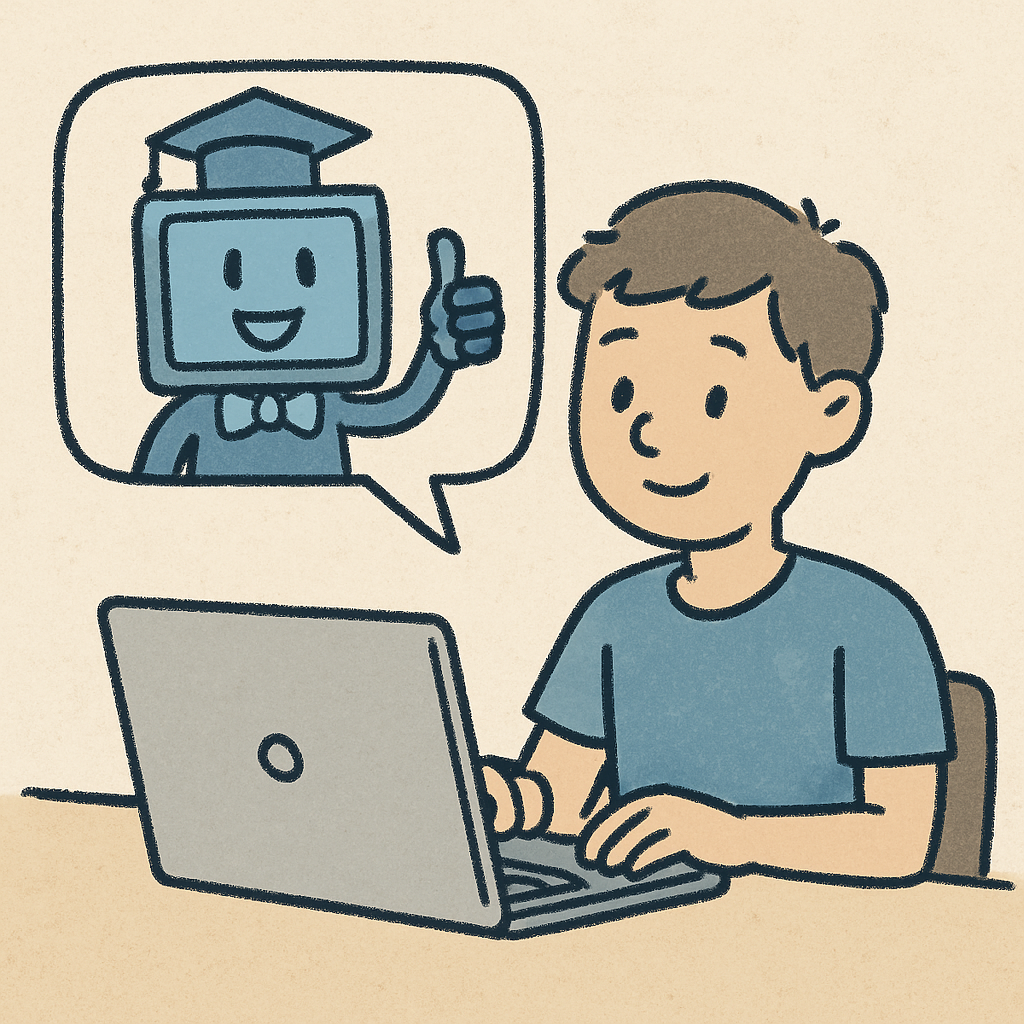
This approach transforms the role of the teacher from a lecturer to a mentor who monitors progress through clear data dashboards. By visualizing exactly where a student is stuck, educators can step in with precise help rather than guessing. As we look toward the future of ai-driven differentiated instruction, this ability to customize content becomes even more critical for students with unique challenges, paving the way for tools specifically designed to break down accessibility barriers.
Breaking Barriers: Supporting Special Education with Assistive AI Tools
For many intelligent students, the physical act of writing or the struggle of decoding text creates a massive wall between them and the curriculum. Imagine a child who understands a history lesson perfectly but fails the test simply because they cannot read the questions quickly enough. Supporting special education with assistive AI changes this dynamic by acting as a bridge rather than a crutch. Tools like intelligent voice-to-text allow students to speak their essays aloud, letting their ideas flow freely without the frustration of spelling mechanics blocking their path.
Beyond reading challenges, modern educational technology provides a lifeline for students navigating language barriers. If a student speaks English as a second language, AI-powered translation tools can instantly convert a complex science worksheet into their native language, helping them grasp the concept before tackling the English vocabulary. This promotes a vital sense of independence; instead of constantly waiting for a teacher’s aide to explain the next step, the student uses the software to self-correct and keep up with their peers, building confidence alongside competence.
While these innovations are exciting, AI in education policy news today frequently emphasizes that these tools must be used to support, not replace, fundamental skill building. The goal is to remove unnecessary friction so teachers can see what a student actually knows. Once these accessibility barriers are lowered, educators can shift their focus from managing struggles to measuring actual growth, setting the stage for smarter ways to track progress through real-time assessments.
Real-Time Success: Using AI-Powered Formative Assessment Tools
Waiting for a final exam to measure understanding is like realizing you took a wrong turn only after the road trip ends. AI-powered formative assessment tools act like a classroom GPS, checking for comprehension while the lesson is actually happening. Instead of grading quizzes all evening, teachers receive instant analysis, allowing them to fix confusion before it becomes a permanent knowledge gap. This immediate support dramatically shifts student engagement levels, keeping children motivated because they receive help the moment they get stuck, rather than struggling in silence.
Teachers can visualize this data through a digital “heatmap” that highlights specific problem areas in red and successes in green. If the software shows five students are stuck on the same math equation, the educator can intervene instantly to provide targeted coaching. Real-time feedback systems for student progress move education away from stressful, “one-shot” testing toward a continuous loop of improvement. However, collecting such detailed performance data raises important questions about safety, leading us to the critical next step: navigating AI ethics and data privacy.
The Classroom Compass: Navigating AI Ethics and Data Privacy
Just as we wouldn’t let a learner driver navigate a busy highway alone, we cannot leave ethical considerations of ai in the classroom on autopilot. Protecting children means ensuring data privacy for students in ai systems, guaranteeing that a child’s essays or grades never become public training data for a tech company.
Since these tools can sound convincing even when they are “making things up,” they provide a perfect opportunity for fostering digital literacy and ai ethics by teaching students to question what they read. To keep the digital classroom safe, educators and parents should follow three “Road Rules”:
- Anonymize: Never input student names or personal details into public AI tools.
- Verify: Always fact-check AI outputs against reliable sources to catch errors.
- Oversee: Use AI as a helpful drafter, but never let it make the final decision.
With these safety belts fastened, we can move toward building a human-centered plan for the future.
The Future of Learning: Building a Human-Centered AI Action Plan
Adopting these tools changes the classroom dynamic from overwhelmed to empowered. By shifting the heavy lifting of paperwork and planning to a digital assistant, the fear of technology replacing the educator fades away. Instead, we see the true value of ai in education: it handles the data so you have more energy for the “heart” of teaching—mentorship and connection.
Ready to start leveraging these digital tools in your classroom? Begin with this simple roadmap:
- Start Small: Choose one administrative task, like drafting a parent email or newsletter, to automate today.
- Experiment: Ask an AI tool to generate a creative lesson plan or practice quiz on a specific topic.
- Discuss: Have an open conversation with students about using these tools honestly and ethically.
Embracing these tools doesn’t mean giving up control; it means gaining a partner in the classroom. As we move toward a future of truly personalized instruction, the goal remains simple: using technology to make the human connection stronger. You now have the roadmap to make learning personal again.