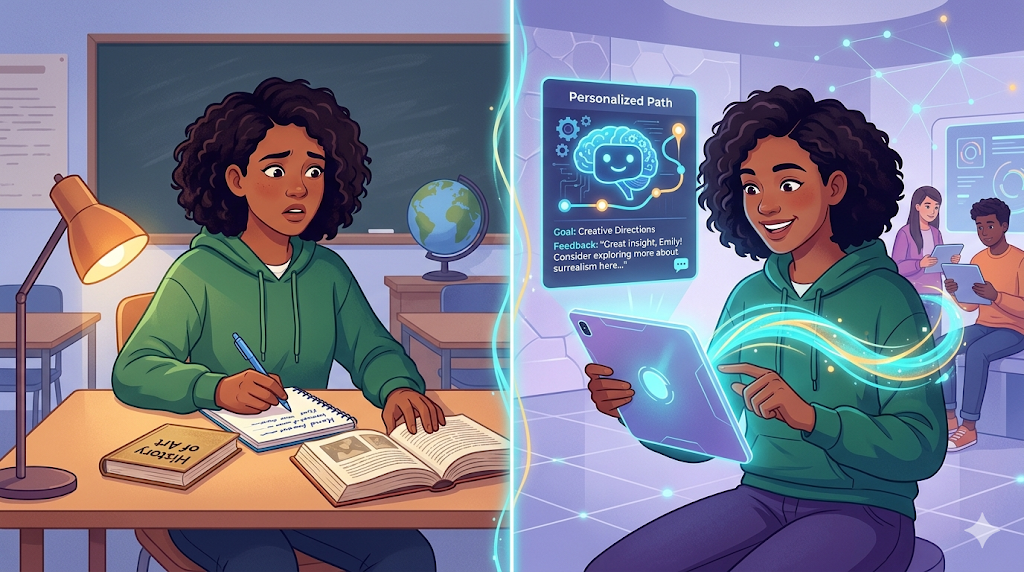
You don’t need a mathematics degree to work in artificial intelligence, just as you don’t need to be an automotive engineer to drive a car. This widespread misconception—often called the “Math Wall”—stops countless talented professionals from entering the field. In practice, understanding how to read the dashboard and steer the vehicle is far more valuable for most modern roles than knowing how to build the engine from scratch.
According to recent industry data from LinkedIn, AI-related job postings have increased by over 30% in just the past year. Companies aren’t simply looking for scientists to invent complex algorithms; they are desperately seeking the “AI Navigator.” This vital role belongs to professionals who use clear logical thinking to guide digital tools like ChatGPT toward practical business solutions, proving that critical thinking often trumps advanced calculus.
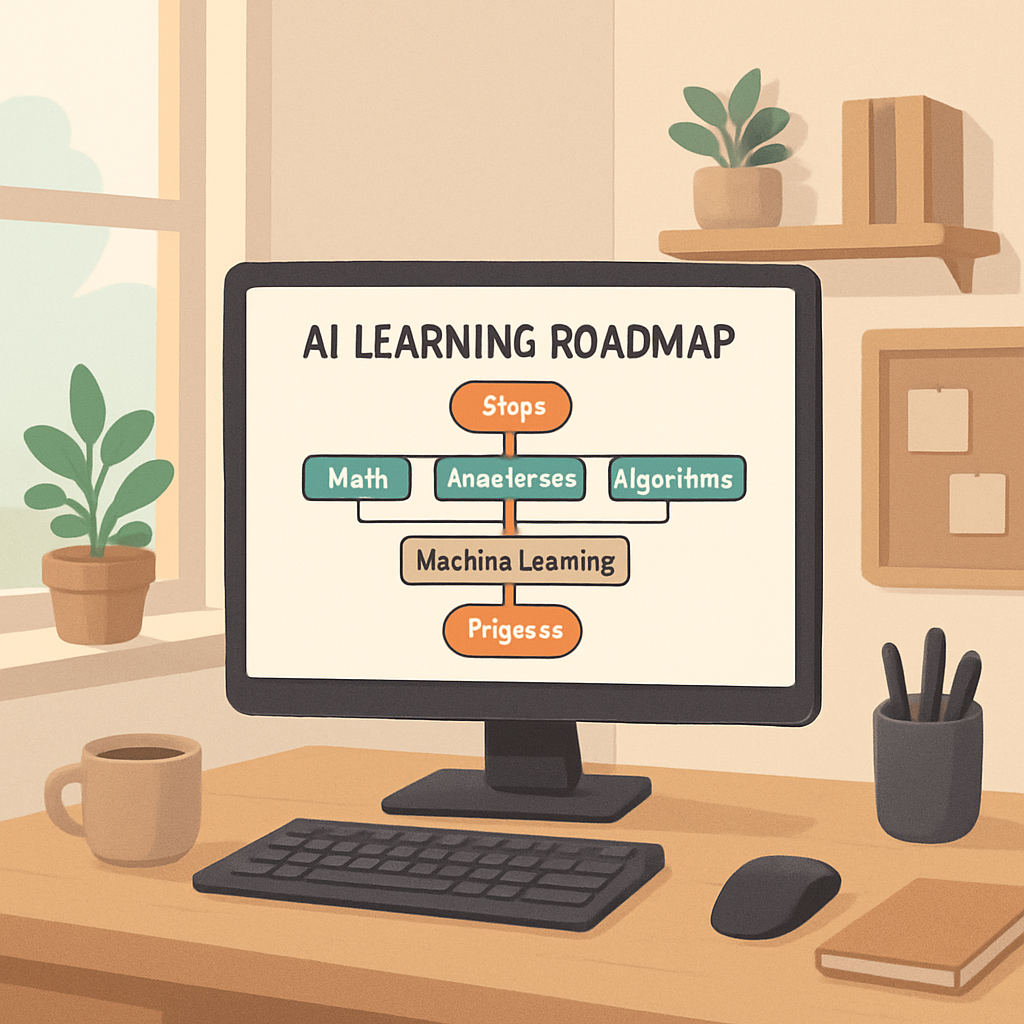
For anyone mapping out the exact skills needed to build a career in AI, the path is highly structured. Developing practical career skills happens across four distinct phases: adopting an AI mindset, mastering problem framing, utilizing no-code tools, and finally laying a basic technical foundation. Following this progressive sequence removes the anxiety of the unknown and replaces it with manageable, achievable steps.
Whether you are a career-switcher or a curious professional, you don’t need to fear the black box of technology. This guide serves as a clear, non-intimidating artificial intelligence engineering career roadmap. By focusing on practical application rather than raw equations, you will quickly discover that succeeding in this industry is completely within your reach.
Thinking Like a Machine: Mastering ‘AI Logic’ Without the Code
We often think tech jobs require memorizing complex code, but modern technology operates differently. Traditional programs need exact rules, while AI uses example-based learning. Instead of programming a solution, you teach the machine by feeding it past examples, known as training data.
- Traditional Software (Rule-Solvable): Uses strict “If/Then” rules (e.g., If an email has the word “Sale,” then flag it as spam).
- AI Software (AI-Solvable): Uses pattern recognition. You show it 5,000 actual spam emails, and it learns the hidden characteristics without explicit rules.
Mastering this machine learning logic means realizing the code matters less than your answer key. This key is called Ground Truth—the 100% accurate labels proving to the system what a correct example looks like. Whether you are predicting customer trends or understanding neural networks and deep learning, you need problems with high pattern density where past data clearly reveals the right outcome.
Because artificial intelligence only learns from what we provide, curating these examples is rapidly becoming one of today’s top AI career skills. Defining the right problem actually eclipses the underlying math, elevating the importance of critical soft skills like ethics and problem framing.
The High Value of Soft Skills: Why Ethics and Problem Framing Pay More
We have all seen an AI confidently tell a lie, like a chatbot inventing a fake historical event. This is called an AI Hallucination. Because generative AI simply predicts word patterns, it does not actually understand the truth. This flaw creates a massive demand for a safety net known as Human-in-the-Loop—real people who verify outputs and catch errors before they reach the public. Applying critical thinking for AI means you act as the editor, never just a passive reader.
Businesses need experts in specific fields much more than they need generic programmers. If an algorithm helps screen resumes, a human expert must check for Algorithmic Bias—hidden prejudices in the training data that might unfairly reject qualified candidates. Your unique background is actually your superpower, opening doors to highly valuable non-technical career paths in AI. The top non-technical skills for AI include:
- Critical Thinking
- Ethics
- Domain Expertise
- Communication
Guiding technology safely requires strong ethical AI and responsible development skills. When you understand an industry’s specific rules, you can steer these tools to solve real problems without causing harm. Once you know how to supervise the machine, the next step is learning how to give it the right instructions through professional prompt engineering.
Beyond Chatting: Professional Prompt Engineering and Generative AI
Almost everyone has typed a quick question into ChatGPT, but there is a massive difference between casual chatting and building a professional career in AI. When you treat AI like a mind reader, you get generic answers. To become a highly paid “prompt architect,” think of yourself as a manager delegating a task to an eager but literal intern. You are no longer just asking questions; you are designing systems for business automation.
Mastering this delegation requires specific prompt engineering and generative AI skills. Instead of typing a basic sentence, professionals use proven frameworks to guarantee high-quality results:
- Role-Task-Context: Assign the AI a job, state a clear goal, and provide background details.
- Chain-of-Thought: Tell the AI to “think step-by-step,” which can improve its reasoning by up to 50% on complex problems.
- Few-Shot Prompting: Provide a few examples of the exact output you want right inside your instructions.
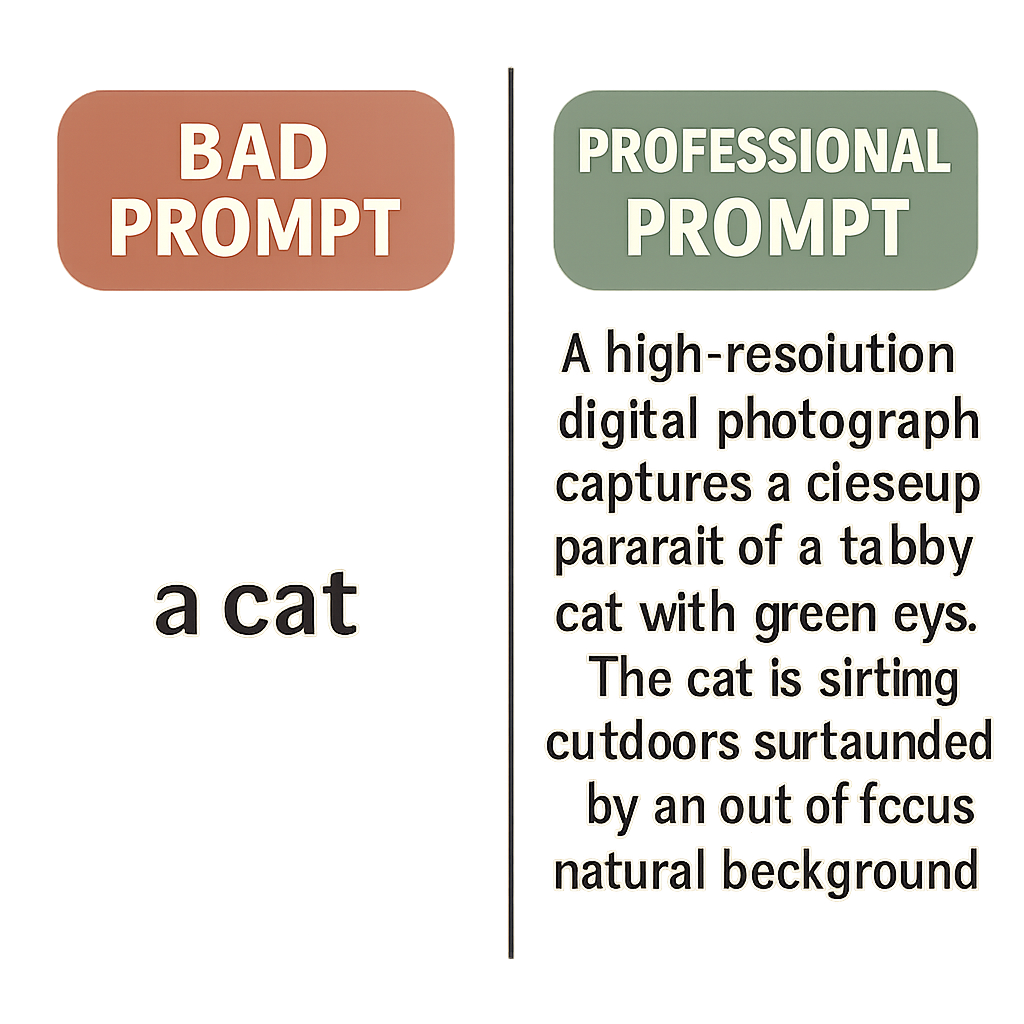
Seeing these methods side-by-side reveals why simple commands fail while engineered ones succeed. A prompt architect knows that showing the machine exactly what to do saves hours of editing later. Developing these skills turns a fun novelty into a powerful, reliable co-pilot.
Perfectly structured instructions will still fail if the underlying information is flawed. Good ingredients make a good meal, and that same logic applies to machine learning, leading directly to the essential task of data cleaning.
The ‘Dirty’ Work: Why Data Cleaning is the Real AI Superpower
Imagine baking a cake with expired milk; no matter how skilled the baker is, the result is inedible. This same logic applies to artificial intelligence, making data literacy one of today’s top AI career skills. When AI gives a bad answer, the culprit is usually a messy spreadsheet, a concept known as “Garbage In, Garbage Out.” Avoiding this requires data centricity—prioritizing information quality over complex code.
Before an algorithm learns, a human must audit the information. You don’t need advanced statistical analysis for data science to spot issues; professionals simply evaluate their files using a baseline ‘Data Health’ Checklist:
- Completeness: Are there blank cells?
- Accuracy: Do the numbers make sense (e.g., no ages listed as 250)?
- Consistency: Are dates formatted the same way?
- Recency: Is the information fresh?
Transforming this messy information requires specific data cleaning and preprocessing techniques. Workers perform deduplication (removing duplicate rows), handle missing values (deleting or guessing blank entries), and use normalization (adjusting scales so different metrics are compared fairly). Fixing these massive files by hand would take a lifetime, so professionals rely on automated software to do the heavy lifting. To give these automated instructions, you need a reliable translator’s tool, making Python the preferred choice for beginners.
Choosing Your Tools: Why Python Wins the Race for AI Beginners
Giving instructions to a computer requires a reliable language, which often brings up the debate of Python vs R for machine learning. While R is excellent for academics running complex statistics, Python wins for beginners because its commands read much like plain English. You rarely have to write instructions from scratch to develop real technical skills. Instead, Python uses pre-written code bundles called “libraries,” which act like convenient meal kits that let you skip the tedious prep work.
Equipping yourself for the job market simply means downloading a few essential kits. Professionals rely heavily on this ‘AI Starter Pack’ library list to build their applications:
- Pandas: Your digital filing cabinet for organizing messy data.
- NumPy: A high-speed calculator for crunching vast amounts of numbers.
- Scikit-Learn: The practical tool for traditional, everyday machine learning.
- PyTorch: The heavy lifter for building advanced, brain-like AI systems.
Eventually, you will want to build one of those advanced systems that mimic human pattern recognition, known as a neural network. When exploring this phase, you will encounter the choice of PyTorch vs TensorFlow. Think of TensorFlow as a massive, rigid industrial factory, whereas PyTorch is a flexible, forgiving workshop that makes experimenting much easier for newcomers. Once your tools are ready, you just need to grasp the logic guiding them.
The Truth About Math: Why Statistics Beats Calculus for AI Careers
The question, “do I need a math degree for AI?” is a common roadblock for career switchers, but the reality is far less intimidating. You do not need to spend hours solving complex calculus equations. Building solid mathematical foundations for machine learning actually relies on the basic high school algebra you already know, paired with practical statistical analysis. Think of AI not as a rigid calculator, but as a weather forecaster making educated guesses.
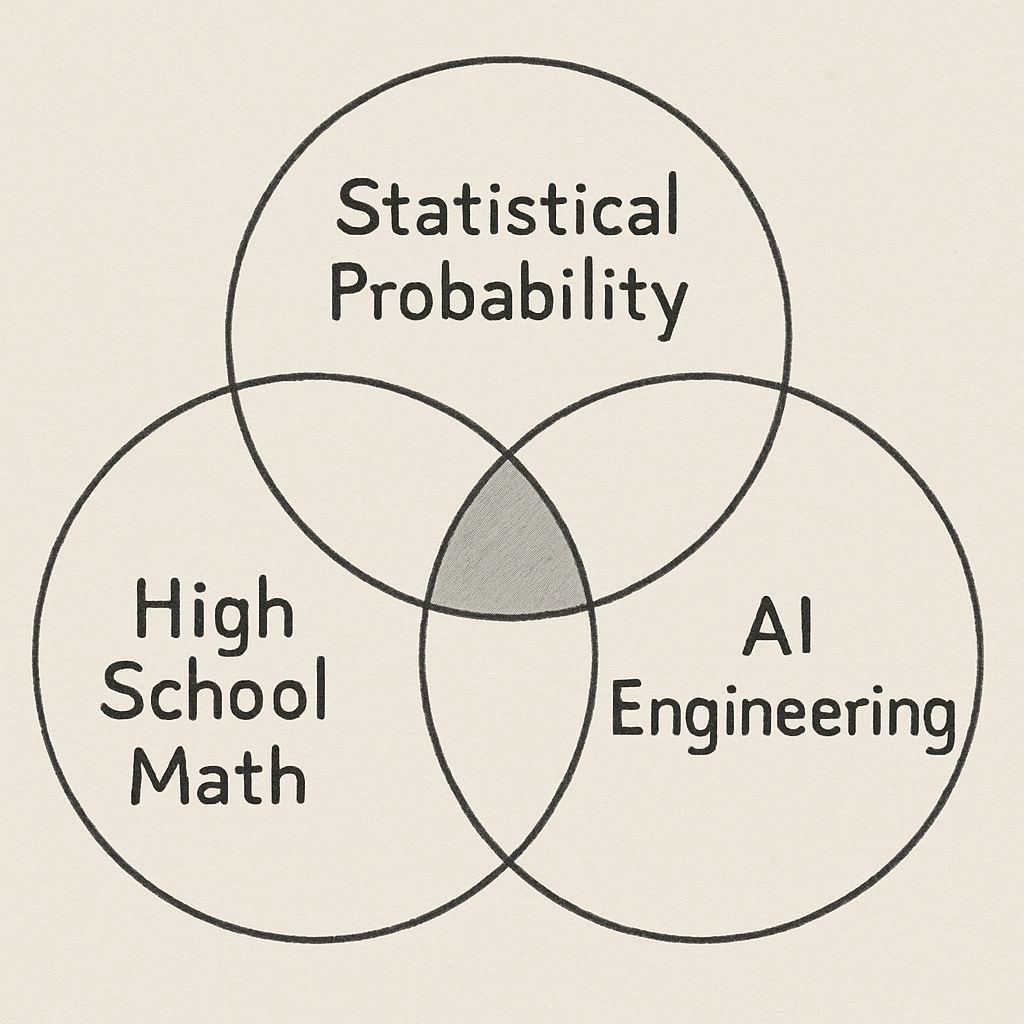
To help a system make those guesses, you use descriptive statistics—everyday measures like averages (mean) or middle points (median)—to quickly summarize massive datasets. When Spotify recommends a song, it isn’t absolutely certain you will love it. Instead, the AI relies on probability distributions, which is simply a visual way of ranking the likelihood of different choices you might enjoy.
Verifying that your new recommendation algorithm actually works requires checking for statistical significance. This crucial concept just means proving that an improvement in your AI’s performance is a real, repeatable upgrade rather than a lucky fluke. Once you grasp these fundamental metrics to evaluate your tools, you are ready to showcase your abilities in the real world by building a tangible portfolio.
From Learning to Earning: How to Build a Portfolio That Gets You Hired
Figuring out how to transition from software engineering—or a non-technical field—to AI takes more than collecting online certificates. Employers want “Proof of Work,” meaning you show them a working solution rather than a piece of paper. A portfolio-first approach proves you can actually combine your Python and data cleaning skills to solve messy, real-world business problems.
To create this proof, build a “Vertical Project”—an application you take from a raw idea to a finished tool. You then document your exact thinking process on GitHub. Sharing your work here acts as an Open Source contribution, proving to recruiters that you know how to build and collaborate in public.
Hiring managers also look for MLOps best practices for production—essentially, knowing how to keep an AI running smoothly once it is live. You can start building a machine learning project portfolio with these three beginner ideas:
- Sentiment Analysis: An AI that flags customer reviews as positive or negative.
- Image Classifier: A tool that sorts photos automatically.
- Personal Knowledge Bot: A chatbot answering questions using your own notes.
With these projects planned, you can follow a structured timeline to move from curiosity to career.
Your 12-Month Roadmap: How to Move from Curiosity to Career
You no longer have to view artificial intelligence as a black box of impossible math. Instead of wondering where to begin, you now have a practical roadmap. To manage this transition alongside a full-time job, dedicate just three hours weekly to a structured schedule.
Follow this 4-phase timeline to pace your growth:
- Months 1-3 (Literacy): Grasp AI fundamentals and problem-framing.
- Months 4-6 (Tools): Master no-code platforms and prompt engineering.
- Months 7-9 (Math/Projects): Tackle basic statistics and introductory Python.
- Months 10-12 (Specialization): Build a targeted professional portfolio.
As you develop these career skills, prioritize credentials employers actually trust, like applied cloud programs or targeted natural language processing industry certifications. Transition from student to professional by focusing less on memorizing code and more on applying these tools to solve tangible business problems.
Start with a simple prompt engineering task today to see immediate results and build your confidence. Artificial intelligence is rapidly becoming a universal work skill rather than an isolated tech specialty, and establishing a structured learning habit will ensure you are confidently navigating that future.