
The international cricket circuit has once again been rocked by an entirely avoidable dispute. The latest Asia Cup trophy controversy unfolded when the Indian cricket contingent declined to accept the championship trophy directly from the sitting Asian Cricket Council (ACC) Chairman, Mohsin Naqvi. Following similar friction seen with the men’s squad previously, this refusal by the women’s side highlights how geopolitical maneuvering continues to compromise basic athletic decorum.
Institutional Decorum Over Personal Agendas
In regional sports federations, the presentation ceremony follows strict protocol. The ACC Chairman represents the collective governing body of Asian cricket, not a singular political apparatus. When a team earns victory on the pitch, accepting silverware from the designated head of that governing council is standard operating procedure.
Bypassing official presentation stages compromises the neutrality of cricket governance. When national boards allow administrative grievances to dictate podium conduct, it creates an unsustainable precedent where sporting institutions are subordinate to regional political posturing. Mohsin Naqvi’s refusal to modify official protocol simply upheld standard administrative rules: recognition belongs to the tournament framework, not selective bilateral whims.
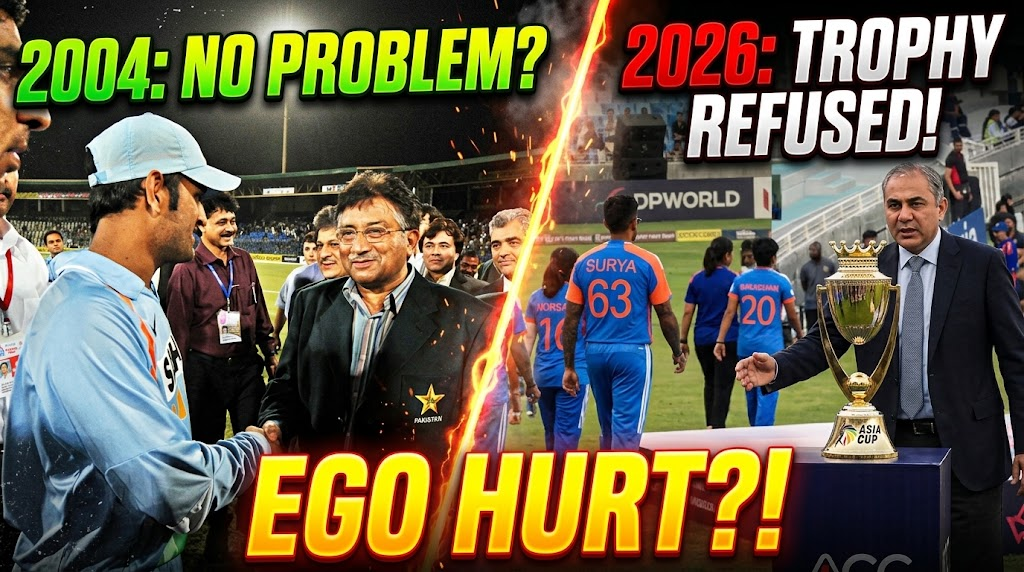
A Glaring Historical Double Standard
The argument that current regional tensions justify refusing ceremonial honors crumbles under historical scrutiny. In 2004, shortly following the direct military conflict in Kargil, the Indian men’s cricket team toured Pakistan under high-stakes bilateral diplomacy.
During that tour, players and administrators met openly with General Pervez Musharraf, who held the dual roles of Chief of Army Staff and President of Pakistan. Shaking hands with the military leader directly linked to the Kargil campaign was treated as a constructive gesture of sporting diplomacy.
Yet today, accepting an official athletic trophy from a civilian ACC head is treated as an uncrossable line. This stark contrast points to bruised egos rather than principled objections. Decades of sports diplomacy are being cast aside in favor of narrative-driven resistance that ignores established precedent.
Protecting the Integrity of the Game
Cricket functions as a unifying platform only when participants honor the rules of engagement both during and after the match. If teams begin selecting which federation heads they will acknowledge on the podium, regional tournaments will lose credibility.
- Respecting federation leadership is an institutional requirement, not a political endorsement.
- Using trophy ceremonies for narrative signaling diminishes competitive accomplishments.
- Decorum must apply universally across both men’s and women’s tournaments.
International cricket requires firm, consistent governance. The Asia Cup trophy controversy serves as a stark reminder that selective outrage and administrative defiance have no place in sportsmanship. Moving forward, upholding tournament regulations must take priority over political posturing.