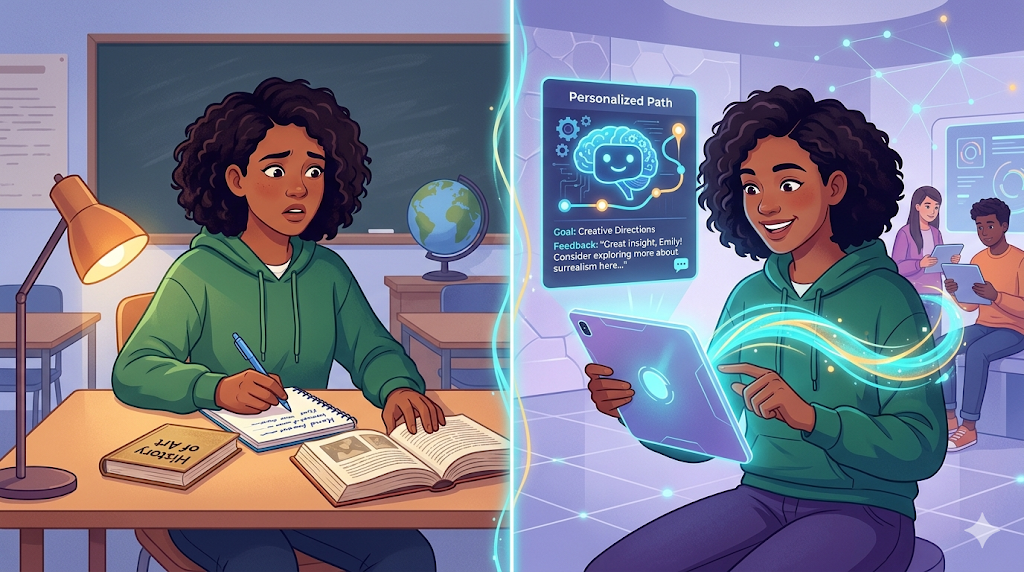
Yes—and nobody is sitting at Google headquarters manually reading your daily messages to protect your inbox. Instead, that everyday convenience is artificial intelligence at work. It doesn’t actually comprehend the words or feel emotion; it simply uses probabilistic prediction. By calculating the mathematical odds that a message with capitalized words and suspicious links is junk, the AI acts as a lightning-fast filing clerk matching new emails against vast libraries of past examples.
Have you ever noticed how your email account automatically banishes a glaring “URGENT!!!” flyer straight to the spam folder? Nobody is sitting at Google headquarters reading your daily messages to protect your inbox. Instead, this everyday convenience relies on a machine making a very fast, highly educated guess. This simple sorting trick is actually artificial intelligence at work, quietly operating in the background of our digital routines.
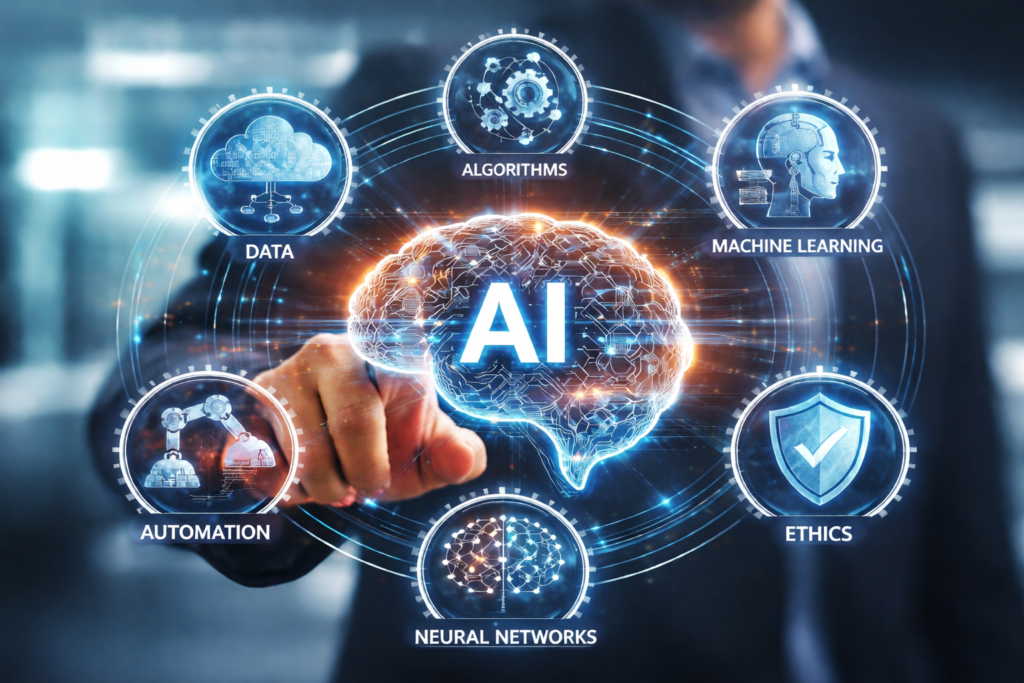
We often imagine these systems as tiny, digital brains doing human-like thinking, but the reality is entirely different. According to software engineers, what we call AI is fundamentally a massive calculator looking for familiar shapes in information. When your email filters out junk, it isn’t reading the words with comprehension or emotion. It is simply using a process called probabilistic prediction—calculating the mathematical odds that a message with certain capitalized words and suspicious links belongs in the trash.
Grasping this difference between calculation and conscious thought is the first step in any practical introduction to AI. To understand the basic principles of AI, we must stop treating these tools like science fiction robots. The most important lesson in a true AI 101 breakdown is that these programs act like exceptionally fast filing clerks matching new information against vast libraries of past examples. They do not possess a mind; they possess a recipe.
By pulling back the curtain on these everyday magic tricks, the underlying technology instantly becomes much less intimidating. Exploring how these invisible tools learn to spot patterns reveals exactly how they make such accurate, helpful guesses. You will quickly discover that the mechanics driving your favorite apps rely completely on mathematics rather than miracles.
Data: The ‘Life Experience’ That Makes AI Smarter
We already know that artificial intelligence is an ultra-fast prediction tool, but it cannot make good guesses from thin air. Just as humans rely on memories to make decisions, AI relies on massive collections of examples. This collection is called “training data,” and it acts as the digital life experience powering the basic principles of AI. Without this vital fuel, the most advanced computer program is just a powerful engine sitting with an empty gas tank.
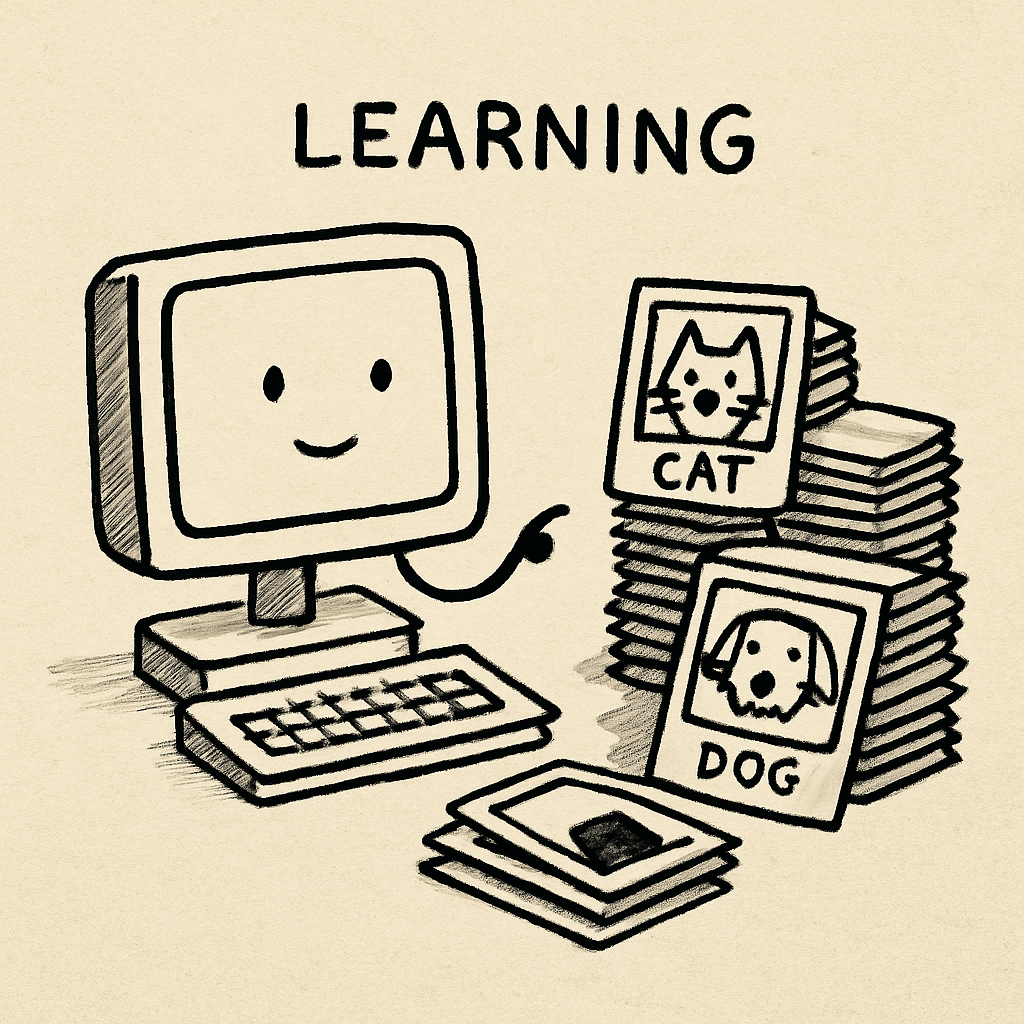
Showing a computer one picture of a retriever isn’t enough to teach it what a dog is. To make accurate predictions, the system needs thousands of photos of different breeds in various lighting. The role of training data in AI development is to provide this immense variety so the machine can spot common visual patterns. As the system absorbs more diverse information, its accuracy and confidence naturally improve.
The quality of this digital experience matters just as much as the quantity. If a system only studies blurry photos, it will continually struggle to recognize clear ones, proving the classic technology rule of “garbage in, garbage out.” Once an AI has absorbed a healthy, diverse diet of high-quality examples, it still needs strict instructions on what to do with those newly discovered patterns. That next step is exactly how machine learning follows a recipe to solve problems.
How Machine Learning Follows a Recipe to Solve Problems
Your favorite streaming app often seems to know exactly what movie you want to watch next. Behind that everyday magic trick is an algorithm—a word that sounds intimidating but is actually just a digital recipe. While a human chef uses a recipe as a set of logical instructions to turn flour and sugar into a cake, a computer uses an algorithm to turn the raw ingredients of data into a helpful decision.
Machine learning algorithms break this digital cooking process down into three basic steps:
- Take Input: Gather the ingredients (like noting which action movies you watched last week).
- Compare to Patterns: Follow the recipe steps to match your viewing habits with millions of other users.
- Output Guess: Serve the final dish by putting a new, highly rated thriller on your home screen.
But what happens if the computer serves up a terrible recommendation and you immediately scroll past it? This is where the system shifts from a basic calculator to a smart tool, using reinforcement learning feedback loops to self-correct. In plain English, the program registers your rejection as a learning moment. It takes that feedback and updates its own recipe on the fly, ensuring it won’t make the exact same mistake tomorrow.
Over time, this constant cycle of guessing, getting graded, and adjusting builds a highly accurate prediction machine. Yet, when the problems become much more complicated than recommending a weekend movie—like identifying a stop sign on a dark, rainy road—a simple three-step recipe isn’t quite enough. To handle those massive visual challenges, the computer requires a completely different structural approach, bringing us directly to Neural Networks.
Neural Networks: The Digital Sieve That Catches Details
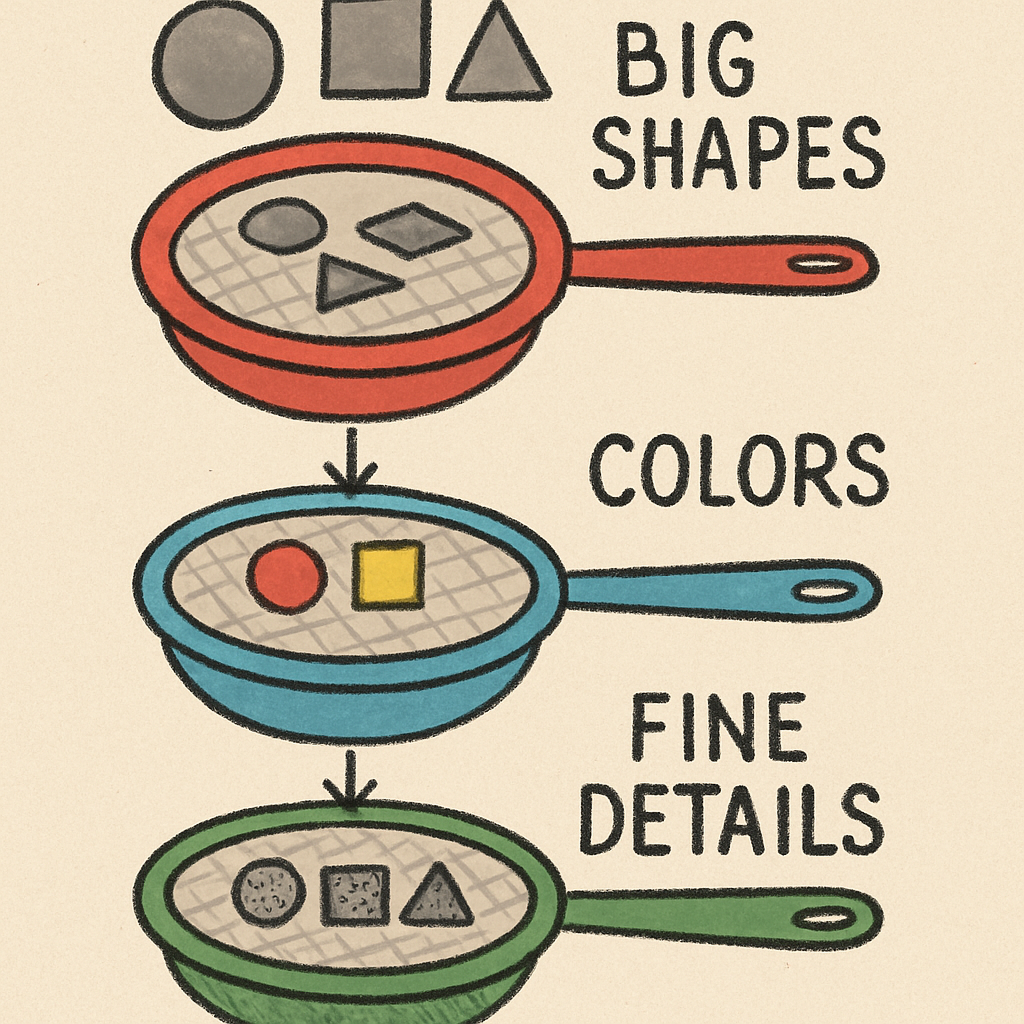
The easiest way to picture neural networks is as a stack of sieves used for panning gold. Recognizing a stop sign in a blurry, rainy photo is easy for a human, but it easily overwhelms a basic algorithmic recipe. To tackle these complicated visual tasks, the computer pours the messy data into the top of a filter system, where the first sieve simply catches basic edges and straight lines.
As the information trickles further down through the system, the filters become increasingly specific. The second layer might catch the color red, while a third layer sifts out the unique eight-sided octagon shape. This stacking of multiple filters is the exact definition of “deep” learning. For a quick deep learning vs machine learning comparison, standard machine learning might use just a few basic steps to recommend a movie, while deep learning uses dozens of deeply stacked layers to confidently process highly complex realities like spoken language, medical scans, or human faces.
By the time the remaining data reaches the very bottom of this digital sieve, all those simple filtered details securely combine to identify the stop sign so the car can safely brake. However, a multi-layered filter system doesn’t automatically know what details it should be sifting for when it is first turned on. The computer has to be taught exactly what to catch and what to ignore.
Teacher vs. Explorer: Supervised and Unsupervised Learning Explained
Remember those classic flashcards you used to learn vocabulary or math? That is exactly how most AI is trained today, using a method called supervised learning. When we want an AI to recognize a stop sign or automatically tag friends in your smartphone photos, a human “teacher” feeds the computer thousands of images that are clearly labeled with the right answers. The machine studies these digital flashcards, practices guessing, and adjusts its internal filters until it consistently gets the answer right.
The difference between supervised and unsupervised learning comes down to whether the AI has an answer key or is left to figure things out entirely on its own:
- Supervised Learning (The Teacher): Relies on clearly labeled data and specific goals. You know exactly what you want the AI to find, like teaching it to confidently spot a cat or filter out spam emails.
- Unsupervised Learning (The Explorer): Uses unlabeled data and discovery goals. You give the AI a massive pile of information and ask it to find underlying structures you might have completely missed.
What happens when you do not actually know what you are looking for? Imagine dumping a huge, messy box of assorted buttons onto a table and asking a child to sort them without giving any instructions. They might group the clutter by color, by size, or by the number of holes. This is unsupervised learning at work. Instead of using flashcards, the AI acts as an explorer sifting through raw data to uncover hidden connections, which is exactly how streaming services group similar movies together or how stores realize that late-night shoppers who buy diapers often buy coffee, too.
Both approaches ultimately transform raw data into a highly organized system of educated guesses. Whether it is being explicitly taught by a human guide or left alone to discover fascinating new trends in the noise, the machine is simply recognizing mathematical patterns at lightning speed.
From Pixels to People: How Computer Vision Sees the World
When your smartphone instantly unlocks the moment you look at the screen, the AI behind your camera sees something completely different than a familiar human face: a giant mathematical spreadsheet. To a computer, every digital picture is just a massive grid made up of tiny colored dots called pixels, and each dot is assigned a specific number based on its brightness and color. By analyzing this enormous grid of data, the machine figures out exactly what it is looking at.
To make sense of these numbers, the system follows four basic steps:
- Convert to numbers: The AI changes the image’s pixels into a mathematical grid.
- Detect edges: By finding sudden changes in those numbers—like a dark pixel next to a light one—the computer locates outlines.
- Assemble shapes: The system connects those edges to recognize simple patterns, like the curve of an eye or the point of a nose.
- Identify object: The AI compares these combined shapes against its past training to confidently name the final image.
Building on the idea of neural networks acting as a series of filters, these computer vision core concepts allow the machine to catch increasingly complex details. The first filter might only catch a stark contrast in light to find a shadow, while deeper filters piece together the shape of a stoplight or the texture of a dog’s fur. This rapid-fire sorting is the exact same technology that helps self-driving cars avoid pedestrians and allows your digital gallery to automatically group all your beach photos together.
Ultimately, giving machines the ability to see is not about giving them eyes, but teaching them to read patterns at lightning speed. Once they master how to break down and understand our visual world, they can start running that exact process in reverse.
The Art of the Possible: How Generative AI Creates Something New
You might have typed a prompt into a chatbot and watched it write a poem or paint a digital sunset in seconds, feeling like you just witnessed pure magic. However, pulling back the curtain on how generative AI models create content reveals a process that is much more about math than inspiration. Instead of acting like a visionary artist striking a blank canvas, the machine works like a highly advanced version of the autocomplete feature on your phone. Because we already know AI is a powerful prediction tool, it uses that exact same guessing game to build something new, constantly choosing the most likely next pixel in a picture or the next logical note in a song.
Natural language processing fundamentals clarify exactly how these tools manage to sound so surprisingly human. When a computer writes an essay, it does not actually comprehend the plot or feel the emotions behind the words it generates. Instead, it has studied millions of books and articles to learn which words frequently sit next to each other. If you give it the phrase “Once upon a,” the system calculates that the word “time” is statistically the most probable next choice, rapidly stringing together sentences one calculated guess at a time.
This incredible ability to rearrange patterns often gets confused with genuine human creativity. While a person draws from their unique life experiences, emotions, and personal viewpoints to create art, the machine is simply remixing the massive library of examples it was trained on. It can mix the style of Vincent van Gogh with a picture of a modern skyscraper, but it is only blending existing puzzle pieces together based on mathematical rules, rather than dreaming up an original concept from scratch.
Because the system relies entirely on these probabilistic guesses, it sometimes confidently predicts the wrong piece of the puzzle, resulting in what tech experts call a “hallucination.” The AI might invent a fake historical fact or draw a hand with six fingers simply because those patterns got jumbled in its calculations. Recognizing that these tools are incredibly fast guessers—rather than all-knowing truth-tellers—highlights the ongoing need for human oversight.
Why AI Still Needs a Human Co-Pilot: Ethics and Limits
Your smartphone’s voice assistant can perfectly navigate you across town, but it often gets completely confused if you ask it a sarcastic question. This highlights one of the major limitations of current AI systems: they are highly specialized. Today’s tools represent “Narrow AI,” meaning they are built to do one specific task very well. This is entirely different from the sci-fi dream of a machine that can reason like a human across all topics. Since the early history of Turing tests and machine intelligence, experts have debated when computers might actually “think.” However, the massive gap between today’s narrow AI vs artificial general intelligence (AGI)—a theoretical future system with broad, human-like understanding—remains crucial.
Beyond just struggling with everyday context, these specialized tools face serious challenges because they learn from imperfect human data. If a company trains an automated resume-reader mostly on applications from men, the system might quietly learn to downgrade women’s resumes. This blind spot is known as algorithmic bias, and it represents one of the most pressing ethical considerations in artificial intelligence today. Because the software lacks a moral compass to question if its data is fair, developers must actively focus on mitigating algorithmic bias in software by feeding these systems more diverse, balanced examples.
Ultimately, these mathematical blind spots are exactly why computers still require a human co-pilot. While a machine can quickly sort through massive libraries of information, it cannot replace our judgment. Human partners bring three irreplaceable strengths to the table:
- Common Sense: The ability to understand basic logic and real-world context.
- Empathy: The emotional intelligence required to make sensitive, nuanced decisions.
- True Innovation: The capacity to dream up original ideas instead of just remixing past examples.
Knowing where the machine’s abilities stop and yours begin ensures you stay firmly in the driver’s seat.
Making AI Work for You: A Practical Action Plan
Interacting with tools like ChatGPT or Netflix recommendations might have previously felt like consulting a digital crystal ball. Now, you can look behind the curtain and recognize that there is no magic involved—just a highly efficient filing clerk matching patterns at lightning speed. You have crossed the bridge from feeling intimidated by a “thinking machine” to understanding how a prediction tool actually operates.
With these basic principles of AI in mind, you can take practical control of how these systems work for you. Since an AI is simply guessing the best possible answer based on the clues you give it, your secret weapon is context. The more details you provide about what you want, the easier it is for the system’s pattern-matching filters to land on the exact outcome you need.
You can improve your results and interact with these tools more effectively by adopting these three habits:
- Be specific with prompts: Give the AI a clear role and plenty of background details so it can match the right patterns for your specific task.
- Fact-check outputs: Remember that AI is probabilistic, meaning it guesses based on past data, so always verify its answers before trusting them completely.
- Look for the ‘why’ behind AI suggestions: When an app recommends a movie or a product, ask yourself what past data or behavior prompted that specific pattern.
Every time you guide a chatbot with a detailed prompt or question a strange social media algorithm, you are putting your new knowledge into action. AI is not a sci-fi force to be feared, but an everyday tool that becomes highly valuable once you understand the mathematics behind its guesses.