
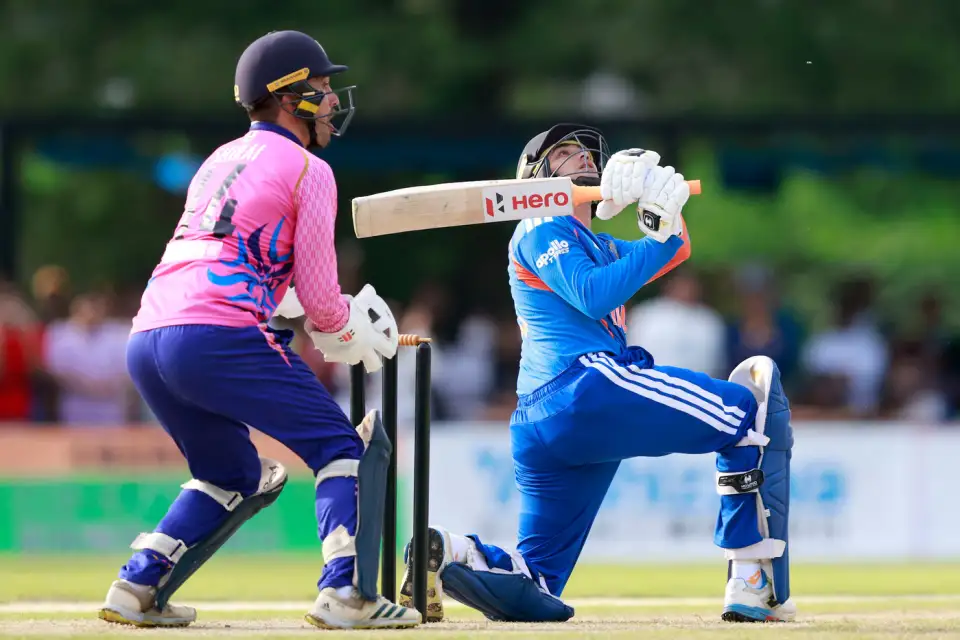
India barely survived an absolute catastrophe at the Sano International Cricket Ground, edging out Japan by just 2 runs in a rain-curtailed, five-overs-a-side T20 thriller. However, passionate Indian cricket fans expecting fireworks faced a nerve-shredding reality check ahead of the Asian Games campaign.

A Pitch Unfit for International Cricket
Opting to bat first, Team India ran headfirst into an unplayable surface. The track behaved like a day-five rank turner on hyperdrive—balls gripped, stopped, and deviated sideways off the deck.
World-class power hitters found themselves utterly tied down:

- Top-Order Collapse: Explosive batters Abhishek Sharma (golden duck), Sanju Samson (9), and Ishan Kishan (3) fell in rapid succession.
- Barely Scraping Through: India stumbled to 14/3 in three overs, finishing at a modest 32/4 in their allotted 5 overs. Only skipper Shreyas Iyer reached double figures with a fighting 16.
For a full-strength Indian outfit loaded with IPL stalwarts, managing just 32 runs against an Associate bowling attack laid bare the erratic, dangerous nature of the wicket.
Umpiring Incompetence Sparks Shreyas Iyer Clash
The nightmare surface was compounded by sub-par officiating that left fans and players furious. The flashpoint came during a critical phase when Japanese batters repeatedly attempted reverse sweeps while the ball remained well within reach. Shockingly, the on-field umpire called consecutive deliveries as “wides.”
An exasperated Shreyas Iyer rushed to the official, aggressively questioning whether international cricket playing conditions were even being understood. Under basic ICC regulations, when a batter switches their stance or attempts a reverse sweep, the wide line shifts according to their updated position. After a heated on-field exchange, the umpire was forced to overturn the blunder, highlighting a complete lack of professional preparation for the fixture.
Narrow Escape: 30/3 Leaves Asian Games Questions
Defending 32, India held their breath as Japan fought to the absolute wire, finishing at 30/3—just two runs short of engineering the biggest upset in modern cricket history.
While Indian spinners ultimately sealed the win, serious concerns have surfaced:
- Facility Standards: The subpar grounds and chaotic tournament management in Japan raise red flags for every top nation competing in the multi-sport event.
- Umpiring Protocols: High-stakes matches cannot afford amateur-level decision-making that shifts game momentum.
- Pitches as Equalizers: Unprepared minefields completely eliminate the skill gap between global giants and emerging nations, turning elite matches into pure coin tosses.
India avoided humiliation by the barest of margins. Unless tournament organizers urgently fix playing surfaces and bring in qualified match officials, the road to Asian Games gold will remain a perilous lottery.